Charleston Wedding Planner Guide: How to Plan a Historic, Coastal Destination Wedding in Charleston, SC

Charleston has a way of feeling both cinematic and strangely familiar, even if you’ve never set foot there. You turn a corner, and there’s a hidden garden behind a wrought-iron gate. Walk a few more blocks, and you’re suddenly staring at the harbor, the air salty and soft. It’s a city where history is not just preserved but lived in—porches still used, church bells still ringing, cobblestones still underfoot.

For a wedding, that combination of history and coastline is powerful. But it’s also more complex than choosing a pretty courtyard and hoping the weather cooperates. Planning a destination wedding in Charleston means working with a subtropical climate, centuries-old architecture, busy tourism seasons, and a layered cultural history, all while caring for guests who may be traveling across the country.

This guide is written for couples who want their Charleston wedding to feel intentional rather than accidental: those who are drawn to historic houses and museums, riverside lawns, boutique hotels, or coastal resorts, and who care as much about guest experience and logistics as they do about design. You’ll find guidance on seasonality, neighborhoods, budget realities, legal details, venues, design, menus, transportation, weather contingencies, and how to structure a full wedding weekend that makes sense in this city specifically.

While teams like Shi Shi Events regularly plan destination weddings in historic and coastal settings throughout the Midwest, East Coast, and South, the information here is meant to be useful whether you hire a planner or coordinate everything yourselves. The goal is clarity: so you understand what Charleston offers, what it demands, and how to weave your story into a place that already has a strong sense of its own.
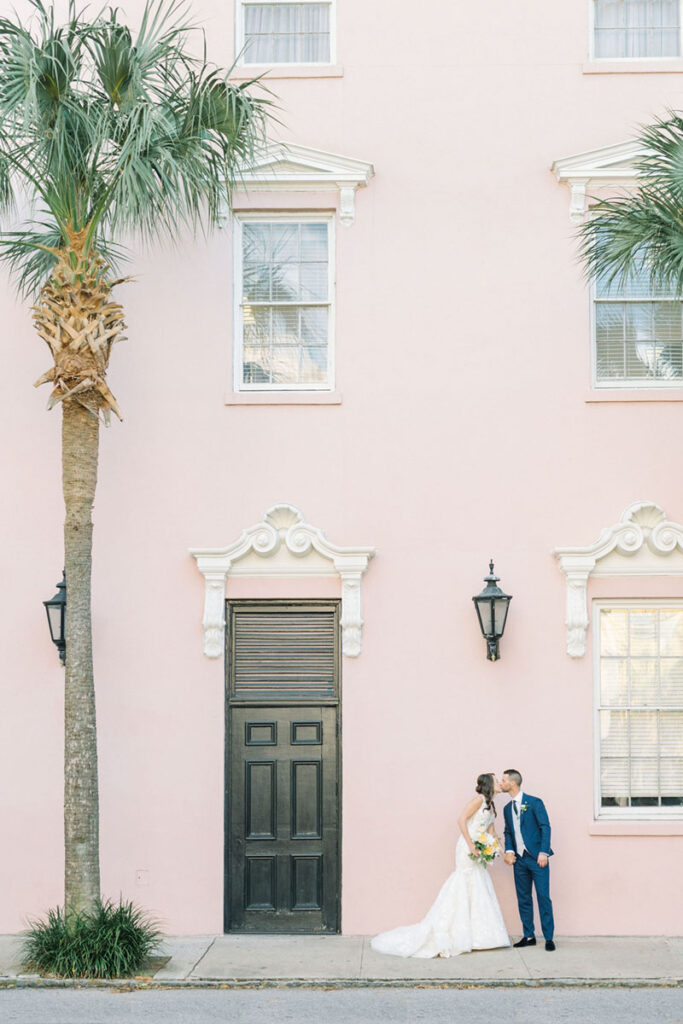
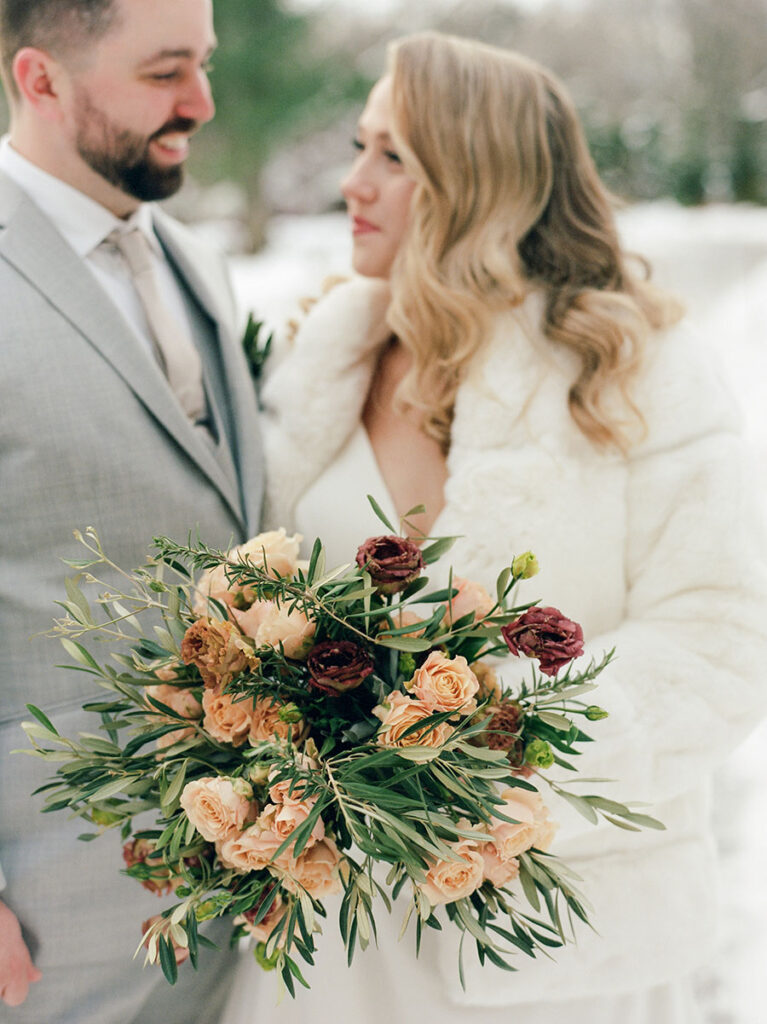
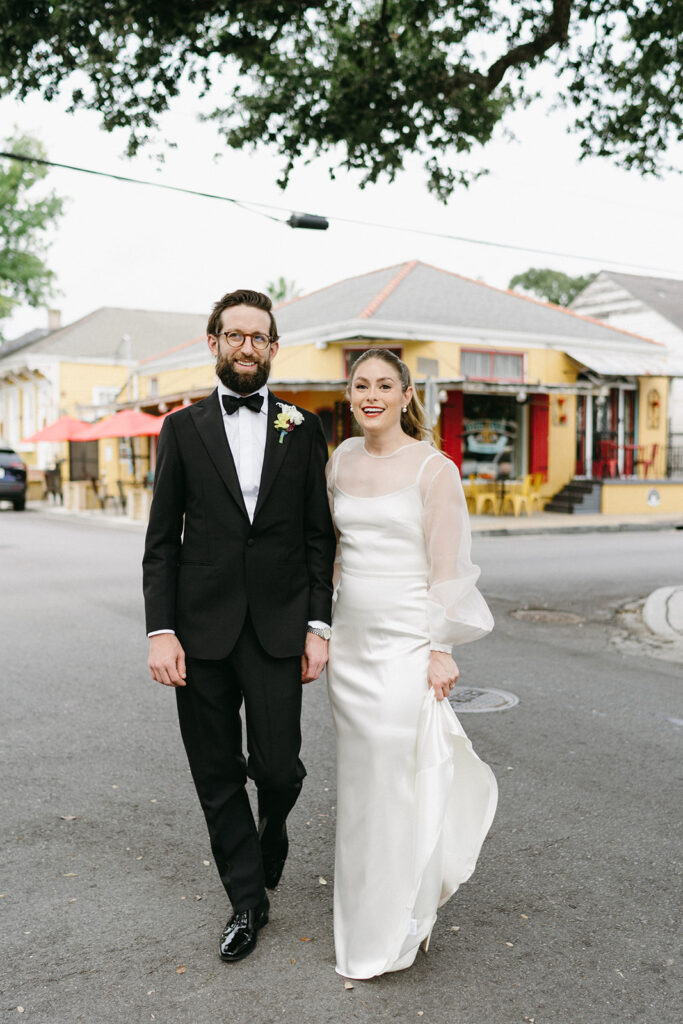
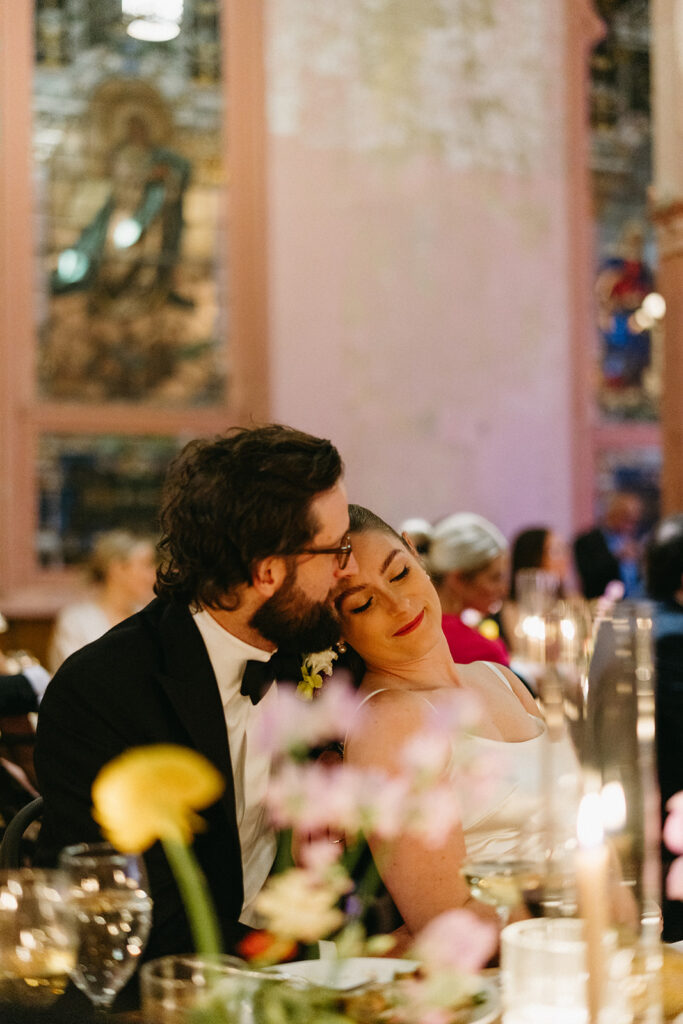
Bride and groom outside a pink historic building in Charleston, South Carolina

Understanding Charleston as a Destination Wedding Locale

How geography shapes the feel of your wedding

When people say “Charleston,” they’re often picturing the historic peninsula—rainbow-colored houses, gas lanterns, steeples. That’s only part of the story. The larger area fans out to barrier islands, rivers, marshes, and rural roads lined with live oaks. Where you choose to anchor your wedding will shape not just aesthetics, but transportation, budgets, and how your weekend unfolds.

In broad strokes, most wedding settings fall into a few geographic categories:

Historic Downtown (the Peninsula) centers on neighborhoods like the French Quarter, Ansonborough, and South of Broad. Expect:

  • Row houses and mansion homes with intimate walled gardens and brick courtyards
  • Historic churches, museums, and preservation society houses
  • Short walking distances between hotels, restaurants, and venues

Downtown is ideal if you want guests to stroll between events, linger in cafés, and absorb the city’s architecture almost by osmosis. It also tends to work well for mid-sized guest counts, given capacity limits in many historic buildings.

Just across bridges, the landscape shifts.

Islands and Beaches such as Isle of Palms, Sullivan’s Island, Folly Beach, and Kiawah Island offer:

  • Beach clubs, oceanfront resorts, and vacation rentals with strong “weekend away” energy
  • Built-in activities—beach days, surfing, paddleboarding, golf, spa time
  • More relaxed dress codes and later-night socializing clustered around a resort or seaside town center

These settings are especially appealing if you imagine your guests wandering from pool to ocean to welcome party without ever needing a car.

Then there are the rivers and marshes.

Plantation, Riverfront, and Rural Lowcountry Corridors along Ashley River Road, Johns Island, and Wadmalaw Island feature:

  • Sweeping lawns under live oaks draped in Spanish moss
  • Docks stretching into creeks or rivers, marsh views, and tidal changes
  • Historic estates or event-focused properties that work beautifully with custom tent builds

These locations can feel secluded and cinematic, but they introduce real logistical questions: How will guests get there? Where do buses turn around? Where do generators and catering kitchens live? That doesn’t make them less appealing—it just means they reward thoughtful planning.

Knowing which of these landscapes resonates most—urban historic, beach, or riverfront countryside—is a helpful early filter. It will narrow your venue list dramatically and clarify whether your weekend will be anchored by walking shoes, flip-flops, or shuttle buses.
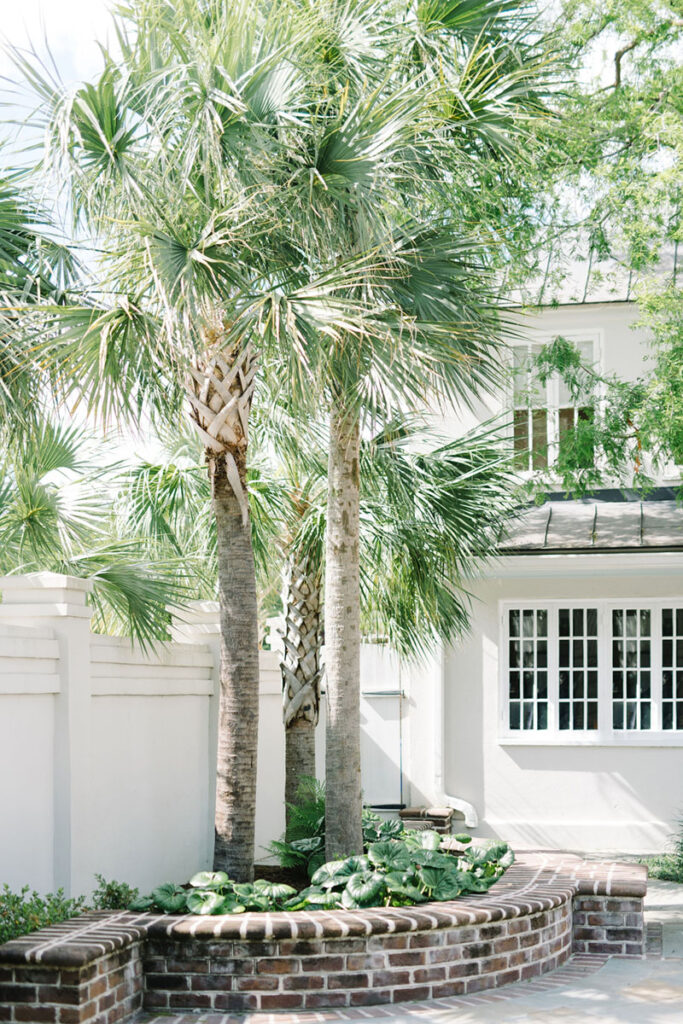
Palm trees and brick courtyard at The Gadsden House in Charleston

Climate, seasons, and what they actually feel like

Charleston’s climate is humid subtropical: warm to hot for much of the year, with mild winters and a distinct hurricane season. That’s the technical version. The lived experience is more nuanced.

Spring (March–May) is when Charleston often looks like the brochure. Azaleas, camellias, and wisteria are everywhere; temperatures are generally comfortable; gardens feel lush but not yet heavy.

You’re likely to encounter:

  • Daytime highs in the 60s–70s°F early in the season, edging toward the low 80s by late May
  • Cooler, pleasant evenings that work well for outdoor cocktail hours and dinners
  • High pollen counts that can affect allergies, contact lenses, and even black rental chairs or railings

Summer (June–August) is lush, buzzing, and unmistakably coastal—but it’s also hot and humid, with frequent afternoon thunderstorms.

This means:

  • Midday outdoor ceremonies can be very uncomfortable, especially for formal attire
  • Later ceremony times (close to sunset) and aggressive shade/hydration strategies matter
  • Humidity-resistant hair and makeup, plus breathable fabrics, become more important than the stiffest satin you saw in a magazine

Fall (September–November) is a favorite for many planners and couples. September often still feels summery. By October and November, the air tends to soften; the light at the end of the day can be extraordinary on marshes and brick streets.

The catch: hurricane season officially runs June through November. Statistically, major storms are not an everyday reality, but they’re a possibility you should respect in contracts and backup plans.

Winter (December–February) is gentler than in northern cities. You might have sunny days in the 50s or 60s°F, or chilly, damp spells. Crowds thin; hotel rates can be more forgiving, especially outside of holidays and major events.

Winter weddings here often lean into candlelight, layered textures, and indoor spaces, but they still allow for outdoor portraits and brief garden moments if the weather cooperates.

Charleston wedding culture, beyond the clichés

There’s a shorthand version of Charleston weddings—seersucker, sweet tea, and Spanish moss—that can feel charming at first, then a little one-note. In reality, the local wedding culture is broader and more layered.

What tends to be consistent is a strong emphasis on hospitality. Couples often:

  • Prioritize how guests move through the weekend: not just “where,” but “how it feels”
  • Build in generous food and drink, often with a nod to Lowcountry cooking
  • Use welcome notes, printed guides, or small touches to orient out-of-town guests

Aesthetically, you’ll see everything from classic “garden party at a museum house” to entirely modern, architectural tents on riverfront lawns. The most interesting weddings tend to respect the city’s historic bones while making clear that the couple lives in this century: clean typography, refined color palettes, and design choices that complement rather than compete with the setting.

When to Get Married in Charleston: Seasonality and Guest Comfort

Spring: peak blooms and peak demand

Spring is when Charleston feels like a painting. Historic homes open their gardens during events like the Festival of Houses and Gardens, restaurant patios hum, and almost every courtyard seems made for a wedding.

The upside is obvious: comfortable temperatures, long days, and a city looking its best. The tradeoffs are worth naming:

  • Hotels, venues, and flights command premium rates, especially around festivals and holidays
  • Top venues, bands, and photographers can book out well over a year in advance
  • Pollen can be intense; consider tissues, allergy meds, and extra time for cleaning outdoor furniture

If spring is your dream, treat date selection like booking a popular restaurant: flexibility helps. A Sunday, Friday, or off-peak weekend may open doors that a single coveted Saturday cannot.

Summer: coastal energy and practical considerations

Summer in Charleston has its own charm: long evenings, busy beaches, and that sense of stepping into vacation mode the moment you land. It can work beautifully if your plans align with the climate rather than fight it.

Practically, that can look like:

  • Scheduling ceremonies later in the day to avoid peak heat
  • Providing fans, parasols, chilled water, and possibly cooling towels for outdoor portions
  • Encouraging breathable attire on your wedding website (“lightweight suits and flowy dresses are welcome”)

For beach or island-based weddings, summer offers the fullest menu of activities for guests—especially those traveling with children—but do factor in the possibility of afternoon storms and aim for tents or covered spaces even if you hope not to rely on them.

Fall: golden light and popular dates

Ask many photographers or planners their favorite Charleston wedding season, and fall comes up quickly. The light is often warm and cinematic, the air a little drier, and evenings just cool enough for layered outfits and candlelit dinners outdoors.

The main complexities are:

  • Hurricane season overlap, which makes strong force majeure and rescheduling clauses in contracts important
  • High demand for October weekends in particular
  • Potential conflicts with college football weekends and regional events that affect hotel availability

It’s helpful to pull up a local events calendar and cross-check your short list of dates against major happenings in the city.
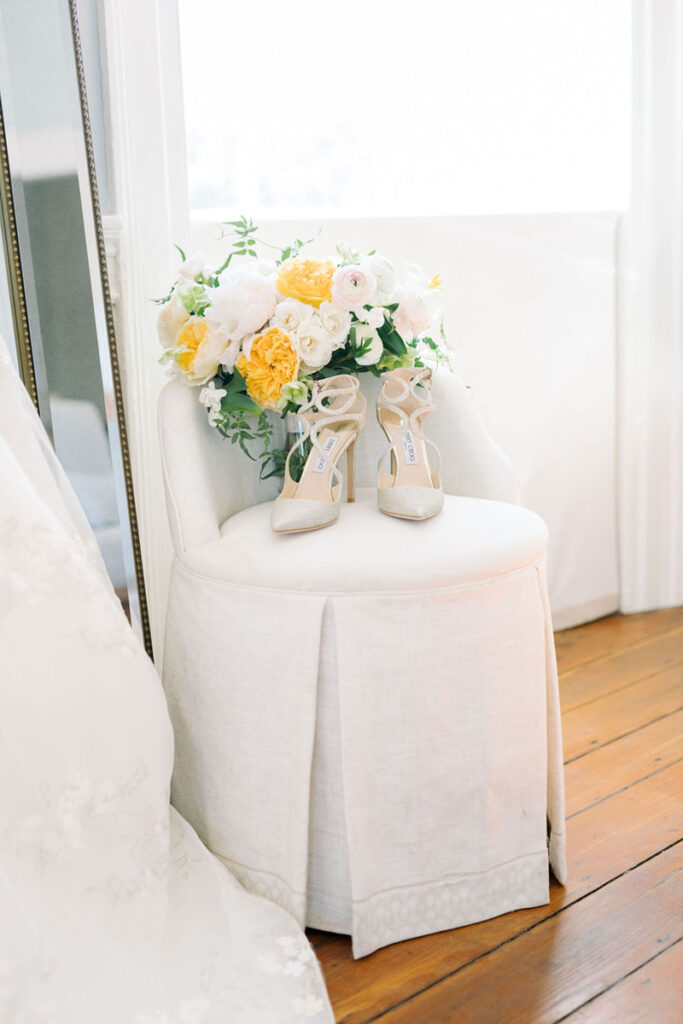
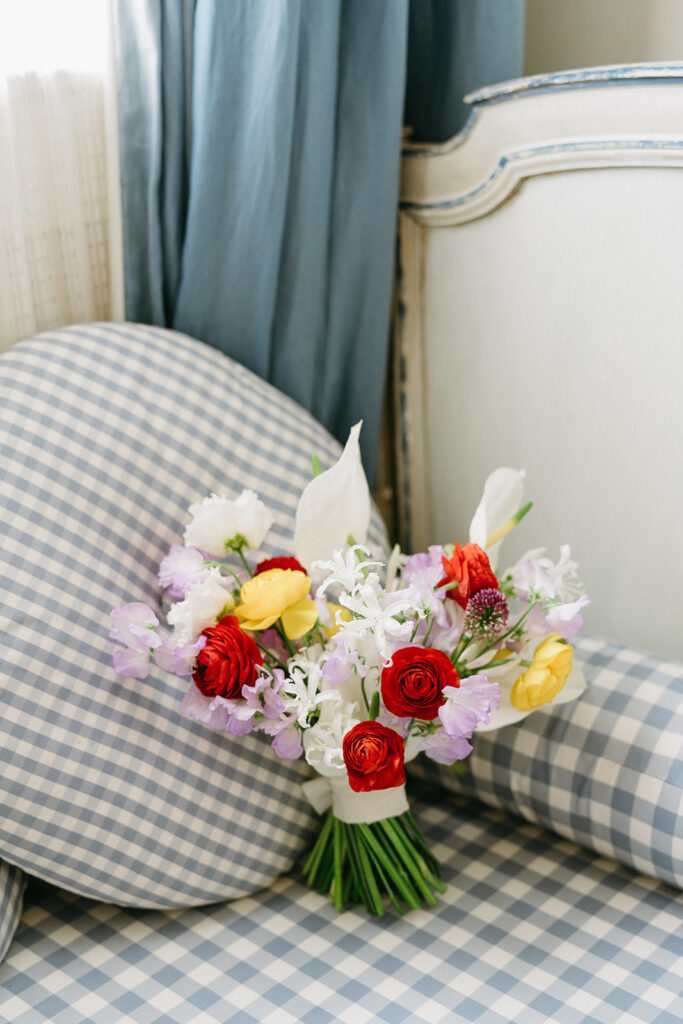
Bridal bouquet and wedding shoes arranged beside the bride's gown

Winter: quieter streets and intimate gatherings

Winter weddings in Charleston feel different in the best way. The city is more relaxed; restaurants are easier to book; boutique hotels may have more flexibility with room blocks and buyouts.

You’ll want to:

  • Pay close attention to sunset times when scheduling your ceremony and portraits
  • Plan for tent or patio heaters, and recommend wraps or coats for portions outdoors
  • Work with your florist on seasonal availability; think texture and shape rather than only lush spring flowers

For couples who love candlelight, leather-bound menus, darker tones, and cozy spaces, winter can be an excellent fit.

Choosing a date with destination guests in mind

Ceremony weather matters, but so does the experience wrapped around it. As you narrow down dates, consider:

  • How many guests will be flying versus driving
  • Whether a three-day or four-day structure feels more realistic for your circle
  • School calendars and holiday weekends that might help or hinder attendance

Many couples aim for a rhythm where guests arrive by midday Friday for a Saturday wedding, or Thursday for a Friday wedding, so there’s at least one full, unhurried day in Charleston baked into the trip.

Budgeting for a Charleston Destination Wedding

How Charleston fits into the national cost landscape

Charleston is not a “budget” destination, but it’s also not at the very top of the pricing spectrum like Manhattan or San Francisco. Think of it as a highly desirable destination market: historic properties, strong culinary scene, high tourism demand, especially in spring and fall.

A full wedding weekend with 75–150 guests at a historic downtown venue, riverfront estate, or island resort will likely align with other major U.S. cities known for weddings. The specific numbers will depend on your guest count, level of design, and how much infrastructure you need to bring in.

Major cost categories you’ll encounter

While every budget is unique, certain categories consistently shape the overall spend:

Venue and Catering
Many Charleston venues operate with food-and-beverage minimums, especially hotels, clubs, and some historic properties. Instead of paying a large standalone rental fee and then hiring an outside caterer, you may:

  • Pay a moderate site fee plus in-house catering and bar service, or
  • Commit to a higher food-and-beverage minimum that effectively covers use of the space

For more blank-slate properties, you may pay a flat rental and then bring in a caterer and full bar program. Both structures can work; they simply allocate funds differently.

Tents, Rentals, and Infrastructure
For plantations, private estates, or lawns, you’re often building a temporary “venue.” That can include:

  • Tents (clear, sailcloth, frame, or pole), plus flooring, lighting, and climate control
  • Tables, chairs, linens, place settings, bars, and lounge groupings
  • Power solutions, restroom trailers, catering prep tents, and vendor parking areas

These line items are easy to underestimate early on, and they can be the difference between a manageable budget and a stressful one. If you’re drawn to tented events, it’s worth getting early, realistic estimates from vendors who frequently work in the Charleston area.

Travel and Accommodations
As a destination couple, you’ll want to account for:

  • Your own travel to Charleston for scouting, tastings, and the wedding itself
  • Any accommodations you’re covering for immediate family or attendants
  • Travel and lodging costs for key vendors if you’re bringing them in from elsewhere

Creative and Logistical Vendors
Photography, videography, florals, entertainment, transportation, hair and makeup, and planning all fall here. Tented and estate weddings tend to involve more categories (e.g., lighting designers, additional staffing, specialty rentals) than hotel-based events, which affects both cost and coordination.

Costs people often forget to plan for

Destination weddings are full of “invisible” costs—items that don’t show up in Pinterest boards but absolutely show up on invoices. Common examples include:

  • Permits for amplified sound, tenting, or use of certain public or semi-public spaces
  • Event liability insurance, often required by venues and tent companies
  • Valet, parking fees, or shuttles when downtown or plantation parking is limited
  • Last-minute weather adaptations: sidewalls, additional fans or heaters, extended tent holds

This is where a good contract review is worth your time. Knowing which weather-related items are “on hold” versus fully reserved, and by what date you must confirm them, can help you avoid both surprise costs and gaps in coverage.

Budget strategies that work well in Charleston

Two levers typically have outsized impact:

Guest Count
It’s not glamorous, but it’s honest: nearly every per-person cost scales with headcount. A smaller guest list often allows for a richer, more detailed experience—better menu, more thoughtful design, higher-touch hospitality—without necessarily increasing the total budget.

Timing and Day of Week
Shoulder-season dates, Sundays, and certain Fridays can sometimes open up premier venues and vendors that aren’t available (or as flexible) on peak Saturdays. In a destination market like Charleston, where weekends are at a premium, shifting by a day can change what’s possible.

If you’re working with a planner familiar with the city and with other destination markets, ask them where past clients have felt their money was best spent, and where they were glad they did not splurge. That collective hindsight is valuable.

Legalities and Logistics: Making It Official in South Carolina

Marriage license basics in Charleston County

The legal side of getting married in South Carolina is relatively straightforward, but you’ll want to treat it with the same respect as flights and passports. Requirements can change, so always confirm details directly with the Charleston County Probate Court.

In general, you can expect:

  • Both parties to submit an application (often available online) and provide valid identification
  • A mandatory waiting period—historically at least 24 hours—between application and license issuance
  • A license that is valid for use anywhere in South Carolina once issued

Post-2020, some counties have introduced or expanded virtual processes, but you may still need an in-person step. It’s wise to build that into your arrival timeline rather than assuming you can squeeze it in between hair trials.

Officiants, residency, and ceremony structure

You do not need to be a South Carolina resident to marry in the state. Likewise, your ceremony does not have to occur in the same county that issued your license.

South Carolina law recognizes certain clergy and public officials as authorized officiants. If you’re hoping to have a friend or family member lead the ceremony, make sure they’re legally qualified under state law, or consider a hybrid approach:

  • Hold a brief legal signing with an authorized officiant in addition to your main ceremony, or
  • Have a legally recognized officiant present during your ceremony to quietly handle paperwork while your chosen person leads the spoken portion

Many couples prefer the second option; guests never know the difference, and you get both the emotional significance of a loved one officiating and the legal peace of mind.

Practical tips for avoiding last-minute license stress

It’s surprisingly easy for a marriage license to become an afterthought amid seating charts and floral mockups. A few small habits can prevent that:

  • Assign one specific person (planner, parent, trusted attendant) to be “license captain” on the wedding day
  • Store the license with other non-negotiables—passports, engagement ring, important documents—so it’s not drifting between bags
  • Clarify with your officiant when and where the signing will happen and who needs to be present

Treat the license the way you’d treat boarding passes for an international flight: handled early, double-checked, and not left to chance.

Choosing Your Charleston Wedding Setting: Historic, Coastal, or Both

Historic downtown: courtyards, churches, and walkable weekends

Historic downtown Charleston is what many people picture when they think “Southern wedding”: church steeples, wrought-iron balconies, mansion homes hiding gardens behind their walls.

Typical downtown venues include:

  • Museum houses with drawing rooms and side gardens
  • Small inns and boutique hotels with courtyards and rooftop terraces
  • Historic churches paired with nearby reception spaces

Advantages often include:

  • Guests can walk between hotels, ceremony sites, and reception venues
  • The architecture itself does much of the visual work; you need less decor to make an impact
  • Post-wedding, guests can easily continue the evening at nearby bars or lounges

On the other hand:

  • Noise ordinances and neighborhood rules can affect music end times
  • Historic buildings may have strict guidelines on candles, hanging decor, or heavy installations
  • Loading docks, elevators, and narrow streets can limit what vendors can bring in and how quickly

When reviewing downtown venues, ask direct questions about capacity, noise cutoffs, and decor restrictions. The answers will help you understand where your design and entertainment ideas may need adjustment.
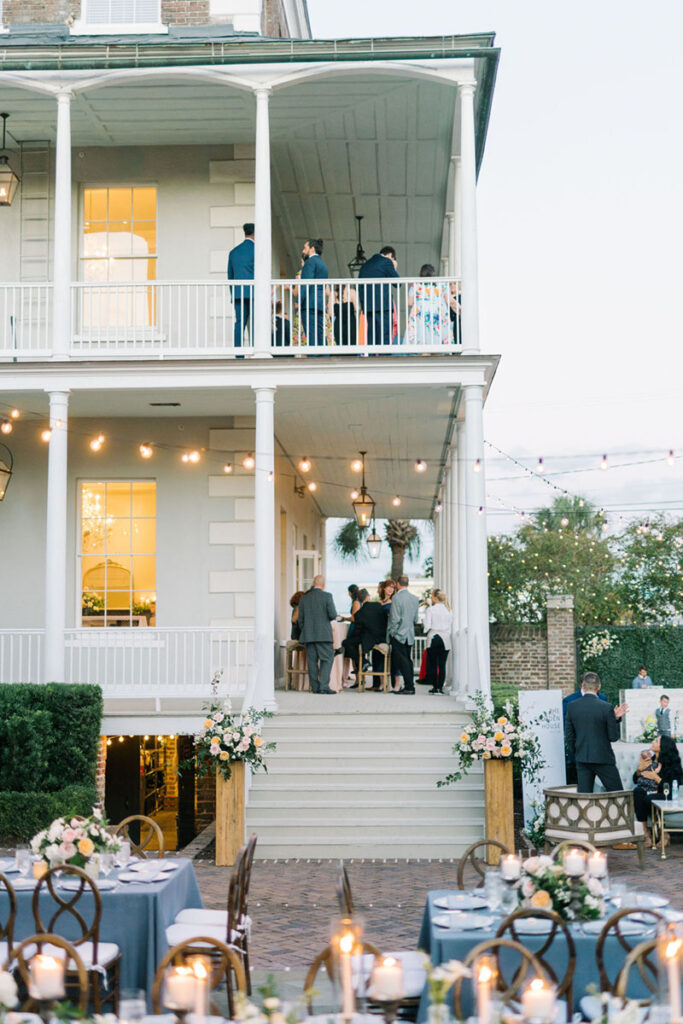
Cocktail hour on the piazza at The Gadsden House in Charleston

Plantations and riverfront estates: expansive settings with layers of history

Riverfront and plantation-style properties in the Lowcountry are visually striking: avenues of oaks, reflective water, long docks, and open lawns. They also come with more logistical and ethical nuance than a simple “pretty backdrop.”

From a planning standpoint, these venues are appealing because:

  • You can often hold ceremony, cocktail hour, and reception in distinct outdoor spaces on one property
  • Tents allow you to sculpt the reception environment in a highly customized way
  • The privacy and quiet create an immersive, almost retreat-like feeling for guests

Logistically, though, you’ll be considering:

  • Guest transportation, usually via shuttle or coach, especially after dark
  • Weather exposure and the need for robust tent and backup plans
  • Additional vendor categories: power, restrooms, lighting, security, and staff areas

There’s also the question of historical context. Many plantation properties were sites of enslavement and ongoing racial trauma. Couples approach this in different ways, including:

  • Selecting venues that actively interpret and acknowledge this history through tours, exhibits, or programming
  • Including a brief note in programs or welcome material honoring the land’s history and those who labored there
  • Having open conversations with family and friends for whom the location might carry particular weight

There’s no one “right” answer, but planning here benefits from reflection and intentional choices rather than avoiding the topic entirely.
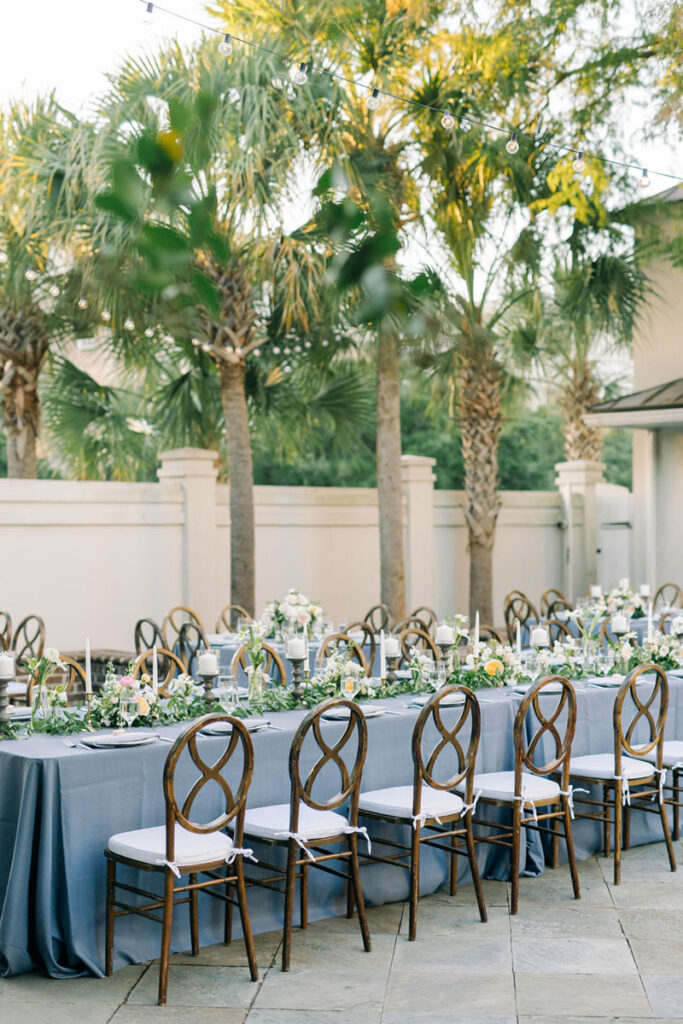
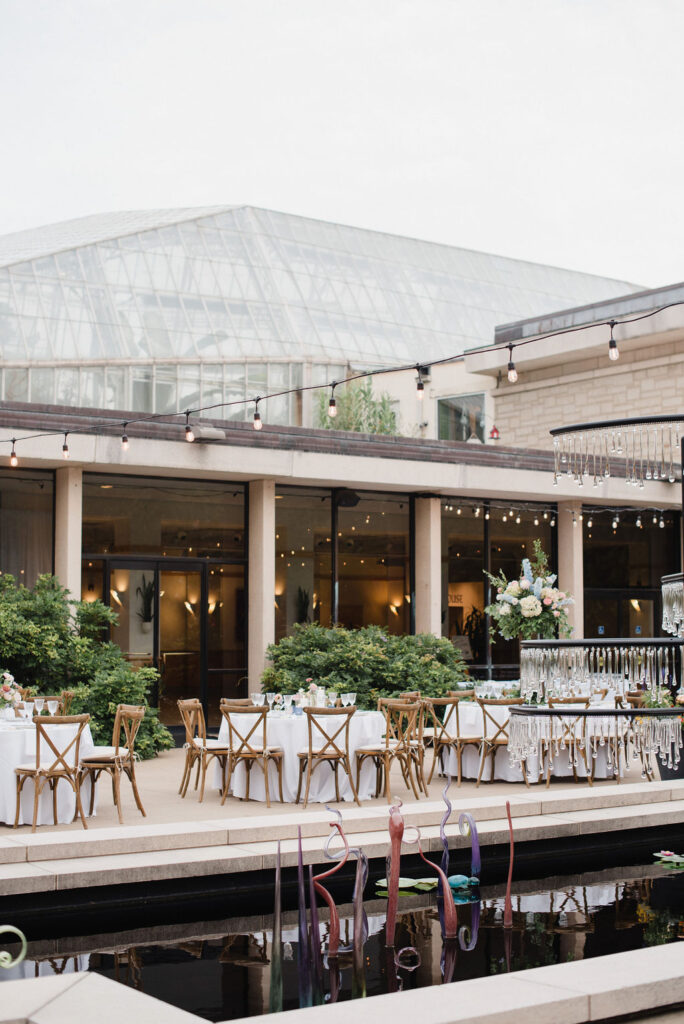
Outdoor wedding reception tables beneath palm trees at The Gadsden House

Islands, beaches, and coastal resorts: the vacation-forward option

If your dream wedding feels more like a multi-day beach trip with a wedding in the middle, barrier island settings might be your best match. Places like Kiawah Island, Isle of Palms, and Wild Dunes blend resort infrastructure with access to sand and surf.

Couples are often drawn to:

  • On-site accommodations, restaurants, and activities that keep everyone clustered together
  • Spaces that move from lawn to ballroom to beach boardwalk in a single evening
  • Family-friendly amenities—pools, bike rentals, kids’ programs—that make it easier for guests with children to attend

Planning details to pay attention to:

  • Wind and sound: microphones, speaker placement, and hairstyle choices matter on an oceanfront site
  • Beach regulations around set-up, open flames, and amplified sound, which vary by municipality
  • Resort fees, service charges, and minimums that may not be obvious in first-pass pricing

A short conversation with the resort’s event team about weather norms, backup indoor spaces, and how past weddings have handled beach conditions can be very instructive.

Boutique hotels and inns: all-in-one intimacy

Charleston has an unusually rich inventory of small hotels and inns, many housed in historic buildings with thoughtful modern interiors. For destination weddings, these properties can act like a private home scaled just large enough for your guest list.

The appeal is clear:

  • Your guests are primarily under one or two roofs, creating an easy sense of community
  • Event spaces, rooms, and staff are already integrated, simplifying coordination
  • Many boutique properties offer strong existing design, which you can layer onto rather than starting from scratch

The tradeoffs usually center on:

  • Buyout costs if you want complete privacy and control over common areas
  • Size limitations; these venues often suit smaller and mid-sized weddings best

For couples who picture running into their favorite people in the lobby all weekend, or winding down each night at the same cozy bar, a boutique hotel is worth serious consideration.

Private homes and estates: bespoke, but infrastructure-heavy

Some couples are drawn to private properties in the Charleston area—a family home, a rented estate, or a residence that occasionally hosts events. These settings can be incredibly personal, but they essentially turn you (and your team) into venue builders for the weekend.

You’ll want to pay attention to:

  • Local regulations and HOA rules around events, noise, parking, and short-term rentals
  • Power capacity, water access, and waste management options
  • Vendor access, truck clearances, and where staff will stage equipment and supplies

This is the scenario where hiring a planner experienced in private estate and tented weddings is less a luxury and more of a safeguard. They know the checklist of unglamorous questions that prevent mid-event surprises.

How to narrow your venue search intelligently

Instead of starting with a massive spreadsheet of venues, it’s often more effective to clarify a few core variables and let them do the heavy lifting:

  • Your approximate guest count (including a realistic range, not just “if everyone says yes”)
  • Your top one or two preferred seasons
  • Which setting feels most like you: historic downtown, island/coastal, or riverfront/estate

From there, a short list of venues tends to emerge naturally. At that point, virtual or in-person site visits become invaluable. Seeing sun angles, walking paths, and backup spaces often reveals whether your weekend vision really fits in a given place.
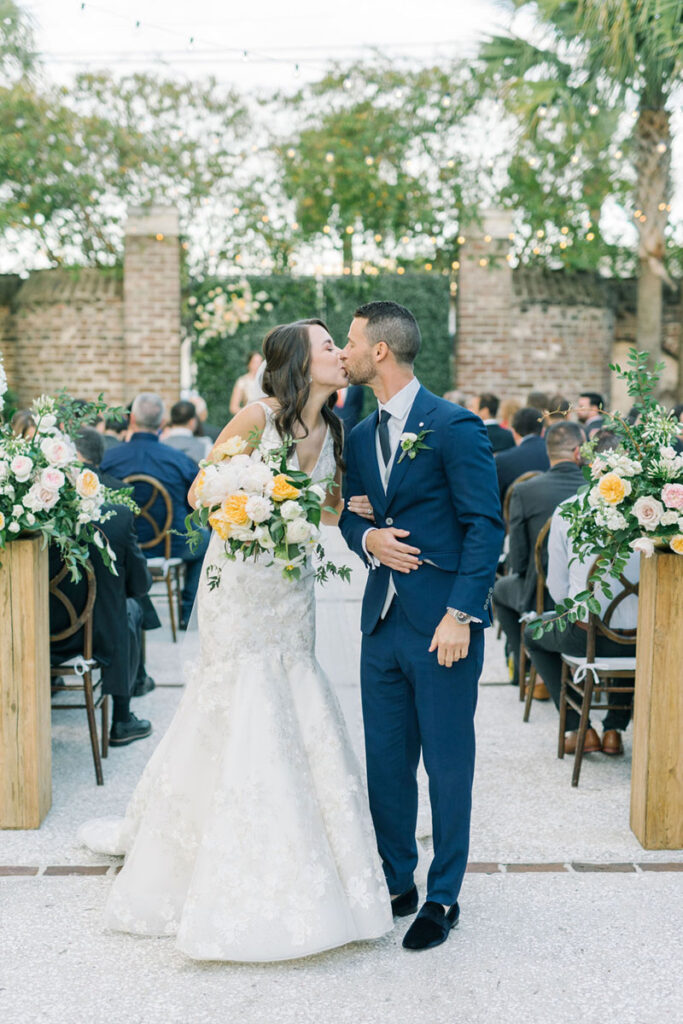
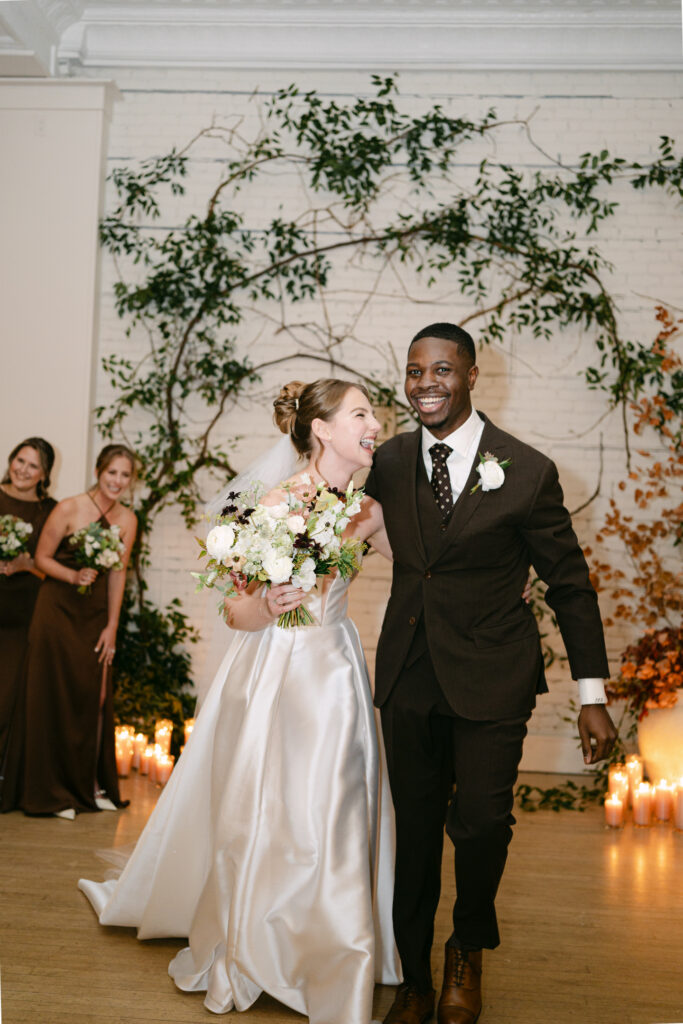
Bride and groom kissing after their outdoor ceremony at The Gadsden House

Structuring a Destination Wedding Weekend in Charleston

Thinking in terms of a weekend, not just a day

When guests travel for your wedding, the event naturally stretches beyond a single evening. The most successful destination weddings in Charleston work like a well-paced story: a clear beginning, middle, and end, with room for unscripted moments in between.

Common anchor points include:

  • A welcome gathering (rooftop drinks, an oyster roast, or a relaxed cocktail hour)
  • A rehearsal dinner or family-focused meal
  • The wedding day itself
  • A casual farewell brunch or drop-in coffee before departures

You can then layer in optional activities—beach afternoons, walking tours, boat outings—without making guests feel like they must attend everything to be “good” guests.

Sample downtown weekend rhythm

A downtown-centric weekend might unfold like this:

Day One (Friday)
Guests arrive midday and check into hotels in the historic district. After some time to settle in, you host a welcome reception at a courtyard wine bar or rooftop space—something light enough that guests can still head to dinner on their own if they like.

Day Two (Wedding Day)
Mornings are open for coffee, exploring the Market, or a carriage tour. The ceremony might be at a historic church or museum house garden, followed by a short walk to a reception venue nearby. Late-night, you may host an after-party at a bar within walking distance for those who want to keep going.

Day Three (Sunday)
A brunch at a favorite restaurant or hotel gives everyone a relaxed way to say goodbye before flights and drives home.

Sample coastal or island weekend rhythm

For an island or resort-based wedding, the timing often stretches slightly:

Day One (Thursday)
Guests arrive and check into the resort or nearby rentals. The evening might be something informal: a beach bar meet-up, pizza on a deck, or drinks around a fire pit.

Day Two (Friday)
During the day, guests can choose between the beach, pool, golf, or spa. The evening might be your rehearsal dinner or an oyster roast overlooking the water.

Day Three (Wedding Day)
Ceremony on a lawn or terrace with ocean or marsh views, cocktail hour outdoors, and then a reception in a tent or ballroom. Because everyone is staying on property or nearby, the walk or shuttle home is short.

Day Four (Sunday)
Brunch or a simple farewell coffee station, with the option of a harbor cruise or beach walk for those with later flights.

Curating local experiences without overscheduling

Charleston offers more activities than you could possibly fit into a single trip, which is part of its appeal. Rather than trying to host everything, you can:

  • Use your wedding website to suggest a few vetted walking tour companies, such as those listed by Explore Charleston
  • Offer a short list of favorite restaurants with notes on which require reservations and which are more spontaneous
  • Point guests toward harbor cruises, sailing charters, or plantation tours, with clear notes on cost, timing, and accessibility

Think of yourself more as a curator than a cruise director. Giving guests options and information allows them to choose their own pace.

Keeping an eye on guest energy and pacing

It’s tempting to fill every hour of a destination weekend, especially when you love the city and want to share it. The risk is that guests end up exhausted, with no time to simply wander or rest.

A few guiding principles help:

  • Limit yourself to one “must-attend” event per day, plus truly optional extras
  • Protect at least one open block of three to four hours where nothing is scheduled
  • Make it explicit on your website which events are hosted and which are informal or pay-your-own-way

When guests feel both welcomed and free to choose, they tend to arrive at your wedding day rested rather than overextended.

Guest Travel and Accommodation Planning

How most guests will get to Charleston

Most out-of-town guests will arrive via Charleston International Airport (CHS), which offers nonstop flights from a growing list of cities and easy connections through hubs like Atlanta and Charlotte.

For regional guests, driving is often straightforward. Approximate drive times include:

  • Atlanta to Charleston: around five to five and a half hours
  • Charlotte to Charleston: around three hours
  • Columbia to Charleston: roughly two hours
  • Savannah to Charleston: roughly two hours

Including this information on your wedding website helps guests quickly gauge whether a road trip or flight makes more sense for them.

Transportation in and around the city

Downtown Charleston is comfortably walkable; many guests will not need a car if your main events and hotels are on the peninsula. Rideshare apps operate there as well.

Once you move to plantations, islands, or more rural venues, distances increase and rideshare reliability drops. For those events, it’s worth planning:

  • Shuttle service from one or two central pickup points to your venue and back
  • Clear timelines and maps on your website and in welcome materials
  • A plan for late-night returns, when guests may be more tired than they expect

Downtown, parking garages are plentiful but not always right next to venues; valet services or simple parking maps can save your guests last-minute stress.

Choosing where guests will stay

Many couples take a layered approach to accommodations:

  • A primary “host hotel” where the couple and many guests stay
  • One or two additional hotel options at different price points nearby
  • A suggestion (not management) of vacation rentals in the area for families or groups

If your events are downtown, it generally makes sense to focus on hotels in the historic district. If you’re on an island or in a resort setting, aim for properties as close to the venue as possible to minimize bus time and car rentals.

When arranging room blocks, consider asking about:

  • Cut-off dates and any penalties if the minimum number of rooms isn’t booked
  • Perks like welcome bag distribution, late checkout for your wedding night, or a small hospitality space
  • Online booking codes or links that simplify the process for guests

Communicating logistics clearly

A clear wedding website is essential for a destination wedding in Charleston. Think of it less as a “nice to have” and more as your central information hub.

Helpful elements include:

  • Airport information, estimated travel times, and recommended arrival windows
  • Hotel block links, rates, and booking deadlines
  • Maps showing the relationship between the ceremony, reception, and lodging
  • Attire notes that consider cobblestones, lawns, and climate (“block heels or flats are best,” “light layers recommended,” etc.)

Some couples also provide a printable one-page weekend overview in welcome bags, which is especially appreciated by less tech-focused guests.

Accessibility in historic and coastal settings

Charleston’s charm sometimes comes with uneven bricks, narrow staircases, and older building layouts. If you have guests with mobility considerations or sensory needs, it’s worth asking venues detailed questions up front.

Consider clarifying:

  • Which spaces are fully wheelchair-accessible, including restrooms
  • Whether there are elevators or ramps for key transitions
  • How far guests will need to walk between ceremony, cocktail hour, and reception areas

For guests who may need extra support, small gestures—like reserved ceremony seating close to the aisle, access to a golf cart where allowed, or a designated point of contact on the planning team—can make the entire weekend feel more inclusive and manageable.

Designing a Historic, Coastal-Inspired Wedding Aesthetic

Borrowing from Charleston’s colors and textures

One of the real gifts of marrying in Charleston is that the city gives you a built-in palette. The harbor’s blue-gray, the soft greens of marsh grass, the sun-faded pastel facades, the patina of old brick and wrought iron—they’re all right there.

Many couples draw from:

  • Soft greens, oyster and sand neutrals, blues, and muted pastels
  • Textures like linen, seagrass, cane, rattan, and lightly distressed wood
  • Motifs inspired by ironwork, fanlights, or local flora translated into modern patterns

Instead of replicating Charleston literally (for example, printing Rainbow Row on every surface), you can let those elements inform quieter details: a stationery suite that echoes a balcony railing, custom drink stirrers shaped like palmetto fronds, or linens that feel like the inside of a seashell.

Balancing historic romance with a modern eye

The key to avoiding a “set piece” wedding is editing. You don’t need lace, silver candelabra, and patterned china in every direction just because you’re in a historic city. Often, the most elegant designs choose a few historically resonant details, then frame them with modern simplicity.

For instance, you might:

  • Use calligraphed place cards, but display them on a clean, sculptural escort display rather than a gilded frame
  • Pair a single vintage-inspired charger with simple glassware and flatware
  • Keep the palette restrained—one or two core colors with neutrals—to let architecture and florals breathe

Photography style plays into this as well. Editorial or documentary-focused photographers often lean into natural light, shadow, and architectural lines, which suits Charleston particularly well.
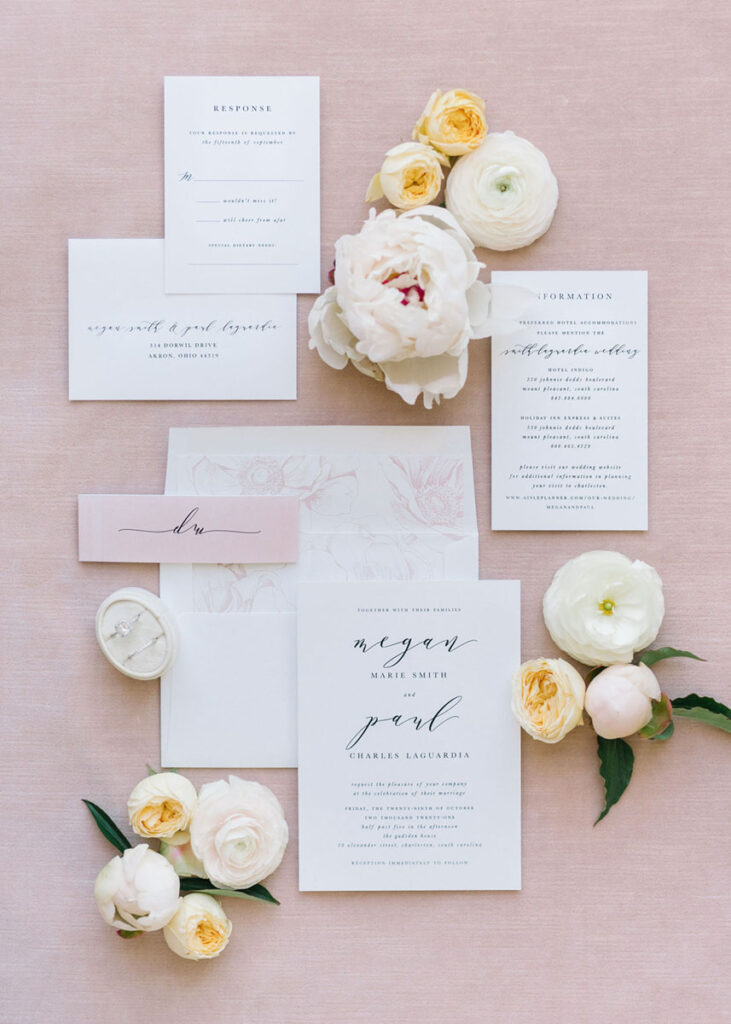
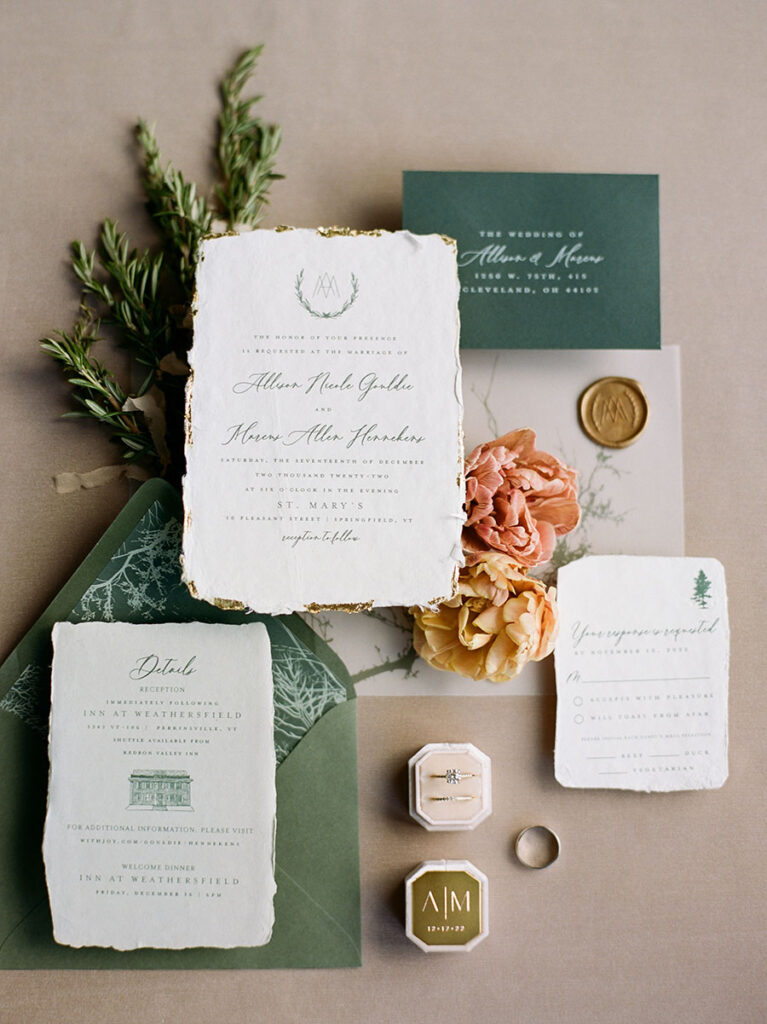
Blush wedding invitation suite with white and yellow flowers

Ceremony and reception spaces that work especially well here

Certain vignettes feel deeply “Charleston” without feeling cliché when done thoughtfully:

  • A ceremony under a live oak, with florals that trace the tree’s form rather than fighting it
  • Vows on a piazza or terrace, overlooking a garden or water view
  • Courtyard dinners with layered candlelight and delicate overhead lighting
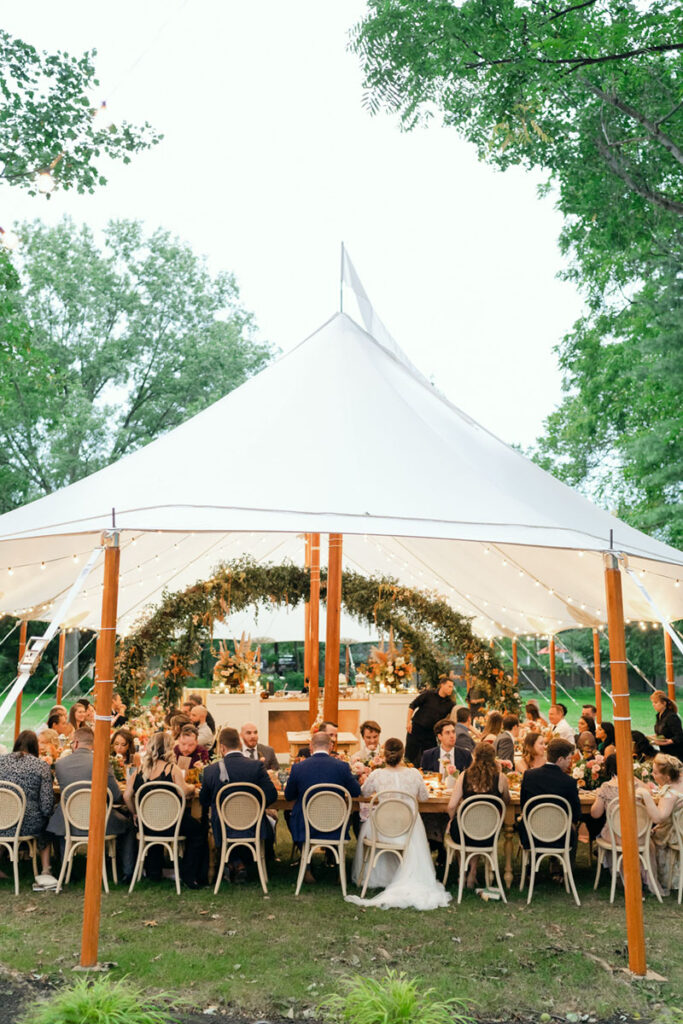
  • Tented receptions on lawns or by the water, with flooring, chandeliers, and draping that create an indoor-outdoor “room”

When working with a strong site—whether a museum house or a dock overlooking marsh—try to preserve key sightlines. You want guests to remember where they were, not just the inside of a tent.

Florals and botanicals that like Charleston’s climate

Charleston’s climate is kind to many flowers most of the year, but heat and humidity still influence what holds up outdoors. Florists who regularly work here know which blooms can handle ceremony arches in August and which should live indoors.

You may see:

  • Garden roses, ranunculus, lisianthus, and dahlias in cooler months
  • Zinnias, cosmos, textural greenery, and hardy blooms during warmer periods
  • Subtle references to local plants—magnolia leaves, palmetto-like fronds, or moss-inspired shapes—without using actual Spanish moss in ways that damage trees

For arrangements in direct sun, water sources, timing of installation, and flower selection all matter. It’s worth listening if your florist gently steers you away from a fragile flower wall in late summer.
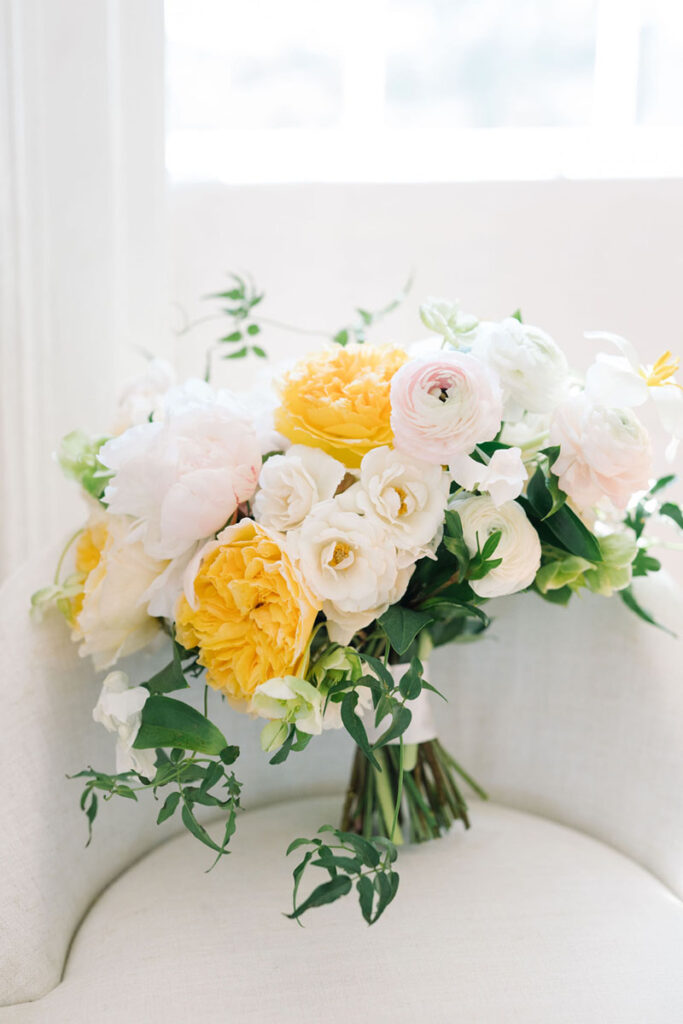
Yellow, blush, and white bridal bouquet with trailing greenery

Working with a design-forward planning team

Translating a collection of inspiration images into a coherent, site-specific design is part creative direction, part technical problem-solving. In a place like Charleston, where properties themselves carry such strong identities, that translation matters even more.

A planner and designer experienced with historic venues and tents will typically:

  • Map out how guests will physically move through spaces—where they pause, what they see, and in what order
  • Recommend materials and installations that perform well in humidity and wind
  • Help you weave your story—how you met, where you live now, what you love—into paper goods, bar details, and small design choices without overwhelming the setting

Firms like Shi Shi Events, which often work in historic and private estate environments around the country, tend to approach design as a conversation between the couple and the venue. In Charleston, that mindset is particularly valuable; the city is already speaking. You’re deciding how to answer.

Food, Beverage, and Southern Hospitality

Incorporating Lowcountry cuisine without making it a theme

Charleston’s food scene is one of the reasons many guests are excited to attend weddings here. That doesn’t mean you must serve a fully traditional Southern menu, but including a few grounded, local touches can add real depth.

Typical Lowcountry flavors include:

  • Shrimp and grits (with endless possibilities for preparation)
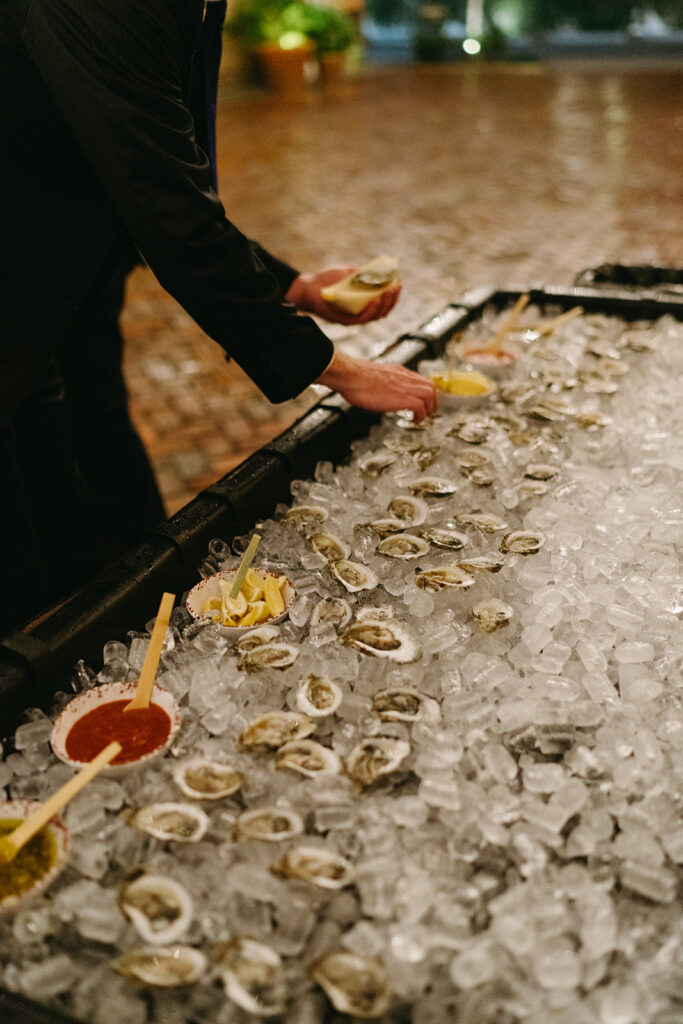
  • Oysters—raw, roasted, stewed, or fried
  • She-crab soup, a Charleston classic
  • Local fish and crab dishes, often seasonal
  • Biscuits, cornbread, and sides built around okra or field peas

You might treat these as accents rather than the entire meal: shrimp and grits as a passed small plate at cocktail hour, oysters at a raw bar, or a refined, smaller portion of a traditional dish in a plated course. Talk with your caterer about balancing richness with lighter, fresher elements so the meal feels satisfying but not heavy in the Charleston climate.

Service styles that fit Charleston venues

The shape of your venue often influences how you’ll serve dinner:

  • Plated dinners work especially well in structured tents, ballrooms, and museum spaces where a more formal cadence suits the room
  • Stations or family-style service can be wonderful for relaxed, social receptions, but they require wider aisles and thoughtful layout to prevent bottlenecks, especially in courtyards or multi-room venues

Late-night snacks are a natural place to play: small fried chicken sliders, mini biscuits, or a modern take on a classic Charleston dessert can delight guests just when they need a bit of fuel for the dance floor.

Bar programs with a sense of place

A coastal wedding invites drinks that feel bright, refreshing, and occasionally a bit nostalgic. Many couples choose a small set of signature cocktails, perhaps drawing on local spirits or seasonal produce.

Popular directions include:

  • Gin or vodka cocktails with citrus, herbs, and light tonics
  • Bourbon or rye drinks with peach, mint, or spice elements
  • Thoughtful mocktails that mirror flavor profiles for guests who prefer not to drink

If you’re interested in highlighting local producers, ask your caterer or bar provider about regional distilleries and breweries they already work with. Subtle signage that notes “featuring a Charleston-made gin” or “brewed locally” adds a sense of place without reading like an advertisement.

Signature cocktails with mint served at a Charleston wedding

Small acts of hospitality guests really remember

In a warm, coastal climate, comfort-focused details quickly become expressions of care rather than just aesthetic choices. Guests tend to remember:

  • Welcome bags with water, a simple map, a few local snacks, and practical items like sunscreen or bug wipes
  • Fans, parasols, or chilled towels at summer ceremonies
  • Throws or pashminas available on the backs of chairs during cooler months

Combined with clear signage, smooth transitions between spaces, and staff who anticipate rather than react, these details contribute to a feeling that guests are being genuinely looked after.

Limoncello wedding favors displayed for guests at a Charleston wedding

Working with Local and Destination Vendors

Choosing which vendors to source locally vs. bring with you

Many destination couples end up with a hybrid vendor team: some professionals based in Charleston, others traveling from the couple’s home city or elsewhere. The mix depends on relationships, budget, and comfort levels.

Categories that often benefit from local expertise include:

  • Caterers who know local health codes, supplier networks, and venue kitchens
  • Tent and rental companies experienced with Charleston’s soil, wind patterns, and specific venues
  • Transportation providers familiar with plantation roadways, downtown loading zones, and late-night logistics

Couples more frequently choose to bring in:

  • Planners and designers they’ve already developed trust and rapport with
  • Photographers and videographers whose style they deeply connect with
  • Hair and makeup teams attuned to their hair texture, skin tone, or specific preferences

There’s no single correct configuration; it’s about creating a team that communicates well and understands both your priorities and the realities of the city.

Vendor roles that are especially critical in Charleston

While every vendor matters, in a historic and coastal environment like Charleston some roles take on an outsized impact:

  • Tent and rental specialists who know how to manage anchoring on uneven ground, protect floors from moisture, and work within venue-specific rules
  • Florists experienced in building installations that withstand humidity, heat, and occasional gusts of wind
  • Production and entertainment teams familiar with local noise ordinances, power availability, and what’s feasible in older buildings

When interviewing vendors, asking about their experience at your specific venue (or similar ones) can provide more helpful information than generic portfolios alone.

Site visits and remote planning tools

Not every couple can visit Charleston multiple times before the wedding. If you can make one early trip for venue tours and food tastings, it often pays off. If not, it’s entirely possible to plan remotely with the right structure.

Useful tools and habits include:

  • Virtual walkthroughs of venues via video call, ideally at roughly the same time of day as your event
  • Scaled digital floor plans to experiment with table layouts, stages, bars, and lounge areas
  • Shared documents or project management tools to keep track of decisions, deadlines, and notes across time zones

Planners experienced with destination work, including teams like Shi Shi Events, often function as your on-the-ground eyes and ears: attending walkthroughs in person when you cannot, asking technical questions, and translating photographs into realistic guest experiences.

Coordinating communication across a dispersed team

As the number of vendors and spaces increases, clear communication becomes less about courtesy and more about safety and sanity. A central point of coordination—usually your planner—helps keep everyone working from the same assumptions.

Behind the scenes, that typically means:

  • One master timeline shared with all vendors, including load-in, sound checks, and shuttle departures
  • Contact lists with cell numbers for key team members and venue staff
  • Written confirmations of any special rules or constraints, from candle policies to dock weight limits

The smoother this coordination is in advance, the freer you and your families are to actually experience the wedding as guests of your own event.

Weather, Backup Plans, and Coastal Risk Management

Heat, humidity, and pop-up storms

Charleston’s weather can be dramatically beautiful—sunlight slanting through moss, thunderclouds building over the harbor—and occasionally dramatic in less convenient ways. Planning around the climate is not pessimistic; it’s an act of care.

For heat and humidity, consider:

  • Scheduling outdoor ceremonies and photos for earlier or later in the day rather than high noon
  • Providing shade, fans, or parasols where guests will be seated for more than a few minutes
  • Choosing breathable fabrics and hairstyles that can flex rather than collapse in humidity

For pop-up showers, having umbrellas, covered transition spaces, and an agreed-upon “weather call” time (for moving events under a tent, for example) helps everyone respond calmly rather than scramble.

Tent strategy: much more than “rain insurance”

Tents in Charleston are rarely just a backup; they’re often central to the design. They provide shade, structure for lighting and decor, and a sense of intimacy in wide-open spaces.

You’ll typically work with a “Plan A / Plan B” framework:

  • Plan A might involve open-sided tents, partial covers, or uncovered cocktail areas with a tented dinner
  • Plan B might add sidewalls, additional flooring, heaters or fans, and coverage for cocktail hour if rain or wind is likely

Flooring becomes especially important on lawns, marsh-adjacent sites, or during wetter seasons. It’s not just a comfort issue; it’s a safety one, reducing slips and sparing guests from sinking into soft ground.

Hurricane season, contracts, and insurance

The phrase “hurricane season” can sound alarming, but in practical terms it means “pay attention to risk and language.” For weddings between June and November, it’s worth:

  • Reviewing force majeure clauses in venue and vendor contracts: what counts as an event that allows rescheduling?
  • Clarifying whether deposits can be transferred to a new date if a storm or mandatory evacuation occurs
  • Exploring event insurance that specifically addresses weather-related disruptions and travel issues

Not every policy covers the same events; reading the fine print or consulting with a knowledgeable insurance agent can help you choose coverage that actually aligns with your situation.

Reassuring guests while staying realistic

You don’t need to share every contingency detail with guests. In fact, doing so can create more anxiety than comfort. It’s usually enough to:

  • Note on your website that events will proceed rain or shine, with covered and climate-considered areas
  • Share any last-minute changes through a clear channel (group text, email, or planner contact)
  • Offer simple attire guidance that works across a range of weather conditions

When guests can sense that you and your team have thought ahead, they’re more likely to relax and enjoy themselves regardless of what the forecast does.

A Practical Planning Timeline for a Charleston Destination Wedding

Twelve to eighteen months out

For popular dates and venues, starting early helps. In this window, most couples:

  • Clarify their overall budget range, estimated guest count, and top priorities
  • Choose one or two preferred seasons that align with their schedules and weather preferences
  • Secure a planner, if working with one, so they can guide venue selection and high-level strategy
  • Tour (virtually or in person) and book their ceremony and reception venues

Nine to twelve months out

Once the foundation is set, attention typically shifts to key creative partners and guest logistics:

  • Booking caterers (if not in-house), photographers, videographers, entertainment, and florists
  • Reserving necessary tents and large rental elements
  • Setting up hotel room blocks and confirming terms
  • Launching a basic wedding website with date, location, and travel information

Six to nine months out

This period often holds the heart of design and guest experience planning:

  • Developing a cohesive design plan, including color palette, florals, and decor
  • Beginning menu conversations, especially if incorporating local cuisine
  • Planning a scouting trip or engagement session in Charleston, if feasible

Three to six months out

The big pieces are in place; now it’s about refinement:

  • Finalizing invitation design, paper goods, and any custom signage
  • Confirming ceremony structure with your officiant, including readings and timing
  • Booking shuttles or car services and sketching out transportation timelines
  • Securing venues or locations for welcome events and farewell gatherings
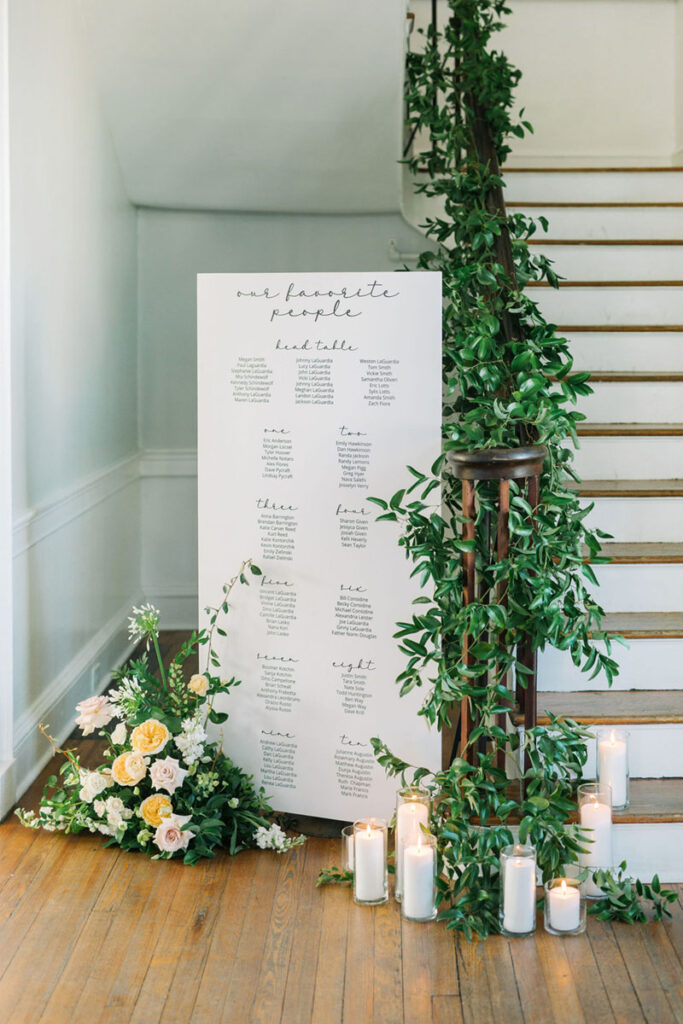
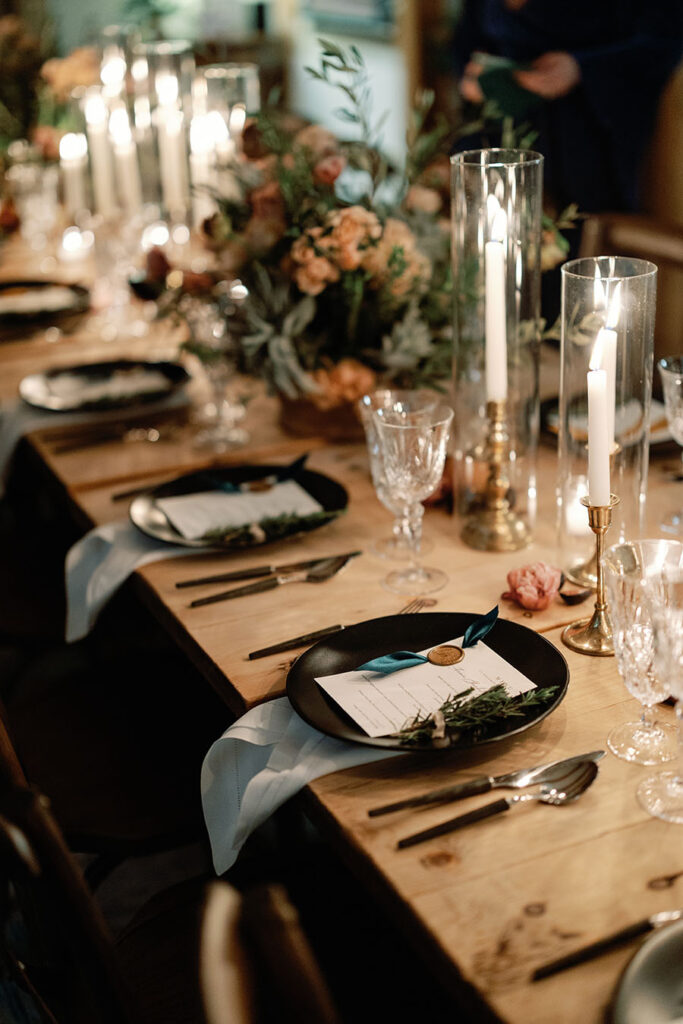
Wedding escort display with flowers, greenery, and candlelight

One to three months out

With the wedding approaching, details crystallize:

  • Holding a final walkthrough (in person or virtual) with your planner and venues
  • Confirming floor plans, seating, and final rental orders
  • Approving floral and design mockups, if applicable
  • Beginning to casually monitor weather patterns, especially in hurricane season

The final weeks and wedding week

This is where planning shifts from decisions to communication and execution:

  • Sharing final timelines with vendors, wedding party, and family members who have roles
  • Organizing and distributing welcome bags to hotels, if you’re providing them
  • Confirming arrival times, contact details, and any last-minute adjustments with your planner
  • Intentionally handing off as many logistics as possible so you can be present in the city you chose

Common Pitfalls When Planning a Charleston Destination Wedding

Even well-organized couples can run into avoidable stress points. Being aware of them early makes it easier to sidestep them.

Underestimating the climate. Planning an unshaded outdoor ceremony mid-afternoon in July or skipping tents in October because the forecast “looks fine so far” can lead to discomfort. Building your timeline and spaces around realistic weather is not a compromise; it’s part of caring for your guests.

Falling in love with a venue before you know your guest count and budget. It’s easy to emotionally commit to a property that comfortably fits 90 people when your final list will be closer to 160, or that requires infrastructure that stretches the budget more than you realize at first.

Overprogramming the weekend. Three hosted events per day can sound generous but often leave guests exhausted and less present during the moments that matter most. Leaving space for people to explore and rest usually results in a better overall experience.

Assuming transportation will “figure itself out.” Especially for plantations and islands, rideshares are not a dependable plan at scale. Coordinated shuttles and clear instructions are worth the investment.

Ignoring local rules until late in the process. Historic properties and coastal areas often have specific regulations on sound, flames, installations, and timing. Discovering these after you’ve designed an elaborate plan is frustrating. Asking early is much easier.

Taking on a complex tented estate wedding without professional support. When you’re effectively building a temporary venue, the number of moving parts increases sharply. An experienced planner can anticipate issues that are simply not visible from a Pinterest board.

Is Charleston the Right Destination for Your Wedding?

Questions to help you decide

Before you commit to Charleston, it can be helpful to check in with your own priorities:

  • Does history and architecture feel central to how you imagine your wedding, or would any pretty scenery do?
  • How important is it to be near the water—do you want beach time, river views, or simply the idea of a coastal city?
  • Are you comfortable planning from a distance, with the help of a planner or a structured approach to remote decisions?
  • Does your budget align with a high-demand destination market, especially if you’re drawn to historic venues or tented estates?

When Charleston tends to be a great fit

In practice, Charleston works especially well for couples who:

  • Envision an intimate or mid-sized celebration with a strong sense of place
  • Value the idea of a full weekend with welcome events, dinners, and time for guests to explore
  • Are drawn to boutique hotels, historic homes, or tented riverfront settings rather than very large ballrooms

If your top priority is hosting several hundred guests at the lowest possible per-person cost, another location might serve that goal more directly. Charleston shines when you allow its scale and character to shape your plans rather than trying to bend it to an entirely different model.

Moving forward if you’re leaning toward Charleston

If you feel that particular pull toward cobblestones and marsh light, a simple sequence can help you move from “maybe” to tangible plans:

  • Choose your top one or two seasons and a rough guest count range
  • Decide whether you’re most drawn to historic downtown, islands and beaches, or riverfront/estate settings—or a blend
  • Reach out to a small set of venues or a planner for availability, capacity, and baseline pricing

With those answers, you’ll be in a position to commit to Charleston with eyes open, or to realize that another destination fits your priorities better.

Crafting a Place-Driven Wedding Experience in Charleston

A wedding in Charleston offers more than beautiful photographs. It offers a chance to gather your people in a city where history, water, and hospitality intersect in everyday life. When you align your plans with that reality—choosing season and setting thoughtfully, respecting the climate, caring for guest logistics, and letting the city’s character influence your design—you end up with a celebration that feels anchored rather than generic.

The details your guests remember often aren’t the ones that cost the most. It’s the way the air felt under the live oaks during your vows. The ease of walking back to their hotel past lit windows and quiet courtyards. The oyster they tried for the first time. The feeling that the weekend was both carefully considered and still somehow relaxed.

Teams who spend a lot of time in historic and coastal settings, such as Shi Shi Events, are often drawn to Charleston because it rewards that kind of thoughtfulness. A plan that honors both the city and your story—rather than using Charleston as simply a backdrop—tends to age well in photographs and in memory.

However you decide to approach it, give yourselves permission to enjoy the process. Wander the streets or beaches on a scouting trip, pause in front of a house whose color you love, taste menus, listen to the way the city sounds at sunset. Those quiet moments often become the reference points you return to as you shape a weekend where your history meets Charleston’s, even if only for a few days.
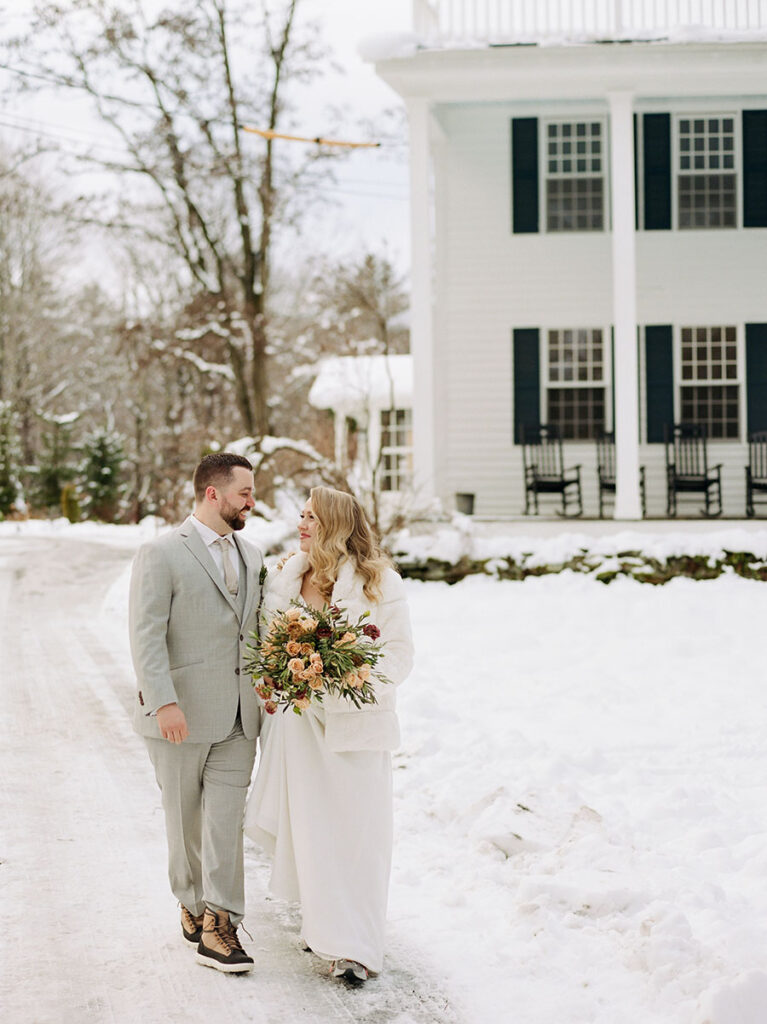
Vermont Wedding Planner Guide: How to Plan a Romantic New England Destination Wedding in the Green Mountain State

Vermont has a way of slowing everything down in the best possible way. Roads narrow into winding lanes shaded by maple trees, village greens appear around unexpected bends, and mountains seem to rise up just when you start to exhale. For couples dreaming of a romantic New England destination wedding, the Green Mountain State offers a kind of quiet magic that’s hard to replicate elsewhere.

Part of Vermont’s appeal is its range. You can host a black-tie weekend at a historic inn, a laid-back lakeside gathering, a luxe tented reception on a private meadow, or a snow-dusted celebration in a ski village. Each season feels distinct, each region has its own character, and the scale of the state keeps things intimate and personal.

Planning that experience from afar, though, comes with moving parts: seasonal weather, rural logistics, vendor availability, and guest travel. This guide is designed to walk you through those details. Whether you’re planning from another state or another country, you’ll find practical, real-world insight to help you navigate Vermont’s regions, seasons, venues, and vendors with confidence.

Throughout, you’ll also see where an experienced destination wedding planner can help—especially if you’re envisioning a tented celebration, boutique hotel buyout, or private estate event. The goal is not to sell you on anything, but to give you a clear sense of what’s possible and what to expect as you bring your Vermont wedding vision to life.

Why Vermont Works So Well For A Romantic New England Wedding

Vermont is often described as “quintessential New England,” but that undersells it a bit. Yes, you’ll find white-steepled churches, historic town centers, and covered bridges. You’ll also find a rich farm-to-table culture, a deep respect for craftsmanship, and a landscape that feels both dramatic and welcoming.

The four-season romance of the Green Mountain State

One of Vermont’s biggest strengths as a destination wedding location is how different it feels at various times of year. The same mountain vista can read as soft and hazy in June, blazing in October, or quietly cinematic in February. That matters for photography, guest comfort, and overall atmosphere.

Summer brings lush hillsides, warm evenings, and long golden hours—ideal for tented weddings, lakeside ceremonies, and al fresco cocktails. Temperatures are typically comfortable rather than sweltering, especially in the mountains. You do want to be prepared for humidity and the occasional afternoon thunderstorm, but the trade-off is those glowing, late sunsets.

Fall needs little introduction. Peak foliage usually arrives between late September and mid-October, depending on elevation and region. Think saturated reds, golds, and oranges, crisp air, and that sense of cozy abundance that makes candlelit receptions feel particularly inviting. In many ways, fall is Vermont at its most iconic—and also its most in-demand.

Winter transforms Vermont into a snow globe. Ski resort towns bustle with activity, fireplaces crackle in inns and lodges, and twinkling lights against the snow create a romantic, almost cinematic backdrop. If you like the idea of a smaller, more intimate guest list and you’re comfortable embracing the season, winter can work in your favor. It’s also a natural fit if many of your guests ski or snowboard.

Spring is underrated. Once “mud season” passes, fields and hillsides wake up with fresh greens, budding trees, and early blooms. Days can feel bright and hopeful, with soft light and cooler temperatures. For couples seeking shoulder-season pricing and a more delicate color palette, late spring can be a beautiful choice—as long as you’re realistic about rain and build in a thoughtful backup plan for outdoor elements.

What sets Vermont apart from other New England wedding destinations

Compared with more densely populated New England coastal areas, Vermont has a slower, more intimate feel. That affects everything from traffic to noise ordinances to how long it actually takes to get from a rental warehouse to a mountain venue. There’s room to breathe here, and that sense of space tends to shape the pace of the weekend.

There’s also a distinct farm-to-table and maker culture. Many venues have direct relationships with local farms, and it’s common to see menus built almost entirely from regional ingredients. Local creameries, breweries, cideries, and distilleries give you plenty of options for featuring Vermont-made food and drink at cocktail hour and dinner. If you love the idea of menus that shift with the seasons, you’re in the right place.

Finally, the landscapes themselves are remarkably varied within a small footprint: mountains, rolling farmland, deep forests, crystal-clear lakes, and those iconic covered bridges. Instead of choosing between “mountain” or “water” or “village,” you can often have some combination of all three within a short drive. That variety is a gift when you’re thinking about portraits, guest excursions, or a multi-day itinerary.

Who this guide is for

This guide is especially helpful if you are:

Planning from out of state (or abroad). Most couples marrying in Vermont are hosting some or all guests from elsewhere in the U.S. or beyond. Coordinating travel, lodging, and weekend events from a distance takes some strategy, particularly when local knowledge—like how long it actually takes to drive from Burlington to Stowe on a foliage weekend—makes a difference.

Imagining a boutique, detail-driven wedding. If you’re drawn to historic inns, intimate resorts, refined barns, or design-forward tented celebrations, Vermont’s scale and culture support those more curated experiences. You can lean into a sense of “we’re all away together” rather than a single-day event.

Considering a tent or private estate. These settings can be extraordinary—and logistically complex. An experienced destination wedding planner, such as Shi Shi Events, can help with infrastructure, vendor sourcing, and the hundreds of behind-the-scenes decisions that create a seamless guest experience in rural settings.

Understanding Vermont’s Wedding Regions

It helps to think of Vermont in three broad wedding regions: north, central, and south. Each has its own strengths, travel considerations, and venue styles. Within those, individual towns take on distinct personalities, so you’re really choosing a “little world” for your guests to inhabit for the weekend.

Northern Vermont and the Burlington area

Burlington is Vermont’s largest city and home to the University of Vermont. It sits on the shores of Lake Champlain, looking west toward the Adirondack Mountains in New York. The result: sunsets that guests will talk about long after the wedding.

In and around Burlington, you’ll find:

Lake Champlain views. Waterfront hotels, marinas, and nearby inns can give you direct access to the lake. Some couples incorporate boat rides, dockside ceremonies, or lakeside welcome events. The light on the water in late afternoon is especially beautiful for photos.

Urban conveniences with small-city charm. Burlington’s Church Street Marketplace is lined with shops, cafés, and restaurants, creating plenty of options for guest downtime and informal meetups. Nearby towns like Shelburne, Charlotte, and Essex offer a more rural feel within an easy drive—so you can pair a countryside venue with an urban-adjacent lodging hub.

Accessibility. Burlington International Airport (BTV) has direct flights from several major cities and is only a short drive from downtown. This makes northern Vermont particularly appealing for destination weddings where many guests will fly in. For updated flight routes and airport details, the Burlington International Airport website is a useful resource.

Because Burlington is a university and tourism center, it’s wise to keep an eye on college move-in weekends, graduations, and major festivals when selecting dates; these can impact hotel availability and rates.

Central Vermont: Stowe, Waitsfield, and the Mad River Valley

If you imagine the “postcard” version of Vermont—towering green mountains, covered bridges, and small ski towns—central Vermont is probably what you’re picturing. Stowe, Waitsfield, Warren, and the Mad River Valley have become beloved wedding destinations for good reason.

Here you’ll find:

Mountain views and ski culture. Ski resorts operate year-round, offering wedding venues with chairlift access, mountaintop ceremony sites, and extensive guest amenities. In summer and fall, trails become hiking and biking routes; in winter, you have skiing, snowboarding, and après-ski built into the weekend. This makes central Vermont an easy “wedding plus vacation” choice for many guests.

Storybook villages. Town centers in places like Stowe combine historic charm with modern amenities—artisan shops, farm-to-table restaurants, breweries, and galleries. Guests can wander, grab coffee, or explore on their own between events without feeling lost or overwhelmed.

A wide range of venues. From classic inns and upscale lodges to barn venues and private estates, central Vermont offers a strong mix for couples wanting both dramatic scenery and solid infrastructure. It’s an especially good fit for couples interested in tented receptions with nearby lodging.

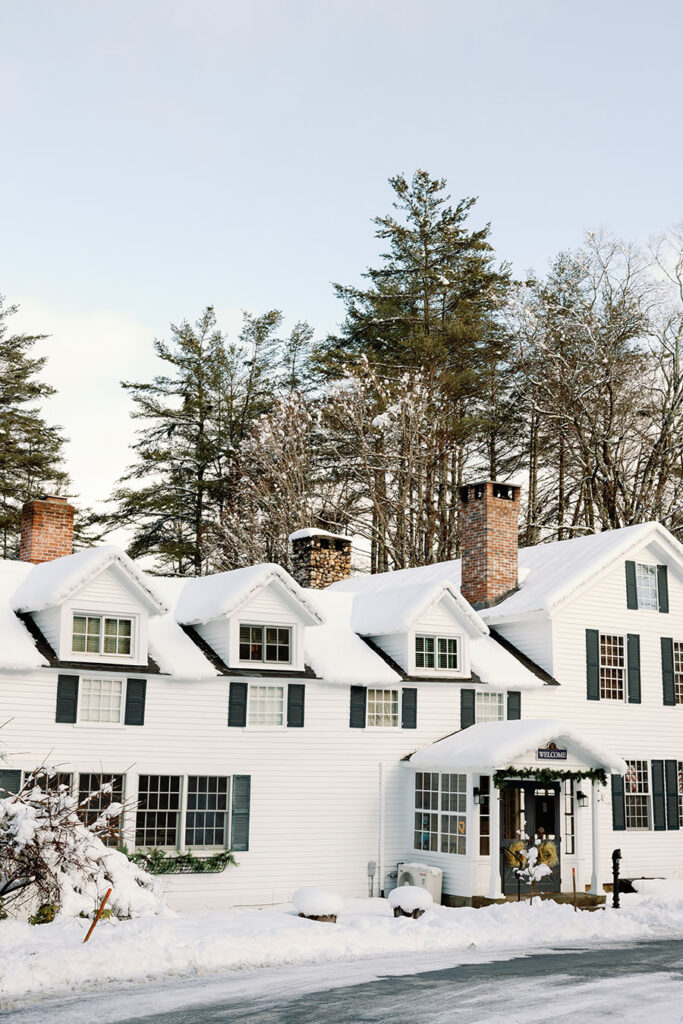
Snow-covered New England inn surrounded by evergreen trees in Vermont

Southern Vermont: Manchester, Woodstock, Brattleboro, and beyond

Southern Vermont tends to feel slightly more accessible to guests driving from New York City, Boston, or the Mid-Atlantic. Towns like Manchester, Woodstock, and Brattleboro combine historic architecture with a relaxed, upscale country feel.

Expect:

Historic inns and estates. Many properties date back to the 18th and 19th centuries, with beautifully preserved architecture and manicured grounds. Full-property buyouts are common, which works well for weekend-long gatherings where you’d like everyone under one or two roofs.

Village greens and classic New England streetscapes. Southern Vermont villages photograph beautifully, and they give guests a defined place to wander between events—often with independent bookstores, small museums, and cafés within a few blocks.

Ease of driving access. From New York City, southern Vermont can be reached in roughly three to four hours by car, depending on your exact destination. From Boston, many areas are two and a half to three and a half hours away. Albany and Hartford are also within comfortable driving distance, which can simplify travel planning for guests coming from multiple directions.

Woodstock in particular is worth mentioning on its own. With its iconic covered bridge, central green, and well-preserved architecture, it often feels like a movie set—in the best way. For couples who want “quintessential New England” in a walkable footprint, it’s hard to beat.

How to choose your Vermont wedding region

When deciding where to focus your venue search, a few questions are especially helpful:

How will most guests travel? Are they likely to fly, drive, or do a combination? Flying guests may appreciate proximity to Burlington or larger regional airports such as Boston (BOS), Albany (ALB), or Hartford–Bradley (BDL) with a reasonable drive to the venue. Driving guests from major cities might lean toward southern Vermont for shorter travel times.

What kind of setting feels most like you? If you want a waterfront ceremony, northern Vermont and Lake Champlain can be especially compelling. If you want a ski resort or alpine feel, central and northern mountain towns are strong choices. For historic inns and quintessential New England villages, southern Vermont offers a deep bench.

How self-contained do you want the weekend to feel? A resort or inn that can host multiple events on site creates a compact, retreat-like experience. A private estate paired with lodging in a nearby town leads to a more “choose your own adventure” feel for guests during downtime.

Ultimately, the region you choose will shape your guests’ experience: the drives they take, the views they see, and the way the whole weekend feels. It will also influence logistics like vendor travel fees and access to rentals—factors a destination planner can help you evaluate early on.

Timing Your Vermont Wedding: Seasons, Weather, and Lead Times

Because Vermont is so seasonal, the timing of your wedding will affect nearly everything: your design, your budget, your guest count, and your logistics. Each season has trade-offs. The goal is to choose the one that best matches your priorities—and then plan with its realities in mind rather than fighting against them.

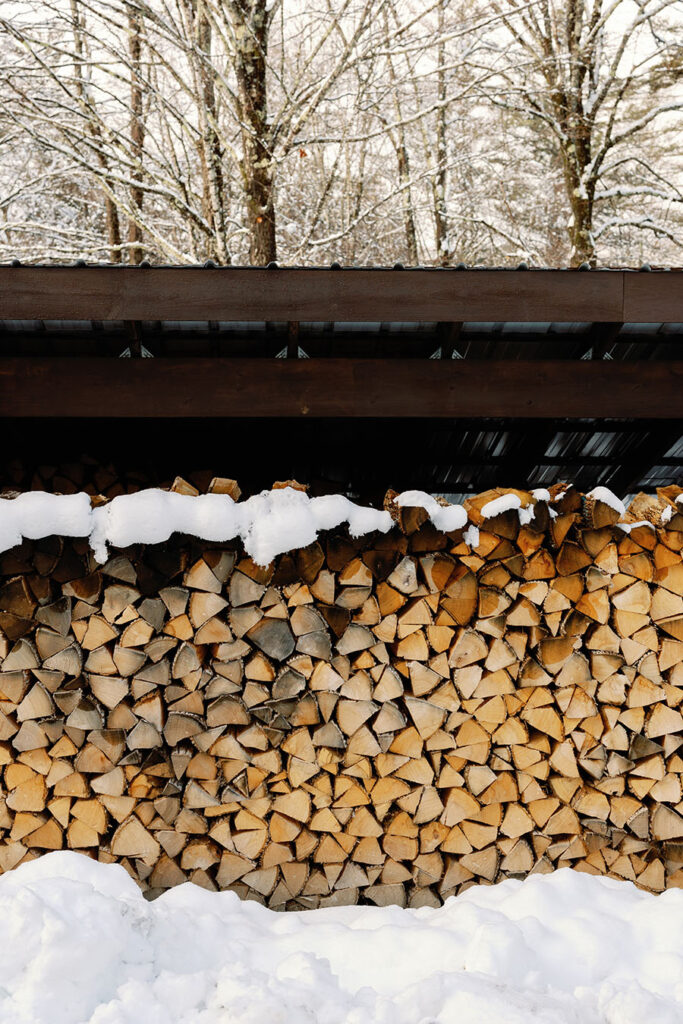
Stacked firewood covered in snow at a Vermont winter wedding venue

Vermont wedding seasons at a glance

Spring (April–early June). Spring in Vermont can be beautiful, but it is also transitional. “Mud season” usually happens in late March and April, especially in rural and mountainous areas, as snow melts and dirt roads soften. By May and early June, hillsides turn a vivid green and early flowers start to appear.

Pros include fresh, soft color palettes, cooler temperatures, and often more flexibility on pricing and availability than peak summer and foliage seasons. The trade-offs are less predictable weather and the possibility of rain and lingering mud, especially if you’re planning an outdoor or tented celebration on grass fields. Thorough flooring and walkways become more important.

Summer (mid-June–August). Summer is ideal for couples who want to use the outdoors as much as possible. Long days mean extended golden hour, late sunsets, and plenty of time for photos. Outdoor ceremonies, cocktail hours, and open-sided tents shine this time of year.

However, summer is also peak tourist season in many Vermont destinations. Popular resort towns and lakeside areas can book out early, and hotel rates may be higher. You’ll want to plan ahead for room blocks and transportation if your date overlaps with school vacations, music festivals, or major local events.

Fall foliage (September–mid-October). Fall in Vermont is famous for a reason. Temperatures are usually comfortable during the day with cooler evenings—ideal for layered attire, candlelight, and rich color palettes. Peak foliage is a moving target influenced by weather patterns and elevation, but early October is often a safe bet for strong color in many regions. The Vermont foliage reports from the state’s Department of Forests, Parks & Recreation can be a helpful reference as you get closer.

Because this period is in such high demand, venues and accommodations often carry premium pricing and may require longer minimum stays. Availability can be tight, especially on weekends. Expect more traffic on scenic routes and in popular towns; this matters for guest transportation and travel times between ceremony and reception locations.

Winter (late November–March). Winter weddings in Vermont tend to be smaller, cozier, and more intimate. Resorts often offer lower food and beverage minimums in certain winter windows (outside of peak holiday and long-weekend periods), and you can build festivities around skiing, snowboarding, snowshoeing, or simply watching the snow fall from a fireside lounge.

On the other hand, winter introduces the possibility of snow and ice affecting travel. Flight delays and difficult driving conditions are not uncommon. Daylight hours are shorter, which means earlier ceremonies if you want natural light for portraits. With the right planning and communication, though, winter can feel unforgettable rather than stressful.

How far in advance to book

Popular weekends in Vermont, especially in foliage season and mid-summer, typically book out 12–18 months in advance. Highly sought-after venues, photographers, and planners may fill their calendars even earlier for peak dates.

As you set your timeline, consider:

Foliage season demand. If your heart is set on early October in a well-known destination like Stowe or Woodstock, aim to secure your venue and planner as early as you reasonably can. A range of 14–18 months isn’t unrealistic, especially if you have specific properties in mind.

Holiday weekends and local events. Long weekends (Memorial Day, Labor Day, Indigenous Peoples’ Day, Presidents’ Day for winter) can work well for travel but also attract higher lodging rates and more visitors. Major local festivals, marathons, and college events can also impact availability. The Vermont Vacation events calendar is helpful for scanning what’s happening around your ideal date.

Weather backup plans that actually work

Regardless of season, Vermont weather can shift quickly. The most realistic approach is to assume you’ll need a backup plan and design it as thoughtfully as your “perfect weather” plan.

Look for built-in flexibility. When evaluating venues, ask specifically about indoor ceremony and cocktail hour spaces, their capacities, and how they are set up. Walk through what would happen if rain (or snow) started an hour before the ceremony. If you’re using a tent, think through the ceremony, cocktail, and reception flow if everything has to move under cover.

Invest in tent enhancements when they matter. For shoulder seasons and unpredictable weather, heaters, tent sidewalls, covered walkways, and solid flooring can make a dramatic difference in comfort and safety. In hot summer weather, fans or tent air-conditioning, plus shaded pre-ceremony areas, keep guests comfortable without much visual impact on your design.

Over-communicate with guests. Your wedding website and pre-wedding emails can set expectations: footwear suggestions, layers for temperature swings, and any possible changes in ceremony location if the forecast looks uncertain. Vermont guests will bring a sense of adventure, but they’ll appreciate knowing what to pack and what kind of terrain they’ll be navigating.

Legal Details: Making Your Vermont Marriage Official

The legal side of getting married in Vermont is relatively straightforward, especially for out-of-state couples. Even so, it’s one of those areas you don’t want to overlook in the rush of design decisions and vendor calls.

Vermont marriage license basics

Vermont does not have a residency requirement for marriage licenses. You can apply whether you live in the state or not, which makes it particularly friendly for destination weddings.

Where to apply. Couples can apply for a marriage license at any Vermont town or city clerk’s office. If you live in Vermont, you’ll apply in the town where you or your partner reside. If you are coming from out of state, you may apply in any town or city you choose. Many couples apply in the town where their venue is located for convenience and to minimize extra driving after arrival.

What you’ll need. Requirements can shift slightly by town, but generally you’ll bring government-issued photo identification and basic personal information. Some clerk offices may ask for a certified copy of a divorce decree if applicable. It’s wise to confirm current requirements directly with the specific town clerk’s office where you plan to apply; most have updated details on their municipal websites.

Waiting period and expiration. Vermont does not have a waiting period; you may marry as soon as the license is issued. The license is valid for 60 days from the date of issuance, which gives you a generous window around your wedding date, especially if you’re planning a longer stay.

For up-to-date details, refer to the State of Vermont’s marriage information page on the Vermont Department of Health website.

Officiants and ceremony requirements

In Vermont, your ceremony can be performed by:

Ordained ministers and clergy of any religious denomination.

Judges, justices, and certain public officials as designated by state law.

Friends or family members who become ordained through a recognized religious or spiritual organization (including many online ministries). Vermont also offers a one-time temporary officiant status through probate court in some circumstances; check the relevant county’s process if that interests you.

Your officiant is responsible for completing and returning the signed license to the issuing clerk’s office after the ceremony so that your marriage is legally recorded. It’s a small but crucial step to assign clearly and confirm on the day.

Folding legal logistics into your planning

From a planning standpoint, treat the license like a key timeline task rather than a last-minute errand.

Schedule time on your arrival day (or a day or two before, if you’re staying longer) to visit the town clerk’s office during business hours. If you are arriving on a Friday for a Saturday wedding, confirm that the clerk’s office is open and can accommodate you. Small-town offices can have limited hours or closures around holidays.

Confirm with your officiant who will handle the completed license after the ceremony and when you can expect certified copies, if needed. Some couples like to designate a trusted person or planner to help shepherd the paperwork and ensure it is signed and returned promptly, especially when the day itself is full and emotional.

Choosing a Vermont Wedding Venue

Vermont’s venues span historic inns, modern lodges, agrarian barns, art-forward boutique hotels, and private estates tucked down gravel roads. Each comes with its own atmosphere and logistical profile. Understanding those nuances will make your search more focused and your final decision more aligned with your priorities.

Common types of Vermont wedding venues

Historic inns and boutique hotels. These properties often sit right in or just outside town centers. Many date back decades or centuries, with charming architecture, cozy common rooms, and landscaped gardens or courtyards.

Advantages include on-site lodging, in-house food and beverage teams, and built-in gathering spaces for welcome parties and brunches. A full buyout can make the property feel like your private home base for the weekend, with guests mingling over breakfast or nightcaps in spaces that feel personal instead of anonymous.

Barns and farm properties. Barns in Vermont are not one-size-fits-all. Some are elegantly restored, with modern amenities and climate control. Others retain a more rustic, working-farm feel. Surrounding views usually include open fields, rolling hills, or wooded backdrops, which lend themselves well to outdoor ceremonies and portraits.

With barns and farms, pay attention to infrastructure: quality and quantity of restrooms, power availability for catering and entertainment, parking, lighting, accessibility for older guests, and any local noise ordinances. If a property is more bare-bones, you may need to bring in additional rentals and services, which affects budget and logistics. The charm is real; the practicalities need to be real too.

Resorts and ski lodges. Resort venues offer a one-stop experience for many couples. They typically combine lodging, multiple event spaces, on-site restaurants, and built-in activities. Ski resorts can host mountaintop ceremonies accessed by gondola or chairlift, along with slopeside receptions or ballroom dinners.

Season matters here. A ski lodge in January feels very different from the same lodge in July. In the off-season, you may benefit from more flexible pricing or more date availability, while in peak ski periods, you gain energy and activity but may see higher room rates and heavier crowds. Both are valid choices; they just lead to different weekend rhythms.

Private estates and home rentals. For couples seeking maximum privacy and customization, an estate or short-term rental can be ideal. These properties are often surrounded by acres of land, with the flexibility to bring in a tent, design custom floor plans, and choreograph each element of the weekend.

The flip side: they rarely come with built-in wedding infrastructure. You’ll need to plan for permits (if required by the town), tenting, restrooms, power, parking logistics, potential shuttle services, and clear communication with neighbors about noise and timing. An experienced planner is especially valuable here, as private estates are essentially blank canvases that require careful logistical design to feel seamless for guests.

Questions to ask potential Vermont venues

As you narrow your options, go beyond the brochure descriptions and the most photogenic corners of the property. Particular questions worth asking include:

Capacity and layout. What is the maximum comfortable capacity for a seated dinner? For a ceremony? How does the space flow between ceremony, cocktail hour, and reception, especially if the weather is bad? Are there any tight transitions (narrow staircases, single elevators, long outdoor walks) that might be challenging for older guests or those with mobility considerations?

Rain and backup plans. What is the Plan B if it rains or snows? Are there indoor options on site, and how do they change the feel of the event? Can the same room flip from ceremony to reception if needed, and how long does that take?

On-site catering vs. outside catering. Some venues require you to use their in-house catering team; others allow you to bring in a caterer from an approved list or entirely of your choosing. Clarify food and beverage minimums, service styles, and any restrictions early. It’s also worth asking whether menus can be customized seasonally or if you’ll be choosing from set packages.

Lodging and transportation. How many guests can sleep on property? Are there partner hotels or inns nearby? Is there sufficient parking or space for shuttle drop-offs and pickups? Does the venue have any restrictions on large vehicles (like coaches) accessing the property?

Curfew and noise ordinances. What time must amplified music end? Are there local ordinances regarding outdoor noise? Can you move the party indoors after a certain time? If you’re dreaming of a late-night dance floor, this question is crucial.

How a planner evaluates venues from a distance

If you’re not able to visit in person immediately, a destination planner can function as your on-the-ground proxy. At Shi Shi Events, for example, venue evaluation often includes:

Detailed site visits (in person or via local partners), including video walk-throughs and photos that highlight both the pretty vignettes and the practical realities—parking areas, loading paths, kitchen access, and where a tent could realistically go without compromising views or circulation.

Review of floor plans and site maps to understand capacities, flow, and where support spaces (catering tent, restrooms, generator, shuttle drop-offs) fit without intruding on guest areas. This is especially important for tented or split-level properties.

Conversations with venue teams about restrictions, preferred vendors, noise rules, and any quirks that could influence design, budget, or guest experience, such as seasonal road closures or on-site construction plans.

This kind of due diligence on the front end prevents surprises later and ensures that you’re choosing a venue that not only looks beautiful but functions well for your specific event size, season, and style.

Designing A Thoughtful Guest Experience In Vermont

Destination weddings work best when the entire weekend feels coherent and considerate—from how guests get there to what they do between events. Vermont lends itself to multi-day celebrations, but because many locations are rural, your planning choices have an outsized impact on comfort and ease.

Getting to Vermont

Guests typically arrive by a combination of air and car. It’s worth walking yourself through how, exactly, someone who has never been to Vermont would get from their home city to your welcome party.

Airports. The most relevant airports include Burlington (BTV) within Vermont, and Albany (ALB), Boston Logan (BOS), Hartford–Bradley (BDL), and Montreal (YUL) within a reasonable drive depending on region. For example, BTV to Stowe is roughly 45 minutes; ALB to Manchester is about 1.5–2 hours. The Vermont tourism site offers a useful overview of travel options.

Ground transportation. Renting cars is common, particularly for guests arriving at out-of-state airports. For wedding-day logistics, chartered shuttles, mini-coaches, or locally based transportation companies help keep everyone on time and avoid parking crunches at more rural venues. In winter, having professional drivers who are comfortable in snow and on mountain roads is a meaningful safety and comfort upgrade.

Lodging options for out-of-town guests

A thoughtful lodging strategy does more than secure beds; it shapes how your group interacts all weekend.

Room blocks. Traditional hotels, inns, and resorts can often offer room blocks at negotiated rates. Ask about minimums, cutoff dates, and whether there’s a mix of room types to appeal to different budgets. Clarify whether there are additional resort fees or parking charges that guests should expect.

Short-term rentals. In more rural locations, short-term rentals (through platforms like Airbnb and Vrbo) can work well for families or friend groups. When several homes are clustered near each other, they create little “neighborhoods” that add to the sense of community for the weekend. It can be helpful to nudge guests toward certain areas so they’re not too spread out.

Clarity of options. On your wedding website, organize lodging recommendations by distance from the venue and price range. Include notes on whether a car is needed, which properties are walkable to town, and how late-night transportation will work. Guests tend to appreciate a clear “good, better, best” set of suggestions rather than an endless list.

Wedding guests gathered around a long table for an intimate Vermont dinner

Curating a Vermont wedding weekend itinerary

One of the joys of a Vermont destination wedding is that you can treat the event like a long, shared retreat. The right mix of hosted and unstructured time allows guests to relax rather than feel overscheduled.

Welcome gatherings. Casual welcome parties at local breweries, cideries, or farm properties set a relaxed tone. Bonfires with s’mores, lawn games, or pizza nights under bistro lights are naturally social and low-pressure. If many guests are arriving at different times, consider an open-house style event where people can drop in as they arrive.

Daytime activities. Depending on season and region, guests might enjoy hiking, kayaking or paddleboarding, skiing, snowshoeing, visiting farmers’ markets, or simply exploring a nearby town. Linking to local tourism boards such as Vermont Vacation on your website can help guests plan free time. It’s also thoughtful to offer one or two low-key, no-gear-required suggestions for those who aren’t outdoorsy.

Farewell brunches. A send-off brunch at your venue, a nearby café, or a family home gives you additional relaxed time with guests and helps them transition out of “wedding mode” before traveling home. Even a simple coffee-and-pastry spread can feel generous when people are loading cars and checking out of hotels.

Communicating weekend details

Clear communication makes destination weekends feel effortless for guests, even when the underlying logistics are complex.

Wedding website essentials. Include travel instructions, lodging options, a schedule overview, dress codes (with notes about temperatures and terrain), and any local tips. If you anticipate dirt paths, gravel drives, or lawn seating, for instance, mention that block heels or flats are best. Seasonal packing notes (like layers for crisp fall evenings or hats and sunscreen for summer mountains) are surprisingly helpful.

Welcome bags with Vermont touches. Many couples love to include local treats in welcome bags or boxes: small bottles of Vermont maple syrup, local chocolate, cheddar, snacks from nearby bakeries, and a printed weekend schedule. Including a simple area map and notes on your favorite local spots makes guests feel oriented and cared for without much extra effort on your part.

Bride in a modern long-sleeved wedding gown at a Vermont winter wedding

Designing A Romantic Vermont Wedding: Style, Décor, And Atmosphere

Vermont’s scenery does a lot of the work for you. The goal of your design is often to enhance, not compete with, what’s already there. That said, your choices in color, texture, and lighting will shape how guests perceive and remember the setting.

Working with Vermont’s natural palette

Each season suggests its own color story, and leaning into that can make your design feel deeply rooted in place.

Spring. Soft greens, blush, ivory, and muted pastels echo new growth and flowering branches. Incorporating budding branches, delicate blooms like hellebores or tulips, and airy textiles can feel very aligned with the season. Consider how early-evening light moves through your ceremony and reception spaces; sheer draping and lighter linens can keep everything feeling fresh.

Summer. Think layered greens, whites, and neutrals, or brighter garden-inspired palettes pulled from summer flowers. Because the landscape is already saturated with color, many couples lean toward slightly more restrained palettes for a timeless feel—perhaps with a single accent hue appearing in flowers, stationery, or glassware.

Fall. Jewel tones, rich neutrals, and warm metallics (bronze, gold, copper) sit beautifully against foliage. You can embrace the season fully with deeper tones or choose a more minimalist palette that lets the surrounding color do the talking. Textural elements like velvet ribbons, ceramic vessels, and wooden chargers work particularly well here.

Winter. Candlelight, layers of ivory and cream, forest greens, and touches of velvet or wool create instant warmth. You can go classic and restrained (greens and whites with lots of candles) or lean into moody, darker tones for a more dramatic winter evening feel. Think about tactile elements—blankets on chairs, soft napkins, heavy glassware—that make guests want to linger.

Long Vermont wedding reception table with romantic florals and rustic wood details

Aligning design with venue architecture

Barns and rustic spaces. Instead of leaning entirely into a rustic aesthetic, consider contrast. Clean-lined tableware, elevated linens, modern flatware, and refined floral compositions can make a barn feel like a chic, thoughtfully designed space rather than a theme. You can still reference the setting with natural wood accents or wildflower moments without defaulting to mason jars and burlap.

Historic inns and estates. Many of these spaces already have strong architectural and decorative character. Here, less can be more: candles on mantels, statement florals in a few key locations, and linens that complement rather than compete with existing colors and patterns. It’s worth noting what’s fixed (wallpaper, carpet, chandeliers) and letting that guide your palette.

Tented private estates. Tents offer a blank canvas. You can bring in custom flooring, lighting installations, tailored draping, and lounge furniture to create something that feels like a temporary, beautifully designed venue rather than a generic tent. Because you’re essentially building from scratch, it’s helpful to think about tents as both a design and infrastructure project; layout, lighting, and functional zones all impact the final look and feel.

Bride and groom with a peach and burgundy winter bridal bouquet in Vermont

Floral and décor details with a Vermont sensibility

Many Vermont florists work closely with local flower farms, especially in the growing season, which means you can often incorporate seasonal, locally grown blooms and foliage into your arrangements. This aligns nicely with the broader farm-to-table ethos of the state and can also add subtle variety—no two arrangements look quite the same when the product is that fresh.

Beyond flowers, consider subtle nods to the region: wooden elements, stone or slate accents, linens in natural fibers, or wildflower-inspired details. These tie the experience to the place without turning it into a theme park version of “rustic.” Even something as simple as using local maple syrup bottles as escort-card holders can feel thoughtful.

Candlelit Vermont wedding tablescape with dark place settings and seasonal florals

Lighting and ambiance

Lighting is particularly important in Vermont, where golden hour and sunset can be dramatic, and fall and winter evenings arrive early.

Inside barns and tents, layered lighting—overhead chandeliers or pendants, string lights, pin-spotting for florals, and plenty of candles—creates warmth and depth. Outside, path lighting, lanterns, and thoughtfully lit trees or architectural features help guests navigate and extend the feeling of the landscape into the night.

For fall and winter weddings, consider starting ceremonies earlier than you might elsewhere so that you can capture natural light for portraits and then lean fully into candlelight as the evening progresses. A planner or photographer who knows Vermont well can help you reverse-engineer your timeline from local sunset times.

Tented Weddings In Vermont: What To Know Before You Commit

Tented weddings are a natural fit for Vermont’s open fields, lakesides, and estate lawns. They give you flexibility and the drama of the landscape, but they also demand careful planning. It helps to think of a tent not as “just a structure” but as your temporary venue—one that needs power, climate control, restrooms, and decor just like any building.

Choosing a tent style

Common tent styles for Vermont weddings include:

Sailcloth tents. These have graceful peaks and semi-translucent fabric that glows beautifully in the evening when lit from within. They pair especially well with countryside and waterfront settings and are a favorite for couples who want something that feels romantic and airy.

Clear-top tents. Clear vinyl roofs allow views of the sky and surrounding trees. In early fall or on cooler evenings, this can be magical. In full summer sun, however, clear tops can create a greenhouse effect, so careful shading and cooling strategies are needed. They are best in locations where you’re confident about avoiding prolonged, direct midday sun during your main events.

Pole tents. Supported by center poles, these tents have sweeping lines and require staking into the ground. They work well in open fields with sufficient staking room but are less flexible on hard surfaces. Their interior sightlines are slightly more interrupted, but many couples love the classic shape.

Frame tents. These use a metal frame instead of center poles, offering more open interior space and the ability to position them on decks, patios, or uneven terrain with appropriate leveling. They can be dressed with liners and draping to soften the look and are often the most flexible choice for tricky sites.

Planning infrastructure and layout

A successful tented wedding in Vermont depends on infrastructure that guests never think about but absolutely feel the effects of.

Flooring and staging. In many rural settings, full tent flooring is worth considering, especially in spring and fall when ground can be damp or uneven. At minimum, a sturdy dance floor is important. Catering tents, bars, and bands or DJs may also require staging platforms. Good flooring also makes footwear choices easier for guests.

Power and generators. Assess the site’s existing power with your planner, caterer, and entertainment team. Often, dedicated generators are brought in to handle lighting, band/DJ equipment, and catering equipment. The goal is to avoid overloading circuits and to place generators where they’re accessible but not noisy or visually intrusive. Having separate power for entertainment and catering is common practice.

Restrooms. Unless your venue has ample indoor restrooms near the tent site, you’ll likely need restroom trailers. Today’s higher-end restroom trailers are comfortable and discreet, but they do need level ground, access for vehicles, and power. Locating them along a subtly lit path away from the main tent strikes a good balance between convenience and aesthetics.

Weather-proofing your tented celebration

Because Vermont weather can swing, your tent plan should assume you might encounter wind, rain, heat, or chill—sometimes all in the same weekend.

Sidewalls and vestibules can be added to tents to block wind and rain while still allowing for partial openness where the view is best. In cooler months, tent heaters (properly vented and sized) keep guests comfortable; in hotter months, fans or tent air-conditioning may be necessary, especially under clear tops.

Thoughtful layout helps, too: placing catering tents, generators, and restroom trailers on stable, accessible ground; positioning entry points away from prevailing winds; and ensuring guests don’t have to walk long distances over grass in formal attire if the ground is soft. Simple additions like outdoor rugs, matting, or hardscape paths can transform the experience.

Permits, noise, and neighborhood dynamics

Depending on the town and property, you may need permits for large tents, amplified music, or events over a certain size. Local fire and building codes can also influence how and where tents are placed. Your tent company and planner can typically help navigate these requirements.

Noise ordinances and neighbor relationships matter particularly on private estates and rural properties. Clarifying curfew times, sound levels, and any late-night activities (such as bonfires or after-parties) with both property owners and local regulations will prevent friction later. It’s worth remembering that sound travels differently in open fields and mountain valleys than in urban environments.

An experienced planner coordinates between tent companies, venues, local officials, and neighbors to align expectations, obtain necessary permits, and build realistic setups and teardowns into the overall timeline and budget.

How an experienced planner supports rural tented weddings

Tented weddings involve layered logistics: overlapping vendor deliveries, power distribution plans, lighting design, rental inventories, and contingency plans. A planner who regularly produces tented and estate events is essentially orchestrating a small buildout, then layering a wedding on top of it.

That includes mapping out hardscapes and utilities, scheduling site visits with key vendors, creating scaled diagrams of tent interiors and grounds, and ensuring that rain plans are not only theoretical but actually workable and visually cohesive. In rural Vermont, where cell service can be patchy and vendors may be driving significant distances, that level of coordination is particularly valuable.

Food, Drink, And Vermont-Forward Catering Ideas

Food and drink are central to the Vermont experience. The state’s agricultural landscape and culinary culture give you ample opportunity to create menus that feel distinctly place-specific, seasonal, and generous.

Guests reading a wax-sealed dinner menu at an intimate Vermont wedding

Farm-to-table as a defining feature

Many Vermont caterers and venues build menus around locally sourced produce, meats, cheeses, and breads. This isn’t a marketing slogan so much as a practical reality; local farms and artisan producers are woven into the state’s economy.

In summer, that might mean heirloom tomatoes, sweet corn, and berries. In fall, root vegetables, squash, and apples. Winter menus might lean more heavily on hearty braises, preserved items, and artisan cheeses, while spring features tender greens and early vegetables. Leaning into these seasonal rhythms results in food that tastes like it belongs to that exact weekend.

Bride sharing oysters with friends during an intimate Vermont wedding

Showcasing Vermont on your menu

There are many subtle (and not-so-subtle) ways to weave Vermont into your food and drink:

Maple-glazed appetizers or entrees, perhaps using syrup from a local sugarhouse; cheese and charcuterie boards featuring Vermont cheddars and goat cheeses; and desserts that highlight apples, berries, or maple. Local cider, either still or sparkling, can be a lovely welcome drink during cocktail hour.

Late-night snacks could nod to regional comfort foods: elevated grilled cheese with local cheese, maple-bacon sliders, or mini cider doughnuts with dipping sauces. These small touches tend to be what guests recount later when they talk about “how much the wedding felt like Vermont.”

Bar and beverage considerations

For the bar, consider signature cocktails featuring regional spirits—Vermont has several distilleries producing gin, whiskey, and other spirits—as well as local beers and hard ciders. A maple old fashioned or a gin cocktail with local herbal notes can feel both classic and location-specific without being gimmicky.

Policies around alcohol vary by venue. Some properties require you to use their in-house bar packages; others allow you to bring in your own alcohol through a licensed vendor or retailer. Be sure to clarify corkage fees, service charges, and who carries the liquor license for the event. In more rural locations, it’s also worth confirming delivery logistics and any restrictions on glassware or outdoor service.

Working with local caterers and venues

When you’re planning from afar, look for caterers and venues who are willing to collaborate on a menu that reflects your tastes while still being realistic about what’s seasonal and practical in Vermont at that time of year. Asking to see sample menus from the same month as your wedding can give you a useful starting point.

Tastings are especially useful—not only to assess flavors and presentation but to understand service style, portion sizes, and how the caterer communicates. A planner can help you interpret proposals, compare packages, and ensure that staffing levels and rental needs (glassware, china, serving pieces) are fully and accurately reflected. This is one area where small adjustments—like adding an extra passed appetizer station or a second bar—can have an outsized impact on guest experience.

Building Your Vermont Wedding Vendor Team

The strength of your vendor team will largely determine how smoothly your wedding weekend runs. In a destination context, that means balancing local expertise with trusted specialists you may bring in from elsewhere.

Which vendors are typically local

For many Vermont weddings, it makes sense to source the following vendors locally:

Catering and bar. Local caterers know the area’s sourcing options, rental houses, and venue logistics. They also have a clearer sense of how to time service around things like early sunsets or ski traffic.

Rentals and tenting. Working with regional rental and tent companies who understand Vermont’s weather patterns and terrain is important, especially for rural or tented events. They’ll know, for example, which fields tend to stay soggy late into spring, or how much weight a particular deck can safely hold.

Transportation. Local transportation providers know the roads, potential bottlenecks, and how long it actually takes to move groups between locations. This matters more than you might think when you’re working with unlit mountain roads or narrow village streets.

Hair and makeup. Stylists who already operate in your wedding’s region understand timing, humidity, and lighting conditions and can more easily accommodate early call times or last-minute adjustments. They’ll also be familiar with how long it takes to travel between area hotels and venues on a busy foliage weekend.

Several florists may also be local to the region, particularly those who focus on Vermont weddings and work with area flower farms. If using a local florist is important to you from a sustainability perspective, this is very achievable here.

Vendors you might bring in

Some couples choose to bring in certain vendors with whom they have a strong personal connection or whose style is highly specific to their vision. That might include your photographer, videographer, planner, or band/DJ. A consistent creative team can be grounding when you’re planning far from home.

In those cases, factor in travel costs, accommodations, and any per diems or additional fees. Work with your planner to ensure that out-of-town vendors have the local support and information they need—everything from realistic driving times to where they can park and load in at your venue. Good communication here tends to prevent the “we didn’t realize how dark this road would be at 11 p.m.” moments.

Evaluating Vermont vendors from afar

When you can’t meet vendors in person initially, you rely on portfolios, reviews, and communication. A few things to watch for:

Work that aligns with your aesthetic. Portfolios should show a breadth of styles and settings, ideally including events similar to yours in scale or venue type. For example, if you’re planning a winter barn wedding, it’s reassuring to see that reflected somewhere in a photographer’s or florist’s work.

Reviews that mention reliability and communication. In a rural, seasonal destination, adaptability and professionalism are as important as artistry. Look for former clients mentioning things like “calm under pressure” or “helpful with backup plans.”

Transparency around pricing and logistics. Vendors who readily explain their pricing structure, travel fees, and contract terms tend to be easier to work with over a long planning process. Hidden fees become more noticeable when you’re coordinating multiple locations and days.
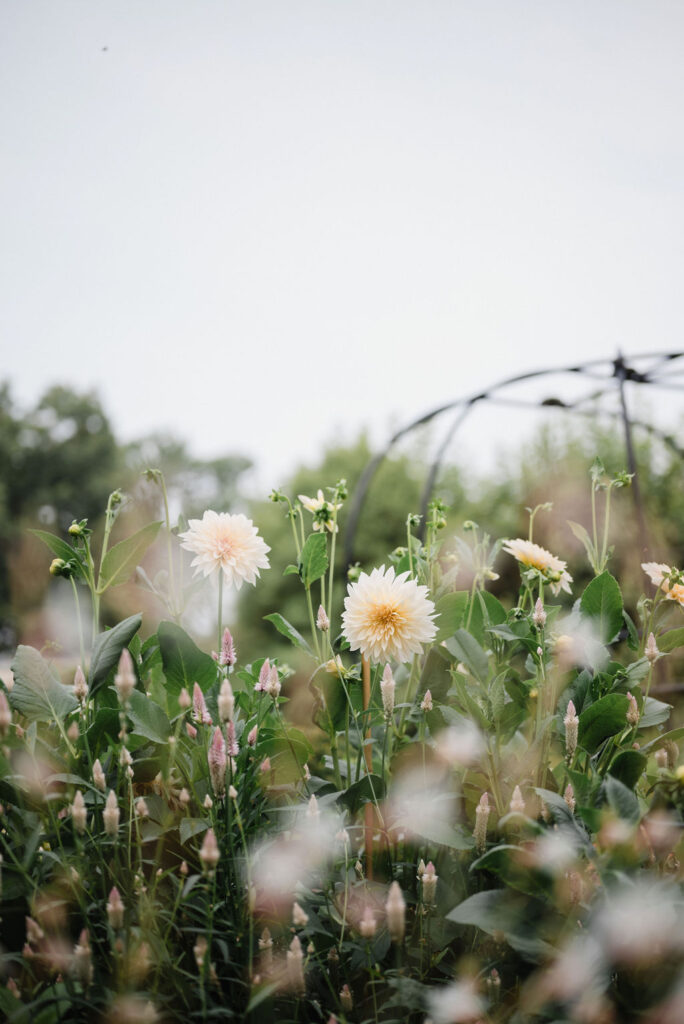
The role of a destination wedding planner

A destination planner functions as the connective tissue between you and your vendor team. They translate your vision into a plan that works in Vermont’s context, recommend vendors who fit both your style and budget, and ensure that each vendor understands the logistics and constraints of your venue and season.

At Shi Shi Events, that often means curating vendor teams that blend local Vermont talent (for catering, rentals, transportation, and some florals) with trusted partners from other markets when needed for photography, entertainment, or specialty design. The goal is a cohesive team where everyone is aligned on expectations and supported logistically.

Once vendors are contracted, your planner tracks retainers and payments, reviews contracts for compatibility (for example, making sure rental delivery windows align with venue access times), and oversees communication so that you don’t have to manage dozens of separate email threads from afar. That structure becomes increasingly valuable as your wedding weekend approaches and the number of moving parts grows.

Budgeting For A Vermont Destination Wedding

Talking about budget is rarely the most romantic part of planning, but it is one of the most grounding. Vermont can be more cost-effective than some coastal New England destinations, especially at certain times of year, but it also presents its own budget drivers.

How Vermont compares to other New England destinations

Relative to marquee markets like coastal Maine, Nantucket, Martha’s Vineyard, or the Berkshires, many Vermont areas can offer more approachable pricing for venues and lodging, particularly outside peak foliage and prime summer weekends. That said, popular resort towns and high-end inns still command premium rates, especially for buyouts during high season.

Seasonal pricing shifts are real. Shoulder seasons (late spring, certain winter dates) may provide more flexibility on minimums and room rates, while peak foliage weekends and holiday periods come at a premium. Being open to a Friday or Sunday date can also create opportunities at high-demand venues.

Major budget drivers in Vermont weddings

Venue and catering. As in most destinations, these are often your largest line items. Inclusive venues with in-house catering can simplify budgeting; estate or tented weddings, where you’re hiring a separate caterer and rental company, offer more customization but also more moving parts and potential costs.

Tenting and rentals. If you’re hosting your wedding on a private property, farm, or venue without a fully equipped event space, tenting, flooring, lighting, restrooms, and rentals (tables, chairs, linens, china, glassware) can represent a significant portion of the budget. These items also tend to be where weather-related upgrades show up, so building in a contingency cushion is wise.

Transportation and lodging support. Providing shuttles for guests, especially where roads are narrow, unlit, or winding, is often both practical and considerate. Depending on your priorities, you may also choose to contribute to or fully cover accommodations for key family members or your wedding party. Those decisions add up and are worth discussing early.

Allocating funds for maximum impact

Because Vermont offers such strong scenery and inherent charm, you may not need to invest as heavily in certain categories as you might in a blank urban venue.

Many couples choose to focus funds on guest comfort (transportation, climate control, thoughtful welcome bags), key design elements that will be widely experienced (ceremony backdrop, dining tables, lighting), and food and beverage, which guests will remember long after small details fade. A warmly lit tent with comfortable seating and great food often makes a deeper impression than elaborate decor in peripheral spaces.

On the flip side, you might simplify areas that add less perceived value for your specific group: favors that are likely to be left behind, overly intricate programs, or redundant decor pieces in low-traffic areas. Being honest about which details matter to you—and which you’re doing only because you feel you “should”—helps align your budget with your actual priorities.

Hidden or frequently overlooked costs

In Vermont, a few line items tend to surprise couples if they haven’t been discussed early:

Delivery and travel fees. Rural venues may require longer drives for vendors and rental companies, which can add travel charges or delivery minimums. This is particularly true for specialized items that may only be available from a few providers in the region.

Weather contingencies. Backup heaters or fans, tent sidewalls, extra flooring, or generator upgrades can add up. It’s wise to build a small contingency cushion into your budget for these weather-related adjustments rather than scrambling to add them at the last minute.

Additional staffing. More spread-out venues can require extra staff for catering, bar, or transportation to maintain service levels and smooth transitions. This might mean an additional bartender for a second bar, more servers for a tented multi-course dinner, or extra shuttle runs to accommodate a staggered guest departure.

A Sample Planning Timeline For A Vermont Destination Wedding

Every wedding timeline is slightly different, but it can help to see a general structure. The following assumes you are planning roughly 12–18 months out; shorter timelines are possible with flexibility on dates and vendors.

Green and ivory Vermont wedding invitation suite with floral details

12–18 months out

Clarify your guest count range, budget framework, and overall vision. Decide which Vermont region fits your priorities and begin researching venues there. This is also the time to secure a destination wedding planner if you plan to work with one; they can then guide your venue search and date selection with an eye toward seasonality and logistics.

Once you’ve chosen your venue and date, book your planner (if you haven’t already), photographer, and, if relevant, videographer—especially if you have specific people in mind. Key creative partners tend to book far ahead for fall and summer.

9–12 months out

Lock in your core vendors: caterer (if separate from the venue), band or DJ, florist, rental company, tent company, hair and makeup, and transportation providers. Reserve hotel room blocks and begin gathering information for your wedding website, which you can launch once major details are set.

At this stage, an initial site visit—either in person or virtually—helps move from broad ideas to more concrete plans. Walking the property (even via video) with your planner can surface opportunities you might not have considered, such as an unexpected spot for a welcome toast or after-party.

6–9 months out

Develop your design direction: color palette, floral approach, linen and tabletop selections, and any custom elements like signage or lounge areas. Confirm your ceremony location and layout, as well as tent type and size if applicable.

Schedule and conduct your menu tasting, ideally in the same season or similar weather to your actual wedding if possible. Sketch out the skeleton of your wedding weekend itinerary so guests will have enough lead time to plan travel; this is when you’ll decide whether you’re hosting a welcome event, farewell brunch, or optional group activity.

3–6 months out

Finalize transportation plans, including shuttle routes and timing. Confirm hair and makeup details and schedule a trial if you’ll be in the area; if not, plan for a trial close to your home and communicate preferences clearly with photos and notes.

Work through ceremony details with your officiant, including readings, vows, and any musical selections. Confirm rain plans in detail—with your planner, venue, and tent company all aligned on how they would be implemented and what trigger you’ll use for making the final call.

1–3 months out

Track RSVPs and confirm your final guest count with the caterer and venue by their required deadlines. Create your seating plan, and finalize decor details such as place cards, escort displays, and any tabletop paper goods.

Complete a final walkthrough, whether in person or virtually, with your planner and venue. Review the detailed weekend timeline, including vendor arrival and departure times, and confirm who is responsible for which items at each stage of setup and breakdown. This is also a good time to confirm contingency items like heaters, fans, or additional tent panels.

Week-of overview

As vendors begin to arrive and setup starts, your planner or venue coordinator will oversee installations, troubleshoot any last-minute adjustments, and manage the flow of rehearsal, welcome events, and the wedding day itself.

Your role at this point should be primarily to show up, be present, and enjoy the environment you’ve worked so hard to create. The better your planning and team building in earlier months, the more you’ll be able to fully inhabit the weekend alongside your guests rather than feeling like the event manager.

Real-Life Vermont Wedding Scenarios For Inspiration

While every Vermont wedding is unique, a few archetypes come up again and again. Seeing how they function in practice might help you imagine which direction suits you best—and where you might blend elements to create something that feels like your own version.

An intimate inn wedding in Woodstock or Manchester

Picture a historic inn with 20–40 guest rooms booked entirely for your group. Guests arrive Friday afternoon to a fireside welcome reception with local cheeses, cider, and small bites. There’s an easy rhythm to the evening: people move from the bar to the library to the porch, catching up and easing into the weekend.

Saturday’s courtyard or garden ceremony is followed by cocktails on the lawn and a candlelit dinner in a dining room with original woodwork and vintage art. Because the inn is yours for the weekend, you’re not working around external restaurant service or other events; the pace can be tailored to you.

A full-property buyout gives you flexibility on timing and use of spaces: brunch in the sunroom, late-night drinks in the bar, quiet mornings on the porch. This format works particularly well for smaller guest counts and for couples who want a house-party feel where everyone crosses paths organically all weekend.

A summer tented wedding on a private estate

Here, the landscape is your anchor. Guests follow a tree-lined drive to a meadow or lakeside lawn, where an open-air ceremony frames the mountains beyond. You might choose minimal ceremony decor, letting the view carry the moment, or a floral installation that feels like it grew there naturally.

Cocktails take place under old trees or on a nearby terrace; guests sip local beer and maple-inflected cocktails as the sun drops. Children run on the lawn, older guests settle into lounge chairs, and conversations drift across the space rather than staying confined to a single bar line.

A sailcloth tent glows from within as evening falls, with long farm tables, abundant seasonal flowers, and a well-lit dance floor. Guests wander out to a firepit between songs, and a late-night snack station appears as the band hits its final set. Because you’ve built the infrastructure from scratch, each element—restrooms, paths, lighting—is exactly where it needs to be for comfort and flow.

A fall foliage celebration in Stowe or the Mad River Valley

For a fall wedding, imagine mountainside vows accessible by chairlift or shuttle, with a panorama of blazing trees in every direction. Guests take in the view during a leisurely cocktail hour, perhaps with a cider tasting or local charcuterie boards.

Later, a cozy reception at a lodge or barn features deep-toned florals, flickering candles, and a menu built around seasonal produce and hearty mains. Blankets are available for guests who want to step outside and watch the stars or the last glow on the mountains. The overall feel is warm, layered, and celebratory—very much in sync with the season.

vermont wedding planner

A winter wonderland weekend at a ski resort

Guests check into slopeside rooms on Friday and head straight to an après-ski style welcome party: hot chocolate bar, mulled wine, and comfort-food stations. On Saturday, some guests ski or snowboard while others opt for spa treatments or reading by the fire. No one feels obligated to do everything; the environment itself provides options.

Your ceremony takes place at dusk, either indoors with large windows framing falling snow or outdoors for a brief, bundled-up exchange of vows. A candlelit reception follows, with rich textiles, evergreen and winter-white florals, and a menu that leans into warmth—braised meats, roasted vegetables, and indulgent desserts. A hot toddy or spiked cider station keeps everyone cozy between the dance floor and the bar.

In each of these scenarios, what ties everything together is an attention to place: menus, decor, and activities that feel rooted in Vermont rather than imported wholesale from elsewhere.

Working With A Destination Wedding Planner For Your Vermont Celebration

Planning any wedding involves many decisions. Planning a destination wedding in a rural, seasonal state like Vermont adds layers: travel, weather, infrastructure, and coordination across multiple locations and vendors. A planner is not a requirement, but there are reasons they are particularly helpful here.

Why a planner can be especially valuable in Vermont

Logistically, many Vermont venues—farms, estates, ski lodges—were not originally built as event spaces. They may have limited parking, unusual load-in routes, or restrictions based on terrain and local ordinances. Coordinating those with a tent company, catering team, and transportation providers takes a level of orchestration that most people don’t want to take on while also being the couple getting married.

A planner helps you see around corners: How long will it really take for guests to move from ceremony to reception? Where do restroom trailers go so they’re accessible but discreet? What happens if an unexpected heatwave or cold snap hits a tented event?

They also coordinate vendor teams spread across multiple towns, often with varying familiarities with your specific venue and with each other. Having a single point of contact who knows the full picture reduces miscommunication and unnecessary stress.

How a planner supports you from afar

From the outset, a destination planner translates your general vision into something that considers Vermont’s seasons and landscapes. They’ll tell you, for instance, how late you can realistically schedule a mountaintop ceremony in October before losing light, or what kind of footwear your wedding party should consider for a hillside ceremony in May.

On a practical level, they manage communication, contracts, and timelines; schedule and conduct site visits; and create detailed layouts and timelines so that all vendors are literally and figuratively on the same page. You remain involved in the creative decisions without needing to problem-solve every logistical detail yourself.

A note on Shi Shi Events’ approach

Shi Shi Events is based in Cleveland but regularly produces destination weddings at historic venues, boutique hotels, inns, and private estates throughout the Midwest, East Coast, and South. That experience translates well to Vermont’s mix of charming architecture and rural settings, where tented receptions and weekend-long celebrations are common.

For Vermont and similar destinations, the focus is on designing an experience that feels tailored to the location and to you: thoughtful guest itineraries, cohesive design that enhances the natural surroundings, and detailed logistical planning for tented and estate events. The intent is to create weekends that feel both effortless for your guests and true to the place you’ve chosen.

Turning Your Vermont Wedding Vision Into A Lived-In Weekend

Vermont offers a rare combination: grand landscapes and small-town warmth, a strong sense of place and the flexibility to make your celebration feel distinctly your own. Whether you imagine exchanging vows in a candlelit inn, under a sailcloth tent as the sun sets, amidst peak foliage on a mountain, or beside a snowy slope, the state gives you real options.

The key is aligning your season, region, venue, and vendor team with your priorities—and being honest about what matters most to you and your guests. When you pair that clarity with realistic timelines, weather-aware planning, and a focus on comfort and hospitality, the logistics start to feel manageable instead of overwhelming.

Whether you choose to work with a destination planner or assemble your own team step by step, an informed, organized approach will go a long way. The reward is the chance to gather the people you love in a place that encourages them to slow down, look around, and fully experience the weekend with you—exactly the kind of celebration Vermont is so well suited to host.

Destination Wedding Planner Guide: How to Choose, Collaborate, and Create a Seamless Celebration Away From Home

Planning a wedding close to home already asks a lot of you: time, decisions, and more spreadsheets than anyone really wants to talk about. Planning a wedding in a place you don’t live—at a venue you may have only seen once, with vendors you’ve never met in person—asks something different. It asks you to trust people and places you can’t easily “drop in” on, and to make big decisions from a distance.

That’s why destination weddings feel so uniquely thrilling and, if we’re honest, a little intimidating. You might be picturing a ceremony on the edge of Lake Erie, a garden party in a historic Southern town, a weekend at a New England inn, or a tented reception at a family estate in the countryside. Each of those ideas is beautiful. Each of them, behind the scenes, is a layered production: travel, accommodations, local laws, rental logistics, weather patterns you don’t know well, and guests who need more guidance than they would for a wedding in your hometown.

A destination wedding planner sits in the middle of all of that. Not as a travel agent, not as a venue manager, and not as a salesperson who “handles everything,” but as the person who can look at your weekend as a whole and say, “Here’s how this can actually work—and here’s where we need to adjust so it still feels like you.”

Many couples assume that a resort coordinator, hotel events manager, or family friend can fill that role. Sometimes they can help with parts of it. But if you’re drawn to historical venues, boutique hotels, inns, private estates, or tented celebrations—especially across multiple days—there are details and decisions that benefit from someone whose entire job is planning destination weddings.

This guide is written for couples in that in-between space: already engaged, already curious about a celebration away from home, and trying to figure out what kind of support you actually need. It draws on experience planning destination weddings throughout the Midwest, East Coast, and Southern United States, where lakeside towns, old brick streets, and wide lawns all come with their own quirks. The goal here isn’t to sell you on a particular service level; it’s to give you a clear sense of how destination wedding planners work, how to choose one, and what collaboration really looks like when your celebration is not in your own backyard.

What a Destination Wedding Planner Really Does

“Destination wedding planner” is one of those phrases that sounds straightforward until you start asking people what it means. Some planners use it to describe international work only. Others use it for any wedding where most guests travel. The reality: it’s less about the passport stamp, more about planning in a place that is not your day-to-day environment.

The core responsibilities (beyond logistics)

At its heart, destination wedding planning is about translating your vision into an event that works in a specific place, on a specific weekend, with real-world constraints. Yes, that involves logistics. It also involves:

– Interpreting your priorities and values, not just your Pinterest board
– Understanding how a town, property, or venue behaves in different seasons and scenarios
– Anticipating pressure points long before you feel them (guest travel, vendor availability, weather, noise ordinances, and more)

The visible part is the wedding. The invisible part is the scaffolding under it: budgets, contracts, timelines, tent specs, power layouts, rentals, staffing, and a hundred quiet decisions you’ll never need to hear about unless something goes sideways.

Service levels you’ll usually encounter

Most destination planners structure their work into a few broad categories. The names vary; the intent is similar.

Full-service destination planning

Full-service (or end-to-end) destination planning is the most comprehensive option. It usually begins before a venue is even selected and continues through post-wedding wrap-up. In practical terms, this can include:

– Helping you clarify the kind of environment you’re drawn to (lakeside, urban historic district, countryside, coastal, etc.)
– Researching and shortlisting regions and venues that match your guest count, budget, and aesthetic
– Building and maintaining a detailed budget, with ongoing updates as quotes come in
– Sourcing, vetting, and managing your vendor team—often across more than one market
– Creating your overall design direction: color stories, textures, floor plans, lighting, and guest flow
– Overseeing infrastructure: tent builds, generators, restrooms, catering kitchens, parking, and shuttles
– Developing a weekend-long timeline, not just a wedding-day schedule
– On-site management for the wedding and usually other events (welcome party, rehearsal dinner, farewell brunch)

Full-service is especially valuable when you’re working with non-resort venues, custom tents, historical properties, or private estates, because there aren’t built-in systems to lean on. The planner essentially becomes the general contractor for the experience.

Partial destination planning

Partial planning is more focused. It’s common when:

– You’ve already booked your venue and possibly a photographer or band
– You enjoy research, but you don’t want to oversee logistics or design alone
– You’re comfortable with some vendor outreach, but want a professional to curate final selections, handle contracts, and bring everything together

A partial planning scope typically covers:

– Refining and tracking your budget as the planning progresses
– Recommending and securing remaining key vendors
– Leading the design process, including rentals, florals, and layout
– Creating timelines and managing the event on-site
– Coordinating with your venue, hotel, and transportation providers

The key difference from full-service is where your planner enters the story and how many decisions they’re steering versus supporting.

Month-of or event management

Month-of coordination (sometimes called event management) is for couples who have done the majority of the planning themselves and want a professional to run the actual weekend.

That planner will generally:

– Review your vendor contracts and confirm all details
– Create a thorough wedding-day (and sometimes weekend) timeline
– Lead the rehearsal and manage events on-site
– Serve as point of contact for vendors and families
– Troubleshoot issues so you and your loved ones can stay out of logistics

For a straightforward hotel ballroom wedding, month-of support can be enough. For destination weddings that involve tenting, private property, or historical venues, it’s less ideal. Many of the most consequential decisions—permits, power, tent size, guest transportation—happen months before your wedding. If a planner is only involved 4–6 weeks out, their ability to course-correct is limited.

How a destination planner differs from other roles

Part of the confusion around destination wedding planners comes from overlap with other professionals. Understanding the distinctions helps you see who does what.

Venue and resort coordinators

Venue coordinators (or catering managers) are employed by the venue. Their responsibilities usually revolve around:

– Managing your contract with the venue
– Coordinating in-house catering and bar, if applicable
– Overseeing venue staff and basic room setups
– Ensuring the venue’s policies and timelines are followed

Very few venue coordinators:

– Manage your full vendor team
– Build or track your total wedding budget
– Oversee off-site events (welcome dinners, farewell brunches)
– Coordinate guest travel or transportation schedules
– Provide holistic design across rentals, florals, paper goods, and lighting

Their focus is the property they represent—which is important—but it is not the same as having an advocate whose responsibility is the entire weekend experience.

Travel advisors and destination planners

Travel advisors specialize in flights, hotels, and sometimes group bookings or room blocks. They can be invaluable for complicated itineraries or international travel, and many couples use them alongside a wedding planner.

A travel advisor typically does not:

– Design your ceremony and reception spaces
– Manage vendor contracts, timelines, or on-site execution
– Navigate venue policies around events, tenting, or noise

Think of them as partners who handle how everyone gets there and where they sleep, while a destination wedding planner handles what happens once they arrive.

Local planners vs. destination specialists

Many planners are deeply rooted in a single city or region. They may be wonderful at what they do locally. Destination-focused planners, on the other hand, tend to:

– Work regularly in multiple regions (for example: Great Lakes towns, New England coastal areas, Southern estates)
– Build systems for planning remotely: virtual walk-throughs, detailed questionnaires, shared planning portals
– Maintain vendor relationships across markets and understand how to bridge gaps in local offerings
– Travel for site visits, tastings, and production meetings where needed

Neither is inherently “better.” The question is whether their experience lines up with the kind of wedding you want and where you want to host it.

Special Considerations for Non-Resort Destinations

When people think “destination wedding,” they often picture an all-inclusive resort where most of the infrastructure already exists. Many couples, though, are drawn to the character of places that are not resorts: historical venues, tented properties, boutique inns, private estates, or small city hotels that don’t have a built-in events machine.

Those spaces are often more personal, more flexible, and more aligned with a specific story you want to tell. They also require a different level of planning.

Bride and groom outside a historic Charleston venue

Historical venues

Historical venues—from Gilded Age mansions to beaux-arts museums to centuries-old inns—come with charm and regulations in equal measure. Typical considerations include:

– Restrictions on open flames, hanging installations, and heavy décor
– Protected floors, staircases, or fixtures that limit where bars, bands, or dance floors can go
– Short setup and breakdown windows to protect the property
– Required or strongly preferred vendor lists
– Local noise ordinances and curfews

A destination planner who works regularly with historical sites will know how to design within those boundaries in a way that feels deliberate—not like a compromise. They’ll also be realistic with you early about what a particular building can and cannot accommodate.

Guests dining beneath a sailcloth tent at a destination estate wedding

Tented weddings and estate celebrations

A tented wedding at a private estate sounds simple: “We’ll just put up a tent in the yard.” In reality, it’s closer to constructing a temporary venue. Behind that one sentence live questions about:

– Tent style (sailcloth, clear top, frame, pole) and size
– Flooring, staging, and weather considerations
– Power needs for catering, lighting, band or DJ, restrooms, and heating or cooling
– Generator sizing and placement
– Restroom trailers and handwashing stations
– Parking, shuttles, and emergency access routes
– Permits and inspections for temporary structures

An experienced planner will bring in trusted tent and rental partners early, map out the property, and create scaled diagrams. Think of them as the person making sure the romantic idea you have in your head matches what the land, budget, and local regulations can support.

Snow-covered boutique inn in Vermont for a destination wedding weekend

Boutique hotels, inns, and small properties

Boutique hotels and inns can be ideal for destination weddings: they’re intimate, they often reflect the character of a town, and a full buyout can feel like your own private compound. The trade-off is that they rarely come with everything a large resort provides.

A planner helps you evaluate:

– How many rooms are available and how that matches your guest count
– Whether you need a full buyout to host late-night events or pool gatherings
– Catering capabilities (in-house vs. outside catering)
– Where to place ceremony, cocktail hour, and reception to keep the property flowing well
– How to handle overflow rooms at nearby hotels and transportation between them

Local knowledge and the “outsider advantage”

Local knowledge matters. Knowing that a particular coastal road floods after heavy rain, or that a small city’s marathon weekend doubles hotel rates, is immensely helpful. But there’s also a case to be made for a planner who is used to stepping into new markets and figuring them out.

Destination planners often balance both:

– They cultivate relationships with local vendors and venue teams
– They bring a tested structure for vetting new venues and suppliers
– They know which questions to ask city officials, tent companies, and venue managers because they’ve asked them in other regions too

That combination—respect for local nuance, plus a wide lens on how destination weddings work in general—is what allows complex weekends to run smoothly.

Do You Actually Need a Destination Wedding Planner?

There’s no universal rule that says every destination wedding must have a planner. Some couples truly enjoy handling most of the details. But it’s helpful to sit with a few questions before deciding.

Questions to ask yourselves (privately, and honestly)

– How complex is the weekend you’re imagining? One ceremony and reception at a hotel is different from a welcome party, a private club rehearsal dinner, a tented reception, and a farewell brunch.
– How comfortable are you interpreting contracts and scopes of work from vendors in another region?
– How much time can you realistically devote to planning in the next year, given your jobs and other obligations?
– How much uncertainty can you comfortably hold? (For example, are you okay not seeing rentals or tasting menus in person until closer to the date?)
– Are any family members expecting a say in decisions—and will that complicate logistics?

None of these questions have “right” answers. They simply reveal what kind of support will feel grounding versus what might feel like overkill.

Situations where a planner is strongly recommended

A dedicated destination wedding planner is usually worth serious consideration when:

– You’re hosting at a private estate, family property, or under a tent
– Your venue is a historical building with strict rules
– Your destination is far from major airports or has limited accommodations
– You’re planning multiple events across different locations
– You’re expecting a large number of out-of-town guests
– You’re juggling demanding careers, caregiving responsibilities, or travel-heavy schedules

These are the scenarios where “hoping it comes together” usually leads to late nights, rushed decisions, or leaning heavily on family and friends who deserve to be guests, not backstage crew.

When lighter support may be enough

On the other hand, you might feel comfortable with a lighter touch if:

– You’re marrying at a full-service hotel or venue that includes major elements (food, beverage, rentals) in-house
– Your guest list is modest and your logistics are simple
– You’re very organized, enjoy project management, and are realistic about the time commitment
– You’re open to a consulting arrangement early on, then a month-of team to run the day

Some planners offer strategy sessions or “planning intensives” early in the process to help you set up your timeline, budget, and vendor priorities, even if you don’t hire them for full-service support. That kind of early guidance can prevent a lot of avoidable stress later.

Budget: what the planner line item really represents

It’s easy to see a planner’s fee as just another line in an already big spreadsheet. The less visible part is how that line item affects almost every other line. An experienced destination planner often:

– Steers you away from costly missteps (like under-sizing a tent or missing a permit requirement)
– Negotiates clear scopes and realistic minimums with vendors
– Helps you prioritize high-impact choices instead of scattering your budget
– Protects your time so you’re not spending evenings comparing linen SKUs or tracking shuttle quotes

It’s not that a planner “pays for themselves” in some guaranteed way. It’s that they help your total investment—financial and emotional—land in the right places.

How to Choose the Right Destination Wedding Planner

Once you know you want a planner, the question shifts from “if” to “who.” Fit matters as much as expertise. You’re not only hiring someone to manage vendors; you’re choosing the person you’ll email at odd hours, share family dynamics with, and trust with the tone of a weekend your guests will remember for years.

Get clear on your own priorities first

Before you open a search engine, pause and write down a few specifics:

– The regions you’re drawn to (Great Lakes, New England, Mid-Atlantic, Lowcountry, etc.)
– The style of venue you prefer (historic hotel, museum, inn, urban loft, private estate, lakefront property)
– The approximate guest count
– Whether design is a top priority, or whether you care more about food, music, or guest activities
– How involved you want to be in decision-making day-to-day

You don’t need a finished vision board. You just need enough direction that you can recognize when a planner’s strengths match what you need.

Where to look for destination wedding planners

Planners who regularly handle destination work tend to show up in a few places:

– Google searches with specific regional terms: “Midwest destination wedding planner,” “East Coast tented wedding planning,” “Southern private estate wedding designer.”
– Venue recommendation lists, especially at historical properties, museums, and estates.
– Credits in real weddings featured on sites like Brides, Martha Stewart Weddings, and Style Me Pretty.
– Photographer blogs and portfolios; photographers often highlight the planner because they know how much it impacts the day.

Social media can be useful as well, but it tells you more about a planner’s visual style than their logistics. Use it as a starting point, not the full story.

Newlyweds celebrating amid candlelight and seasonal wedding design

Evaluating experience, not just aesthetics

When you review a planner’s website or portfolio, look for patterns:

– Do you see weddings in the kinds of venues you’re considering (tent, estate, historic hotel, inn, museum)?
– Are there examples of multi-day destination weekends, not just single-evening events?
– Does their writing (blog posts, FAQs, captions) show comfort talking about logistics, not just pretty details?
– Do they work in multiple regions, or specialize in one area that happens to be where you’re heading?

Firms that consistently show tented celebrations, estate weddings, and boutique hotel weekends—especially across several regions—are likely familiar with the complexities you’ll encounter.

Assessing communication style and philosophy

During consultations, pay attention less to polished answers and more to how the conversation feels:

– Do they ask questions about you as people, not just your budget and color palette?
– Do they listen first, then respond with suggestions rooted in what you’ve shared?
– Are they clear about their process, boundaries, and how they work with families?
– Do you feel comfortable being candid with them about money, expectations, or concerns?

You’re looking for that combination of calm competence and human warmth—someone who can talk about generators and linen swatches in the same breath without making either feel like a crisis.

Useful questions to ask potential planners

You don’t need a script for every consultation, but a few targeted questions can tell you a lot:

– What kinds of destinations and venues do you work with most often?
– How many destination weddings do you take on per year?
– How do you structure the planning process for couples who don’t live nearby?
– What does your on-site team usually look like for a wedding like ours?
– Can you share an example of a challenging situation at a destination wedding and how you handled it?
– How are your fees structured, and what’s typically included?

Their answers will help you understand both their experience and how they think under pressure.

Understanding Pricing, Contracts, and Scope

Planners structure their fees in several ways. What matters most isn’t which model they use; it’s whether you understand it and whether it’s aligned with the scale of your wedding.

Common pricing approaches

– Flat fee: A set fee for a defined scope of work (full-service, partial, or event management). Often based on estimated hours and complexity.
– Percentage of budget: A percentage of your total wedding budget, sometimes with a minimum. More common for highly custom, high-budget events where workload scales with spending.
– Hybrid models: A base fee plus percentage, or a base fee plus production or travel charges.

For destination weddings, you’ll almost always see travel and accommodations for the planner’s team itemized separately. That’s normal; you’re asking them to be on-site for multiple days, sometimes with advance visits.

What a robust destination planning scope usually includes

While every firm defines things a bit differently, comprehensive destination planning frequently covers:

– Budget creation and ongoing management
– Venue and destination research and selection support
– Vendor curation, outreach, and communication
– Contract review (from a practical, non-legal perspective) and coordination
– Design concepting and refinement, including rentals, florals, and lighting
– Site visits and walk-throughs (virtual or in person)
– Weekend timeline development
– Rehearsal oversight and wedding-day (often multi-day) on-site management

Key contract details to pay attention to

When you receive a planner’s contract, look closely at:

– What’s explicitly included in the scope—and what’s not
– How many site visits are built into the fee
– Travel, lodging, and per diem requirements for the planner’s team
– Payment schedule, retainers, and accepted forms of payment
– Rescheduling, cancellation, and force majeure clauses
– Policies for additional events added later (for example, if you decide to host a welcome party after contracts are signed)

If any section feels opaque, ask for plain-language clarification. You’re not being difficult; you’re setting both sides up for a clear partnership.

Outdoor destination wedding ceremony overlooking a landscaped lagoon

Choosing the Destination, Venue, and Guest Experience Together

One of the most helpful roles a destination wedding planner can play is in the early decision-making about where, exactly, this wedding should live—and what your guests will experience over the course of the weekend.

Evaluating destinations through a practical lens

A place can be gorgeous on Instagram and still be a difficult fit for your guest list. A planner will typically walk you through:

– Travel access: The nearest airports or train stations, typical routes for guests, and seasonal flight patterns.
– Drive times: Not just the distance from airport to venue, but also between hotels, ceremony, reception, and brunch locations.
– Seasonality: What the weather usually does that time of year, and how high or low season affects rates and availability.
– Local events: Festivals, sports games, college graduations, or marathons that can impact hotel inventory and traffic.

This is where data meets feeling. That small lake town may check every aesthetic box, but if it only has one inn and your guest list is 180, you’ll need to think creatively—or consider an adjacent destination that offers a similar mood with better infrastructure.

Understanding what your venue actually includes

Venues describe inclusions very differently. Some provide everything from chairs to flatware; others provide the building and little else. Your planner can help you translate language like “tables and chairs included” into real numbers and quality.

At historical venues, they’ll walk through:

– Required caterers, rental providers, or security
– Curfew times and sound restrictions
– Where dancing is allowed (in some properties, not every room or level is available)
– Any required preservation staff, docents, or special insurance

At estates and private properties, they’ll help determine:

– Which areas of the property are usable for events (and which are better left for photos only)
– How to orient tents for light, views, and weather
– Where vendors can load in and park without damaging landscaping
– What the neighborhood or local government allows in terms of amplified sound and traffic

Destination wedding guests gathered for an intimate reception dinner

Designing the weekend as a narrative, not a checklist

Destination weddings naturally lend themselves to multi-day itineraries. The risk is that the weekend can start to feel like a conference if it’s overprogrammed.

A thoughtful planner will help you shape a rhythm:

– A gentle entry point (for example, an optional welcome cocktail hour or dessert-and-drinks after casual dinners out)
– One or two anchor events that feel fully produced (rehearsal dinner, wedding day)
– A softer landing (farewell brunch, coffee trucks on the lawn, or a casual beach or lake meet-up)

They’ll also help you incorporate the destination in ways that feel personal: a local bakery’s specialty in your welcome bags, a regional wine at your rehearsal dinner, or a short walking tour for guests who arrive early.

Fresh oyster bar highlighting local cuisine at a destination wedding

Keeping personalization grounded in practicality

There’s often a temptation to add touches “because it’s a destination wedding”—welcome gifts, excursions, after-parties, late-night snacks, and so on. Each of those can be lovely. They also add complexity.

Part of a planner’s role is gently asking:

– Will guests actually use this, or will it end up in a hotel trash can?
– Does this addition serve your story, or is it just filling space?
– Are we leaving room for people to rest, explore on their own, or spend time with family?

The destination should frame your celebration, not overshadow the reason everyone is there—you two, and the relationships you’re inviting into the weekend.

Design and Aesthetics When You’re Planning From Afar

Design looks glamorous on the surface—mood boards, color palettes, linen samples. Underneath, good design is mostly about restraint and alignment: aligning your aesthetic with the place, the budget, and how the weekend will actually feel in motion.

Outdoor wedding reception beneath palm trees at a historic destination venue

How planners translate your vision into a real space

Most destination planners begin with:

– Conversations about your everyday life (how you entertain, where you travel, what your home feels like)
– A few key images or references that genuinely resonate with you—not 200 saved posts with competing styles
– Details about your venue’s architecture, landscape, and existing colors

From there, they’ll create a design concept that usually includes:

– A loose color story grounded in the environment (shoreline neutrals, stone and brick tones, deep greens, etc.)
– Ideas for ceremony, cocktail hour, and reception layouts
– Floral direction tailored to the season and climate
– Linen, chair, and tableware suggestions that anchor the mood without overpowering the space
– Possibilities for lighting, which is often the most transformative design tool for tented and historic venues

Working with what the destination can realistically provide

A planner who frequently works across regions knows that not every market has the same inventory. The specialty chairs you love might be easy to source in New York City, but far less common in a small lakeside town. You may be able to truck them in—but should you?

Questions they’ll be quietly weighing:

– Is the visual impact of this item worth the additional delivery cost and complexity?
– Can we achieve a similar feel with pieces available locally?
– How will florals hold up in the region’s heat, humidity, or wind?
– Do we need tent flooring to keep guests comfortable if the ground is uneven or likely to be damp?

Some of the most beautiful destination weddings are the ones that lean into what the area does best instead of trying to import an entirely different aesthetic.

Avoiding the “theme park” version of your destination

It’s very easy to slide into visual clichés: anchors and shells at a coastal wedding, burlap and mason jars in the countryside, magnolia everything in the South. A planner with a strong design point of view will help you use the destination as a subtle layer, not a costume.

That might look like:

– Pulling a palette from local stone, water, or flora rather than literal symbols
– Commissioning artwork for your invitations that references the skyline or shoreline in an abstract way
– Featuring a regional specialty as one course or cocktail, instead of turning the entire menu into a travel brochure
– Including a short note on your programs about the venue’s history or the town’s significance to you

The result feels grounded and specific, without shouting “destination wedding” at every turn.

Logistics, Timelines, and Guest Travel: The Invisible Work

If the design is the part everyone sees, logistics are the part you feel—often only when something goes wrong. A destination wedding planner spends a significant portion of their time here, smoothing edges you might never know existed.

Building a destination-specific planning timeline

Most domestic destination weddings benefit from a planning window of about 12–18 months, especially if you want high-demand venues or peak-season dates. Within that window, your planner will help you:

– Secure venue and accommodations before sending save-the-dates
– Book core vendors in an order that protects your options (venue, planner, photographer, caterer, entertainment, floral, rentals)
– Schedule any in-person site visits to cover as much ground as possible (walk-throughs, tastings, hair and makeup trials)
– Time design decisions against rental release dates and floral ordering deadlines
– Plan when to launch your wedding website and when to send travel information to guests

Coordinating guest travel and accommodations

While your planner is not replacing a travel advisor, they often act as the connector between your room blocks, transportation, and event schedule. That might include:

– Coordinating room blocks at one or more hotels, including key cut-off dates
– Mapping which hotels work best for different groups (family, friends, those arriving late or leaving early)
– Organizing shuttles to and from ceremony and reception sites, based on real head counts
– Creating clear, concise information for your wedding website, including maps, transit options, and timing
– Making sure accessibility needs—mobility, hearing, vision—are factored into transportation and seating plans

If you want help crafting the language for your website or invitation inserts, your planner can often share examples or best practices so guests know what’s expected of them and what’s covered by you.

Legal and regulatory details you can’t ignore

Even if you’re staying within the United States, legal details vary from state to state and county to county. A planner will walk you through:

– Marriage license requirements: residency rules, waiting periods, documentation, and whether you can apply online. Resources like USA.gov’s marriage license guide are a helpful baseline, but specifics often come from county clerk offices.
– Event permits and noise ordinances for outdoor or tented events.
– Fire code and occupancy restrictions for historic buildings.
– Insurance requirements for private properties and estates (often a combination of event liability and host liquor liability).

Newlyweds leaving their ceremony at a historic New Orleans wedding venue

Weekend-of timelines and on-site orchestration

The master timeline is the backbone of your weekend. It’s what keeps vendors aligned and guests moving smoothly. Your planner will:

– Build detailed schedules for each vendor: when they arrive, where they load in, and when they break down
– Coordinate hair and makeup schedules with photography so no one feels rushed
– Sequence the ceremony, cocktail hour, and reception in a way that accommodates light, weather, and travel time
– Create contingency timing if storms or extreme temperatures are in the forecast
– Manage the pacing of speeches, dances, and formalities so the evening feels natural rather than over-scripted

During the weekend itself, your planner is often quietly solving problems: rerouting a shuttle, moving a cocktail hour due to wind off the lake, shifting floor plans when a band’s stage needs more space. Ideally, you’re hearing only the abbreviated version: “We’ve adjusted the plan; you’re all set.”

Working Well With Your Destination Wedding Planner

Even the most seasoned planner can only do their best work if the two of you (or the two of you plus your families) are collaborating clearly. The goal is not to turn you into project managers; it’s to shape a partnership where everyone knows their lane.

Setting communication norms early

Early conversations are the right time to talk about:

– Preferred communication channels: email, planning platform, phone, text for urgent matters
– Typical response times and office hours
– How far in advance meetings are scheduled, and which days or times work best around time zones
– Who should be included on emails (both of you, parents, others) and who has final say on different decisions

Aligning on this upfront reduces miscommunication later, especially when large decisions or invoices are involved.

Being a strong collaborator (without doing their job)

The most successful partnerships between couples and planners tend to share a few traits:

– You’re honest about your budget and comfortable saying “this is a stretch for us” early.
– You offer clear feedback—what you love, what you’re unsure about—rather than general “we’ll know it when we see it.”
– You complete planning “homework” (guest lists, rooming details, questionnaire responses) reasonably on time.
– You’re open to expert guidance when your vision clashes with a venue’s limitations, a climate, or a budget line.

The goal isn’t to say yes to everything a planner suggests; it’s to stay in conversation so solutions can emerge that feel right to you and workable in reality.

Tools that keep everyone organized

Most destination-focused planners lean on a mix of tools:

– Cloud-based planning platforms or shared folders for contracts, timelines, and checklists
– Online floor plan software to show table layouts, seating, and vendor placements
– Guest list and RSVP trackers that feed into meal counts and seating charts
– Group messaging or email templates for guest communications

You don’t need to love all the tech. You just need to know where to find information when you need it and to use the systems consistently, so nothing important gets buried in a long email chain.

Common Destination Wedding Challenges (and How Planners Navigate Them)

Every wedding has surprises. Destination weddings add distance to the mix. An experienced planner doesn’t just respond when something happens; they’re constantly running quiet “what if” scenarios in the background.

Bride and groom at a snowy Vermont destination wedding

Weather and environmental curveballs

Whether it’s a sudden storm rolling off a Great Lake, a heat wave in a Southern garden, or wind on a bluff, weather is often the biggest variable. Planners typically:

– Build rain and heat plans months in advance (alternate ceremony locations, tent sides, fans, heaters, blankets)
– Hold backup tenting or additional equipment with rental partners, when appropriate
– Adjust ceremony times if sunsets shift or storms are expected to pass
– Coordinate with caterers and photographers on revised schedules if delays occur

Travel delays and vendor issues

With guests and sometimes vendors flying in, delays will happen occasionally. A destination planner’s role here often includes:

– Communicating with shuttle companies to adjust pickup times when flights change
– Reseating or updating processional orders quietly if a key family member is late
– Tapping into backup vendor networks in case of illness or emergencies (for example, a second photographer in the area)

The point isn’t that every problem disappears. It’s that you’re insulated from most of the scrambling.

Family expectations and guest assumptions

Destination weddings raise questions for families and guests: Who pays for what? Are guests expected at every event? What’s “normal” to cover for the wedding party? A planner can help by:

– Sharing what’s typical in similar destinations and circles, while reminding you that “typical” is not mandatory
– Helping you decide exactly which events are optional or limited to certain groups
– Drafting or refining wording for your wedding website so expectations are clear and kind
– Offering scripts for delicate conversations with parents or relatives

Proactive planning as quiet insurance

The most reassuring part of working with a seasoned destination wedding planner is not that nothing will go wrong. It’s that if and when something does, there’s already a plan. Backup routes. Extra time padding in the schedule. Lightweight rain plans for photos. Alternate ceremony locations confirmed with the venue in writing months earlier.

Realistic Budgeting for a Destination Wedding

There’s a persistent belief that destination weddings are either “cheaper” because guest counts are smaller, or automatically more expensive because of travel. The truth sits somewhere in the middle: the cost structure is different.

How destination budgets typically shift

Compared with a local wedding, destination budgets often allocate more toward:

– Travel and lodging for you and, sometimes, key vendors
– Transportation for guests across the weekend
– Additional events (welcome party, group outing, brunch)
– Infrastructure for tented or estate weddings (restrooms, power, flooring, lighting, kitchen)

At the same time, some couples see savings by:

– Hosting a smaller guest count
– Choosing venues in regions where certain costs (like venue rental or catering) are more moderate
– Simplifying décor because the setting is inherently compelling

Aligning expectations with numbers

An experienced planner will help you put numbers to ideas early. That conversation can feel vulnerable, but it’s far kinder to your future selves than falling in love with something that isn’t realistic.

You might find that:

– A tented estate reception plus multiple off-site events will require either a higher overall budget or a smaller guest list.
– A midweek or shoulder-season date in a popular destination opens up options.
– Investing in lighting and florals transforms a space more dramatically than spreading the same money across many smaller décor categories.

Resources like The Knot’s budget basics or WeddingWire’s budgeting guides can provide baseline percentages, but destination planners will adjust those based on your region and venue type.

Wedding ceremony inside a vaulted Northeast Ohio barn

Domestic Destinations: Feeling Far Away Without Crossing a Border

Not all destination weddings require passports. Many couples are choosing places that feel like an escape but are still within a short flight or drive: Great Lakes shorelines, New England towns, historic Southern cities, or quiet countryside inns.

Why domestic destinations appeal to many couples

Domestic destination weddings often strike a balance:

– Easier travel for guests who may be juggling work, kids, or passports that need renewing
– Streamlined legal processes for marriage licenses
– No currency exchange, customs, or international shipping for décor
– Familiar healthcare systems and emergency services, which most couples hope never to need but are glad to have

Bride and groom walking through a colorful New Orleans neighborhood

Regional character and how it shapes your weekend

Different regions offer distinct textures:

– Midwest and Great Lakes: harbor towns, sandy shorelines, historic clubs, and estates with deep lawns and views of the water.
– East Coast: brick-lined streets, historic row houses, old churches, and waterfront venues that blend urban energy with coastal calm.
– Southern U.S.: live oaks draped in moss, gardens, courtyards, gracious old homes, and inns that feel like time has slowed just a bit.

A planner who has produced events across these regions will have an intuitive sense of how they feel in different seasons: when humidity peaks, when leaves change, when snow can arrive unexpectedly, and how that affects everything from attire to tent selection.

Using Your Planner’s Portfolio and Experience Thoughtfully

When you scroll a planner’s portfolio, it’s natural to ask, “Do we like this?” It’s also helpful to ask deeper questions: “What does this say about how they work? What kind of problems did they likely solve here?”

As you look, notice:

– Whether tented and estate weddings look as polished as hotel or ballroom events
– How guests appear to move through spaces—are there clear paths, comfortable lounge areas, and smooth transitions?
– If the planner’s work holds up across seasons: a winter city wedding, a summer lakeside ceremony, a spring garden reception
– Whether small details (menus, escort displays, lighting) feel intentional or like afterthoughts

Planners who frequently work in similar venues to yours—historic inns, private estates, lakefront clubs—carry forward a quiet library of lessons. Every event teaches them something: how sound carries in a particular kind of room, how wind behaves under a certain tent style, what happens to a timeline if a town’s only main road is unexpectedly closed.

You’re not just hiring their taste; you’re hiring everything they’ve learned when things went beautifully and when they didn’t.

Bringing It All Together for a Seamless Celebration Away From Home

From the outside, a destination wedding that “just flows” can look easy. Guests arrive, check into charming hotels, find thoughtful welcome notes, move from event to event without confusion, and leave feeling like they’ve glimpsed a specific chapter of your life in a specific place.

Behind that feeling is usually a planner who has spent months:

– Helping you choose a destination and venue that fit not only your Pinterest folder, but also your guest list, budget, and personalities
– Building a team of vendors who understand the region and the logistics
– Designing spaces that feel like you, grounded in the architecture and landscape
– Sequencing travel, transportation, meals, and events so the weekend feels spacious instead of hectic
– Preparing contingencies, so the unexpected becomes a small story you tell later—not the defining feature of your wedding

Whether you end up planning a lakeside weekend in the Midwest, a celebration in a historic East Coast neighborhood, or a tented reception on a Southern estate, the most important measure is not how elaborate the plans become, but how present you feel inside them.

If a destination wedding planner helps you get there—with clarity about your options, honest conversations about your budget, and thoughtful care for your guests—then they’ve done their job. The rest is what you’ll remember: the light over the water, the sounds of your family laughing on a porch, the feeling of dancing under a tent as if you were right at home, even though you were miles away.

New Orleans Wedding Planner Guide: How to Plan a Timeless Destination Wedding in the Crescent City

There is a particular kind of magic to New Orleans that’s hard to explain until you’re walking under a canopy of live oaks, hearing a trumpet in the distance, and smelling something delicious simmering a block away. It feels old and romantic in the best possible way—layered, soulful, and endlessly photogenic. For couples planning a destination wedding, especially from places like the Midwest, East Coast, or elsewhere in the South, New Orleans offers a setting that feels worlds away without asking guests to cross an ocean.

“Timeless” is a word that gets used a lot in wedding planning, but in New Orleans it actually means something. It’s the blend of historic architecture, candlelit courtyards, classic cocktails, and live music that still feels relevant decades later. A timeless wedding here doesn’t rely on gimmicks or heavy-handed themes. Instead, it leans on the character that’s already there and layers in personal details, thoughtful design, and a sense of hospitality that guests remember long after they’ve gone home.

This guide is for couples planning a New Orleans destination wedding from afar—whether you’re looking out your window at Lake Erie, the Atlantic, or a quiet Midwestern neighborhood. It walks through how to understand the city as a wedding location, choose the right season and venue, navigate permits and logistics, and design a celebration that feels classic, not clichéd. Throughout, you’ll see where an experienced destination wedding planner—whether based locally or in another city like Cleveland—can help you make decisions with confidence and translate your vision into something that works in the very specific context of the Crescent City.

Understanding New Orleans as a Destination Wedding Location

Planning a destination wedding in New Orleans starts with understanding the city’s personality neighborhood by neighborhood. Each area offers its own rhythm, architecture, and guest experience, and the right fit for you will shape the entire weekend—from where guests stay to how they move between events.

Bride and groom walking through a colorful New Orleans neighborhood

How New Orleans Neighborhoods Shape Your Wedding

French Quarter: This is the New Orleans many people picture first: wrought-iron balconies, hidden courtyards, gas lanterns, and streets paved with stones that feel like they’ve seen centuries of stories. A French Quarter wedding feels intimate and atmospheric, even when you’re in the middle of the city’s bustle. Historic hotels, centuries-old courtyards, and classic restaurants lend themselves to candlelit ceremonies and receptions that feel instantly cinematic.

The upside is undeniable ambiance and walkability; the trade-offs are density and crowds. Narrow streets, limited parking, and heavy foot traffic—especially on weekends or during festivals—mean transportation plans and timing need to be deliberate. For couples who love the romance of European cities but want to stay stateside, the French Quarter can be an ideal fit.

Garden District and Uptown: Just a streetcar ride away, these neighborhoods offer a softer, more residential feel. Think grand homes, wraparound porches, cast-iron fences, gingerbread details, and oak-lined avenues. This is the backdrop for classic Southern elegance: tented receptions on manicured lawns, ceremonies under live oaks dripping with moss, and cocktail hours on verandas with ceiling fans overhead.

The vibe is refined and slower-paced than the French Quarter, with more space for guests to breathe and for larger, estate-style celebrations. Venues here can feel like private worlds tucked inside the city—a good fit if you want a “house party” atmosphere scaled up for a wedding.

Warehouse District and Downtown (CBD): If you prefer a more modern, design-forward atmosphere, the Warehouse District and Central Business District offer industrial lofts, art-filled hotels, and sleek rooftop spaces. Brick walls, high ceilings, exposed beams, and contemporary interiors create an urban-chic look that still feels connected to New Orleans through nearby museums, galleries, and restaurants.

This area works well for weddings with multiple events across different venues because it offers walkability, easy access to hotels, and straightforward transportation. Guests can step out of their hotel and be at your welcome party, rehearsal dinner, or reception within a few minutes.

Bywater, Marigny, and Beyond: A bit more offbeat, these neighborhoods are colorful, creative, and eclectic. You’ll see bold facades, murals, shotgun houses with distinctive trim, and intimate venues tucked into former warehouses or corner buildings. For couples drawn to an artistic or bohemian aesthetic, these areas provide character-filled backdrops and smaller venues with a less tourist-heavy feel.

Because they’re more residential, logistics such as transportation, parking, and noise ordinances need to be considered carefully. When handled thoughtfully, though, these neighborhoods can give your guests the sense that they’ve stepped into the “local” side of New Orleans rather than the postcard version.

Cultural Highlights That Influence Your Wedding Weekend

Music: New Orleans is synonymous with live music. Jazz trios, brass bands, gospel choirs, and second lines are not “add-ons” here; they’re part of the cultural fabric. Couples often weave live music into multiple points during the weekend—ceremony, cocktail hour, a brass band-led second line between venues, or a late-night jazz set.

Because the city’s musicians are used to working weddings and events, they can adapt to a more formal, timeless tone or something looser and more eclectic. A string quartet can play jazz standards for the ceremony. A brass band can escort your guests down the street. A DJ can blend New Orleans classics with your favorite dance tracks. It’s less about checking a box—“we had a brass band”—and more about building a soundtrack that feels like the city and like you.

Food: Cuisine is another defining feature. Creole and Cajun influences, Gulf seafood, and elevated Southern dishes can all appear on your wedding menu. You might see passed mini po’boys, refined gumbo in petite bowls, oysters on the half-shell, shrimp and grits served family-style, and late-night beignets dusted tableside.

Working with a caterer or restaurant that understands both local flavors and fine-dining execution is key. The goal is to introduce guests to New Orleans favorites in a way that feels elegant and digestible—literally and visually. A well-paced, thoughtfully portioned menu lets people enjoy the food and still have energy for dancing and exploring the city the rest of the weekend.

Architecture and Historic Charm: Much of what makes a New Orleans wedding feel timeless is already baked into the buildings themselves—stucco walls, brick courtyards, long French doors, balconies draped in greenery, and intricate ironwork. You’re not inventing a setting from scratch. Instead, you choose a space with strong bones and design around it so your décor feels like it belongs there.

This is where working with your venue’s architecture rather than against it matters. A room with original plaster and chandeliers doesn’t need a ceiling completely covered in florals. A courtyard with a historic fountain doesn’t need a competing focal point. Timeless design here often looks like restraint.

Why Couples Choose New Orleans Over Other U.S. Destinations

Couples considering destination weddings often compare New Orleans to places like Charleston, Savannah, or coastal resort towns. What sets New Orleans apart is the intensity of its culture in a compact, walkable footprint. Guests can hear live music, explore historic neighborhoods, and enjoy exceptional food without ever needing a rental car.

You also get an international-feeling experience—architecture reminiscent of parts of Europe, Caribbean influences, and a strong sense of place—without passports or long-haul flights. For couples based in the Midwest and East Coast, New Orleans is typically reachable by direct flight from major hubs, making travel manageable for a wide range of guests.

Because the city has a long history of hosting events and festivals, its infrastructure is well suited to destination weddings, provided you account for timing and citywide events. Hotels understand group blocks. Venues are used to out-of-town couples. Vendors are accustomed to working around parades and conventions. The key is to use that existing ecosystem instead of fighting it.

When to Get Married in New Orleans: Weather, Seasons, and Citywide Events

Choosing your wedding date in New Orleans isn’t just about what works on your calendar. The city’s climate and festival schedule will directly influence guest comfort, vendor availability, and costs. A weekend that looks perfect on paper can feel very different if it coincides with a major event or mid-summer heat wave.

Understanding New Orleans Wedding Seasons

Spring (March–May): Spring is one of the most popular times for New Orleans weddings, and for good reason. Temperatures are usually mild, humidity is more tolerable, and gardens and courtyards are lush. Outdoor ceremonies and open-air cocktail hours are especially appealing in this season, and you’ll often catch jasmine and other blooms at their peak.

The flip side of this ideal weather is demand: venues, hotels, and vendors book early, and prices may be higher during peak weekends. Spring also aligns with a busy events calendar—Easter, some festival weekends, and late Mardi Gras years—so checking dates against local calendars matters.

Fall (October–November): Fall is equally beloved. After the summer heat breaks, you get pleasantly warm days, cooler evenings, and a rich, moody quality of light that photographs beautifully. Foliage isn’t dramatic in the same way it is in the Midwest or Northeast, but the city’s greenery takes on deeper tones that pair well with autumnal color palettes.

Like spring, fall is a high-demand season. Many couples aim for October and early November to take advantage of comfortable weather and fewer major holidays. Strategic date selection and early booking are important here as well, especially if you’re hoping for a specific historic venue or boutique hotel.
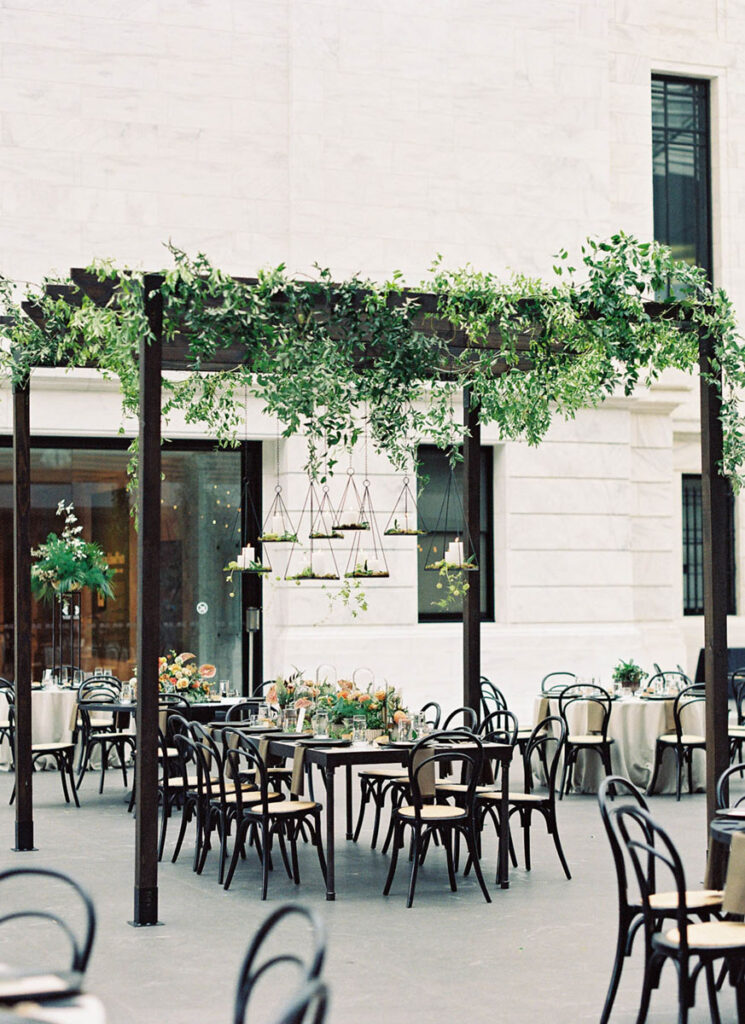
Months That Require Extra Care

Summer (June–September): Summer in New Orleans is hot, humid, and firmly within hurricane season, which officially runs from June 1 to November 30, with peak activity in late summer. It is absolutely possible to plan a summer wedding here, but it requires intentional decisions: fully indoor or well-cooled tented spaces, shorter outdoor time for guests, lighter fabrics for attire, and a clear weather contingency plan.

The upsides: travel and some venue rates can be more favorable, and popular vendors may have more availability. This can be attractive for smaller guest lists, weekday weddings, or couples who prioritize air-conditioned interiors and late-night festivities over extended outdoor time.

Winter (December–February): Winters are comparatively mild. You’ll have cooler temperatures, shorter daylight hours, and the potential for a cozy, candlelit aesthetic that works well in historic interiors. Holiday décor at hotels and restaurants can add to the charm, though you’ll want to confirm how existing decorations may interact with your own design.

One important consideration is the Mardi Gras season, which typically culminates in February or early March and affects availability and logistics significantly. The weeks leading up to Mardi Gras see parades, road closures, and higher hotel rates. It can be thrilling if you want that atmosphere, but it’s not ideal if you’re hoping for a quiet weekend.

Navigating Major City Events and Festivals

New Orleans’ event calendar is robust. While that’s part of its appeal, it also means you need to understand what else the city is hosting around your wedding date.

Mardi Gras Season: Mardi Gras isn’t just one day; it’s a season of parades and celebrations. Lodging prices rise, minimum stays are common, and street closures can make transportation challenging. If your dream is to embrace Mardi Gras energy, you’ll want to work closely with a planner and book as early as possible.

If you’d rather avoid the chaos, choose dates outside of the main parade weekends. The official parade schedule on MardiGrasNewOrleans.com is an essential reference. When in doubt, assume that any weekend with multiple parades will complicate logistics.

Jazz Fest, Sporting Events, and Conventions: Events like the New Orleans Jazz & Heritage Festival, Saints home games, large conventions, and major cultural festivals draw big crowds and can affect hotel availability, traffic, and pricing. The city’s events calendar and convention listings are useful tools while you’re narrowing down dates.

It’s not that you can’t marry on a Jazz Fest weekend or during a big game; it’s that you should know exactly what you’re walking into and plan accordingly.

Choosing Your Date Strategically

Once you understand the seasons and event landscape, think about your priorities and your guests’ realities:

If guest comfort and outdoor time are key, aim for spring or fall dates that do not overlap with major events. If you’re willing to trade milder weather for more competitive hotel rates and a cozier, indoor-focused design, late winter or carefully chosen summer dates might work well.

Here’s a simple way to think about it:

  • Prioritize weather and ambiance? Look at March–May and October–early November.
  • Prioritize budget and availability? Explore January (outside of peak Mardi Gras) and late summer with strong climate plans.
  • Prioritize a specific festival energy? Build the wedding around that, not the other way around.

In every case, check citywide calendars, speak with venues about known conflicts, and build in enough lead time that your chosen date doesn’t force unnecessary compromises on guest accommodations or vendor quality.

Budgeting for a New Orleans Destination Wedding

New Orleans can host everything from intimate, restaurant-based celebrations to multi-day estate weddings, so budgets vary widely. Understanding the specific cost drivers in this city will help you set expectations and allocate funds in a way that supports your priorities instead of surprising you later.

Cost Drivers Specific to New Orleans

Venue and Location Premiums: Iconic and historic properties—particularly in the French Quarter and Garden District—often come with higher rental fees or food and beverage minimums. You’re paying not just for space, but for access to a distinctive setting, historic status, and built-in ambiance that reduces the amount of décor needed.

On the other hand, some smaller venues or restaurants outside the most tourist-heavy areas can offer excellent value with strong character. It’s less about finding the “cheapest” venue and more about finding the space where what you’re paying for actually aligns with your vision.

Food and Beverage: Many New Orleans weddings take place in restaurants, hotel ballrooms, or venues with in-house catering. Food and beverage minimums are common and can be an efficient way to structure your budget if you’re prioritizing cuisine and bar service. For standalone venues that allow outside caterers, you’ll want to factor in rental kitchen build-outs, staffing, and serviceware, which can increase costs.

Live Music and Entertainment: Because music is so integral to the city, many couples invest more heavily here than they might elsewhere: ceremony musicians, cocktail-hour jazz ensembles, a reception band, and a brass band for a second line. There are also associated fees—such as permits and police details—if your second line uses public streets.

None of this is mandatory, of course. You can absolutely have a DJ-only reception or skip a second line. But if part of the reason you chose New Orleans is the music, be honest about where that sits in your priority list and budget for it early.

Where the Budget Typically Goes

Every wedding has its own fingerprint, but in New Orleans, a significant portion of most destination wedding budgets often goes to:

Venue, Catering, and Bar: This is usually your largest combined expense. It encompasses the space itself, food, beverages, staff, rentals that may be included by the venue, and potentially a cake or dessert service. Because so many venues here include at least some rentals, it’s important to understand exactly what’s provided and what’s not (linens, flatware, upgraded chairs, etc.).

Photography, Videography, and Entertainment: Documenting a city as visual as New Orleans is worth a meaningful investment. Photographers and videographers who are familiar with the light, narrow streets, and timing of the city can help you schedule portraits and navigate busy areas. Live bands, DJs, and brass bands shape your guests’ experience of the night and can shift the entire energy of the reception.

Florals, Design, and Rentals: For historic venues and tented receptions, you may be building a full environment: florals scaled to high ceilings, layered linens, upgraded chairs and china, chandeliers, or specialty lighting. In more minimal or modern venues, intentional design helps the space feel warm and wedding-ready.

Hidden or Frequently Overlooked Costs

Budget surprises are rarely about one large, dramatic line item; they’re more often the result of smaller, easily overlooked details that add up:

Permits: A second line parade, use of public parks or streets, and certain outdoor amplified music all require permits. The City of New Orleans and the New Orleans Police and Justice Foundation provide guidelines and fee structures, but couples often underestimate how early these need to be requested and paid.

Transportation and Parking: In dense neighborhoods, especially the French Quarter, parking is limited. Shuttles, trolley charters, or private buses may be needed to move guests between hotels, ceremony sites, and reception venues. If your venue is in a residential area, valet or organized parking plans can also be important. These aren’t glamorous line items, but they directly affect guest comfort and timing.

Additional Events and Experiences: Welcome parties, rehearsal dinners, jazz-club outings, and farewell brunches are common in destination weddings. Even seemingly small touches—like welcome bags with local coffee, pralines, and maps—need to be budgeted thoughtfully. It’s easy to say “it’s just a little something for guests” and then multiply that “little something” by 100 people.

Service Charges and Taxes: Hotels, restaurants, and caterers typically add service charges and local taxes that can total 25–30% (or more) on top of food and beverage estimates. This is true in most cities, but because New Orleans couples often lean heavily into food and drink, the totals can be significant. Ask for “all in” estimates when you’re comparing proposals.

Using a Planner to Align Budget and Vision

An experienced destination wedding planner can help you understand realistic budget ranges for New Orleans specifically, rather than applying generic cost assumptions. That might mean advising you to invest in live music and a quality brass band while simplifying escort displays, or recommending a restaurant buyout instead of a full build-out at a raw space.

The goal isn’t to spend more. It’s to spend intentionally—prioritizing the elements that matter most to you and avoiding common pitfalls that create unnecessary expenses. A planner who knows both New Orleans and other destination markets can also tell you when a quote is simply the “cost of doing business” in a high-demand city versus when there’s room to restructure an approach.

Legalities and Logistics: Marriage Requirements and Permits in New Orleans

New Orleans is known for its spontaneity, but the legal side of getting married here is structured. Understanding Louisiana’s requirements and city permits early will save stress as your date approaches and help you avoid last-minute scrambles for paperwork or approvals.

Louisiana Marriage License Basics

You do not need to be a Louisiana resident to obtain a marriage license in Orleans Parish. Out-of-town couples commonly complete the legal paperwork in New Orleans itself.

Key points to know (always confirm with the Orleans Parish Clerk of Civil District Court, as requirements can change):

Residency: There is no residency requirement for either partner. You can live in Ohio, New York, or anywhere else and still marry legally in Louisiana.

Waiting Period: Louisiana typically has a 24-hour waiting period between the issuance of the license and the ceremony. Under certain circumstances, a judge can waive this; some couples choose to arrive a day or two early to avoid any timing stress and to build in breathing room if flights are delayed.

Identification and Documentation: You’ll need valid photo identification (such as a driver’s license or passport) and a certified copy of your birth certificate. If either of you has been previously married, you may need documentation regarding how that marriage ended (for example, a divorce decree or death certificate). It’s wise to gather these documents well before you fly.

Where and When to Apply: Couples can apply at specific locations in Orleans Parish during designated hours. Office hours and application procedures evolve, so check the clerk’s website and consider calling ahead. It’s also worth asking about holiday closures and any special hours during major events like Mardi Gras.

Officiants and Ceremony Considerations

Louisiana recognizes both religious and civil ceremonies. Your officiant must be authorized under state law, which typically means an ordained minister, priest, rabbi, other recognized clergy, or a judge.

If you have a friend or family member officiating, ensure they meet state requirements and are properly registered in advance. Online ordination alone may not be sufficient; the officiant may need to register with the parish court. This is one of those details that seems small until you’re a week out from the wedding and realize it’s not complete.

Some couples choose to handle the legal marriage at home before or after their New Orleans celebration. This can simplify logistics, particularly for international couples or those with limited time in the city. In that scenario, your New Orleans ceremony can still be structured like a full wedding—vows, rings, readings—without the pressure of paperwork deadlines.

Permits and Permissions

Second Line Parades: To host a second line that uses public streets with a brass band, you’ll typically need a parade permit and a police escort. Costs vary based on duration and route. Application timelines should be respected; many couples rely on their planner, band, or a specialized second line coordinator to navigate the process and ensure all requirements are met.

Street Closures and Public Spaces: If your venue plans involve using sidewalks, courtyards that connect directly to public areas, or staging photos in certain public spaces, you may need additional permissions. This is especially true for large groups or anything involving equipment (arches, furniture, amplified sound). Noise ordinances also come into play, particularly in residential neighborhoods.

Venue-Specific Rules: Historic properties often have their own regulations: restrictions on open flame, décor attachments (no nails or tape on old plaster, for example), load-in routes, and end times. Private estates may have neighborhood-specific noise limitations or parking rules. Understanding these in writing early will shape your design and timeline decisions.

Planning Timelines for Legal and Logistical Details

Build your timeline backward from your wedding date. Confirm marriage license requirements at least a few months in advance and ensure your travel schedule allows for the waiting period. If you’re aiming for a popular weekend, leave yourself time to pivot if office hours are limited or appointments are required.

For second lines and street-related activities, begin permit conversations several months out so you’re not constrained by deadlines. Incorporate these items into your overall planning checklist—not as an afterthought—so they receive the same attention as your venue and design choices.

new orleans wedding planner

Choosing the Right New Orleans Venue for a Timeless Wedding

Your venue will define the tone of the weekend and heavily influence your design decisions, photography, and logistics. In New Orleans, you’re choosing not just a space, but a style of experience. Are you imagining an intimate courtyard dinner, a grand tented lawn, or a lively restaurant filled with jazz?

Historic Hotel Peter and Paul wedding venue exterior in New Orleans

Venue Types That Lend Themselves to Timeless Celebrations

Historic Mansions and Estates: These properties—often found in the Garden District and Uptown—offer a sense of grandeur and intimacy at the same time. Wide porches, double parlors, and manicured grounds create a natural flow from ceremony to cocktails to dinner and dancing. Their architecture provides an elegant canvas for classic design, and many have built-in features like marble fireplaces, grand staircases, and antique chandeliers.

Because they were not originally built as event spaces, you’ll want to pay close attention to room capacities, traffic flow, and where key moments (toasts, dances, cake cutting) typically unfold. A planner familiar with estates and private homes can be especially helpful here.

Boutique Hotels and Inns: Smaller hotels, often in the French Quarter or Warehouse District, combine lodging and event spaces under one roof. Guests can gather in courtyards, rooftop terraces, or salons with distinct character. Boutique hotels work well for destination weddings because they allow you to create a central “home base” for the weekend and often have experienced staff used to handling multi-day events and complex room blocks.

This style of venue is particularly well-suited for weddings where guest connection is a priority. When everyone is staying onsite or within a few blocks, spontaneous lobby encounters turn into impromptu drinks or walks through the neighborhood.

Courtyards, Gardens, and Tented Spaces: New Orleans’ climate and architecture make outdoor settings especially appealing. A brick courtyard with ivy-covered walls or a lawn under live oaks can host ceremonies, al fresco dinners, or tented receptions. Tented weddings require careful planning around weather, flooring, power, and lighting, but they offer the ability to layer in design details while still feeling connected to the landscape.

If you’re drawn to the idea of a tented wedding, it’s important to work with vendors who understand both tent infrastructure and the specific microclimate of the city: how storms move in, what kind of flooring works on local soil, and how to handle drainage if there’s heavy rain.

Restaurants and Jazz Clubs: For smaller guest counts or couples who want a food- and music-forward experience, a restaurant buyout or private room at a jazz club can be ideal. You get the benefit of an existing kitchen and staff, strong interiors, and a built-in sense of place. The key is balancing the venue’s everyday character with the elevated feel of a wedding.

Many well-known restaurants in New Orleans offer private dining rooms or full buyouts that are surprisingly well-equipped for weddings. The trade-off is that you’ll be working within an existing layout and style instead of building from a blank slate—which can be a positive if you’re drawn to their interiors.

What to Consider When Comparing Venues

Capacity, Flow, and Guest Comfort: Many historic spaces were not built with modern event capacities in mind. Understanding how guests will move from ceremony to cocktails to reception is essential. Ask where bars, buffets, and dance floors typically go, and consider how older buildings handle air conditioning, bathrooms, and accessibility.

It’s helpful to imagine your guests hour by hour. Where do they arrive? Where do they put their bags? Where do they get a drink? Where are they sitting, standing, or waiting? Venues that can answer these questions clearly will make your weekend feel seamless rather than improvised.

Indoor vs. Outdoor Balance: Even if you love the idea of an open-air ceremony, you’ll want a true contingency plan in case of rain, extreme heat, or cold snaps. Venues that offer both indoor and outdoor options—or that can be tented effectively—provide flexibility that is invaluable on a wedding day.

Catering Arrangements: Some venues require the use of in-house catering, which can simplify planning but limit menu flexibility. Others allow outside caterers with approved lists. Clarify what is included (tables, chairs, linens, glassware, basic sound) and what will require separate rental contracts. It can be helpful to see sample floor plans and past event photos to understand how the space has been used successfully.

Noise Restrictions and Curfews: In residential or historic districts, amplified music may need to end at a specific time, and outdoor sound levels may be strictly monitored. Understanding these rules will help you shape your timeline and decide whether an after-party at another location makes sense. Some couples choose to end the formal reception earlier and then move to a lounge or club for a later-night continuation.

Key Logistical Questions to Ask Each Venue

As you narrow your list, take time to ask detailed questions about:

Vendor Access and Load-In: What are the earliest and latest times vendors can be on-site? Are there elevators, narrow staircases, or limited entry points that might complicate installation? In dense areas, how do trucks load and unload without blocking traffic or drawing neighbor complaints?

Power and Technical Needs: Older buildings sometimes have limited electrical capacity. Ask how they handle bands, DJs, additional lighting, and tented setups. You may need generators or a lighting vendor familiar with the space. Don’t assume “it will be fine” unless someone has checked the actual power load.

Accessibility: Not all historic buildings are fully ADA compliant. Clarify how guests with mobility considerations will access ceremony areas, restrooms, and reception spaces. If certain areas are only accessible by stairs, plan ahead for seating assignments and where older guests will be most comfortable.

Vendor Lists and Partnerships: Some venues maintain required or preferred vendor lists. This can be helpful when you’re planning from afar, but it’s important to understand how flexible those lists are and whether they align with your aesthetic and priorities. A planner can often navigate these conversations and advocate for vendors who are a strong fit, even if they’re not on an existing list.

Evaluating Venues Remotely with Experienced Support

If you’re planning from out of town, site visits may be limited. This is where working with a planner familiar with historic properties, boutique hotels, and tented weddings in destination markets becomes particularly useful. They can vet spaces, request accurate floor plans, review load-in logistics, and even walk you through venues virtually—highlighting details you might miss on your own.

Instead of choosing based on photos alone, you’re making decisions with someone who understands both design and operations. A courtyard that looks perfect in a single Instagram photo might have challenging dimensions, uneven flooring, or strict noise rules. A planner who has navigated similar properties in New Orleans or other historic cities can help you read between the lines.

Bride approaching the groom for a first look inside a historic New Orleans venue

Creating a Timeless New Orleans Wedding Design

In a city with as much personality as New Orleans, a timeless wedding design doesn’t try to compete with the surroundings. It enhances what’s already there and creates a visual story that will age gracefully in photographs and in memory.

Defining “Timeless” in a Visually Rich City

Timeless design doesn’t mean generic or devoid of color. In New Orleans, it often means:

Choosing understated elegance over literal, themed décor. Instead of leaning into Mardi Gras masks and beads, think refined references: classic typography on your invitations, subtle nods to jazz in your paper goods, or a color palette inspired by the patina of local architecture.

Letting the architecture lead. A French Quarter courtyard might call for organic arrangements that look like they’ve always been there, layered candlelight, and linens that echo the colors of the surrounding stone. A modern Warehouse District loft might benefit from clean lines, tailored florals, and a few sculptural pieces that play off exposed brick and steel.

Thinking in terms of proportion and restraint. New Orleans spaces often already feel full—visually and energetically. Adding every design idea you’ve ever loved can crowd both the space and the story. Timelessness lives in the edit.

Color Palettes and Textures That Complement New Orleans

New Orleans exteriors often feature soft stuccos, weathered brick, and muted pastels. Interiors may include polished wood, antique mirrors, patterned tile, and patterned wallpapers. Some palettes that work well in this context include:

Neutrals with Romantic Accents: Cream, ivory, dove gray, and soft blush layered with taupe or sand tones. This keeps the overall look refined and allows the setting to shine. You can add depth with texture—linen, silk, velvet—rather than relying solely on color.

Mossy Greens and Classic Metallics: Deep greens, sage, and olive paired with warm metallics like brushed gold or antiqued brass feel at home in courtyards and historic parlors. They echo the city’s lush landscaping and vintage details and pair beautifully with candlelight.

Historic Inspiration: Drawing on the colors found in local interiors—rich blues, tobacco, garnet, or faded ochre—can create depth. The key is to keep the saturation balanced so your palette feels sophisticated rather than overwhelming. Think one or two saturated tones supported by neutrals, not a palette of all bold colors competing with each other.

Florals and Décor for Historic and Tented Spaces

In historic spaces, it’s helpful to think in terms of integration rather than overlay. Work with the existing architecture: frame doorways with greenery instead of covering them, place arrangements where they complement fireplaces or staircases, and scale installations thoughtfully so they don’t overpower smaller rooms.

Candlelight is especially effective in New Orleans. Hurricanes and lanterns on tabletops, clusters of votives on mantels, and subtle uplighting can enhance the existing ambiance without feeling theatrical. The right lighting plan can make an already beautiful room feel like it’s glowing from within.

For tented receptions—whether on an estate lawn or a courtyard—consider:

  • Soft fabric draping and tailored linens to add polish and hide tent hardware where needed.
  • Greenery or floral elements integrated into the tent structure for a sense of enclosure and romance.
  • Thoughtful flooring and lighting to keep the space functional and inviting regardless of weather.

In both historic and tented environments, scale matters. A few well-placed focal pieces—an entry installation, a bar arrangement, a thoughtful head table—often have more impact than florals everywhere with no clear visual story.

Colorful red, yellow, white, and lavender bridal bouquet in New Orleans

Balancing Local Flair with Long-Term Appeal

Part of the fun of a New Orleans wedding is embracing local flair without veering into costume-party territory. Some ways to strike that balance:

Subtle Cultural Touches: Custom cocktail napkins featuring a line drawing of your venue or a local streetcar, menus referencing local dishes, or escort cards named after neighborhoods or jazz standards. These evoke the city without relying on clichés.

Thoughtful Paper Goods: Including a small illustration of a trumpet, a fleur-de-lis, or wrought-iron balcony detail on your stationery can be a quiet nod to place. Working with a stationer who understands New Orleans—or who can draw from photographic references—helps keep the look bespoke instead of clip-art.

Avoiding Short-Lived Trends: When in doubt, ask whether a design choice will still feel charming in ten or twenty years. Oversized props, overly literal “speakeasy” décor, or anything that feels borrowed directly from a social media trend can date your photographs quickly. Classic materials—linen, glass, greenery, soft florals—age more gracefully.

The Role of a Planner-Designer Team

A planner with a design focus and experience in historically rooted and tented weddings can help translate your personal style into a design that feels at home in New Orleans. That might mean editing down ideas, tailoring a color palette, or suggesting ways to incorporate meaningful personal references alongside local influences.

For example, if you’re from Cleveland and love Lake Erie’s blues and grays, those tones can show up in your linens or stationery against the warmer hues of a French Quarter courtyard. If you have family heirlooms—silver pieces, textiles, or art—they can be woven into tablescapes or vignette styling. The end result is a wedding that feels both distinctly yours and deeply connected to its setting.

Bride and groom sharing their first dance at a New Orleans wedding reception

Incorporating New Orleans Culture in a Classic, Not Kitschy, Way

New Orleans culture is vivid and accessible; it doesn’t take much to bring it into your wedding. The art lies in choosing details that feel authentic and considered, rather than assembling a themed checklist.

Live band performing during a wedding reception at Hotel Peter and Paul

Thoughtful Ways to Include Music

Ceremony and Cocktail Hour: Strings can still feel entirely at home in New Orleans, especially if you incorporate arrangements of jazz standards or local compositions. Alternatively, a small jazz ensemble can provide a sophisticated soundtrack that hints at what’s to come without overpowering the ceremony’s formality.

For cocktail hour, a trio or quartet can create an atmosphere that feels unmistakably New Orleans—without requiring guests to shout over the music. Think of it as setting the tone for the evening and giving guests the feeling of stumbling into a great local club, except that everything is tailored to you.

Second Line and Reception Entrances: A brass band leading you and your guests through the streets or into your reception space is an unforgettable moment—and a very New Orleans one. Work with professionals who understand wedding pacing and can coordinate with your planner to manage timing, permits, and guest direction. A good band will know how to keep the energy high while still respecting neighbors and schedules.

Curated Playlists: Even when live musicians take breaks, your playlists can continue the sense of place: classic New Orleans artists, carefully chosen modern tracks, and a balance of familiar songs and local flavor. You might share a short “must play” and “do not play” list with your DJ and trust them to weave in regional favorites that feel right for your crowd.

Oyster shucker serving fresh oysters at a New Orleans wedding

Food and Beverage with a Refined Local Twist

Food is an opportunity to introduce guests to New Orleans in a way that feels indulgent but polished.

Elevated Local Dishes: Small plates of étouffée, elegantly presented gumbo, or oysters served multiple ways (raw, charbroiled, or as part of passed hors d’oeuvres) allow guests to sample without feeling overwhelmed. Thoughtful portioning and presentation keep things refined; no one needs a full-size po’boy in a tuxedo.

Signature Cocktails: Classic drinks like the Sazerac, French 75, and Ramos Gin Fizz have deep roots in New Orleans. You might offer a lighter variation of a Sazerac for broader appeal, or a champagne cocktail inspired by a French 75 for your welcome drink. Using local spirits or bitters adds another layer of authenticity. For guests who don’t drink alcohol, zero-proof versions can echo the same flavor profiles and garnishes.

Late-Night Bites: Beignets, mini muffulettas, or chicory-laced coffee service can be a nod to the city’s late-night culture. Presented thoughtfully—on trays with linen napkins or at a small, staffed station—they feel more like a curated experience than a novelty. Late-night snacks also help guests recover from dancing and cocktails and make the walk back to their hotels more pleasant.

Bride and wedding guests enjoying cocktail hour in New Orleans

Guest Experiences and Traditions

Second Line Etiquette: Beyond permits and logistics, guests may need a brief introduction to what a second line is and how to participate. A short explanation on your wedding website or a printed note in welcome bags—encouraging guests to dance, wave handkerchiefs, and follow the band—makes the experience inclusive rather than confusing.

Handkerchiefs, Parasols, and Details: Custom handkerchiefs or simple white ones can be distributed to guests for the second line. Parasols for the couple or wedding party are a traditional touch. These items work best when designed to complement your overall aesthetic, not overshadow it. If your palette is moss green and ivory, for example, parasols and hankies in those tones will feel considered rather than costume-like.

Welcome Bags with Local Touches: Bags or boxes might include local coffee (like a chicory blend), pralines, small bottles of hot sauce, and a printed neighborhood guide. Including a simple map and a few personal recommendations for restaurants and music venues can help guests feel oriented. It’s a small way of saying, “We’re so glad you came all this way—here’s how to enjoy it.”

Respecting Local Culture and Residents

New Orleans is generous in sharing its culture, but it’s still home to many people. Being mindful means:

  • Working with reputable, local musicians and vendors who understand traditions.
  • Following city rules around noise, permits, and public spaces, rather than assuming exceptions will be made.
  • Encouraging guests to engage respectfully with neighborhoods they’re visiting—staying on sidewalks, being mindful late at night, and supporting local businesses.

This approach not only supports the community but also creates a richer, more grounded experience for everyone involved. Weddings feel better when they’re in dialogue with a place instead of simply using it as a backdrop.

Planning from Afar: Destination Wedding Logistics in New Orleans

Coordinating a wedding in New Orleans while living hundreds of miles away is absolutely possible; it just requires a realistic timeline, clear communication, and a structure for decisions. If you’re used to planning events in your own city, the main shift is learning to trust a team on the ground and to use your visits strategically.

Building a Realistic Planning Timeline

For most destination weddings, a lead time of 12 to 18 months is ideal. That window allows you to secure preferred venues and vendors, especially in high-demand seasons like spring and fall.

If your timeline is shorter—nine months or less—prioritizing becomes even more important. You’ll want to secure your venue, planner, and key vendors quickly and be open to weekdays or non-peak dates that can offer more flexibility.

Plan at least one, and ideally two, focused visits:

Early Visit: Venue tours, initial walkthroughs, and getting a feel for neighborhoods. This is when you decide what part of the city feels like “yours” and lock in your date and venue.

Later Visit: Tastings, final walkthroughs, hair and makeup trials, and possibly a second round of design meetings. This visit can be closer to the wedding and focused on fine-tuning rather than big-picture decisions.

A planner can help consolidate meetings during these visits so you maximize your time in the city and don’t spend half the day in transit. Many couples find that a well-structured 48–72 hours on-site accomplishes more than they expect.

Guest Travel and Accommodations

New Orleans’ compact layout means you can often choose one or two primary neighborhoods for hotel blocks and keep guests within easy reach of venues.

Choosing Neighborhoods: The French Quarter offers character and centrality, but can be noisy—especially near Bourbon Street. The Warehouse District and CBD provide convenient access to venues and restaurants with a slightly quieter feel and newer properties. Uptown and the Garden District are more residential and charming, though they may require more transportation for events.

Hotel Types: Boutique hotels offer charm and a sense of place; larger properties offer more room types, loyalty programs, and amenities. Many couples secure a mix, so guests can choose based on their preferences and budgets. Group rates and room blocks are typically coordinated directly with hotel sales teams, and it’s wise to ask about minimums, attrition clauses, and cut-off dates.

On your wedding website, include clear information about the closest airport (Louis Armstrong New Orleans International Airport), transfer options, typical taxi and rideshare costs, and any neighborhood-specific notes about navigation and safety. A short list of recommended hotels at different price points can reduce “where should we stay?” emails.

Transportation During the Wedding Weekend

Because New Orleans is walkable in parts and more spread out in others, transportation plans should be tailored to your venues and guest demographics.

In Dense Areas: For French Quarter or CBD-based weddings, walking between venues can be part of the experience, especially if you incorporate a second line or guided walk. Still, consider shuttles, pedicabs, or specific instructions for older guests or those with mobility considerations.

Shuttles and Charters: If your ceremony and reception are in different neighborhoods—or if you’re hosting events in residential areas—dedicated shuttles or trolleys can keep things on schedule and minimize parking issues. Work with transportation providers who understand local traffic patterns and event timelines.

Planning Around Parades and Road Closures: Always verify whether your date coincides with parades, sporting events, or festivals that might close streets or complicate travel. Build buffer time into your schedule and communicate clearly with guests about recommended arrival times and routes. Your planner and transportation team will often have up-to-date insight that doesn’t show up on public maps yet.

Guest holding a personalized menu at a candlelit New Orleans wedding dinner

Communicating with Guests Effectively

Your wedding website becomes a central hub for information in a destination city. Think of it as your shared reference point so you’re not answering the same questions individually.

Helpful sections include:

  • A basic weekend itinerary with clear time frames and dress codes for each event.
  • Transportation notes: whether shuttles are provided, how far venues are from hotels, and any expected walking.
  • A short list of curated recommendations for restaurants, bars, and music venues that align with your style and comfort level.
  • Local etiquette notes—such as tipping musicians, expectations around second lines, and how to enjoy nightlife while staying aware of surroundings.

A brief email or mailed card a few weeks before the wedding can recap key details, share a weather snapshot, and highlight any late-breaking updates (for example, new street closures or construction near your hotel).

How a Destination-Focused Planner Manages from Another Home Base

Working with a planner who isn’t based in New Orleans but has extensive destination and historic-venue experience can actually be an advantage. They’re accustomed to planning across time zones, consolidating travel for site visits, and coordinating with local vendors remotely.

You benefit from both their broader perspective—what works in different regions and climates—and their ability to adapt those best practices to New Orleans’ specific context. Virtual meetings, shared documents, annotated floor plans, and organized decision timelines keep the process moving without requiring you to be in the city frequently.

For firms like Shi Shi Events that specialize in boutique, historically rooted, and tented weddings across the Midwest, East Coast, and Southern United States, New Orleans becomes part of a broader portfolio of complex, character-rich locations. The logistics of a tented estate wedding outside Cleveland are different from a French Quarter courtyard celebration, but the underlying skills—site evaluation, vendor coordination, contingency planning—translate directly.

Building Your New Orleans Vendor Team

New Orleans has a deep bench of talented wedding professionals, many of whom are intimately familiar with the city’s particular logistics and culture. Choosing the right team will impact not only your wedding day, but the entire planning experience.

Why Local Expertise Matters

Vendors who regularly work in New Orleans understand details that don’t always make it onto a website:

They know how long it truly takes to move a bus full of guests from the French Quarter to Uptown on a Saturday night. They know how humidity affects hair, makeup, and florals at different times of year. They know which courtyards are shady at 4 p.m. in May and which rooftops can be windy in November.

This practical knowledge translates into better timelines, realistic expectations, and quick problem-solving if anything unexpected arises. It also reduces the number of decisions you need to make from scratch; instead, you can respond to informed recommendations.

Key Vendor Categories to Prioritize

Planner and Design Team: Your planner is your primary partner in navigating everything from vendor selection to logistics and design cohesion. They’re especially important in a city that relies heavily on permits, multi-venue coordination, and neighborhood-specific rules. If design is a major priority, working with a planner who also leads or closely collaborates on design ensures that logistics and aesthetics support each other.

Photographer and Videographer: Professionals who know the city can suggest portrait locations that avoid heavy crowds and make the most of available natural light. They also understand how quickly conditions can shift due to weather or events and can adjust plans on the fly. Reviewing full galleries from New Orleans weddings—rather than just highlight reels—will give you a sense of how they handle low light, indoor spaces, and night scenes.

Catering, Bar, and Cake or Desserts: Whether provided in-house by a hotel or restaurant or brought in by an outside team, your culinary vendors should be comfortable executing refined versions of local dishes and managing service in historic or unconventional spaces. Ask about how they handle dietary restrictions, pacing, and late-night offerings.

Music and Entertainment: Bands, DJs, brass bands, and specialty performers need to coordinate with each other and with your planner, especially if your event includes both indoor and outdoor components. Experienced musicians know how to balance classic songs with local flavor in a way that suits your style and your guest mix.

Florist, Rentals, and Lighting: Design vendors familiar with New Orleans venues can suggest what works best in each space: which rental chairs fit comfortably through narrow doors, how to secure florals on delicate railings, and which lighting setups highlight architectural features without overwhelming them. They’ll also understand how to condition flowers in a humid climate so arrangements stay fresh longer.

Questions to Ask Potential Vendors

As you speak with prospective vendors, consider asking:

How often have you worked at our chosen venue or in this neighborhood? What is your approach when there are road closures or event-related delays? How do you handle weather contingencies?

For planners, designers, and photographers: Are you comfortable working primarily via video calls and shared documents? How do you structure decision timelines for destination clients? For caterers and venues: Can we see sample menus that highlight local dishes in an elevated way? How do you handle second line timing with food service?

The goal is to understand not only their portfolio, but also how they think about problem-solving, communication, and collaboration with other vendors.

How a Planner Helps Curate a Cohesive Team

Rather than assembling vendors one by one, a planner can recommend teams that have worked well together in the past, align with your aesthetic, and fit within your budget. This cohesion matters: when vendors understand each other’s workflows and expectations, your wedding day runs more smoothly and your design elements feel integrated—florals complementing linens, lighting supporting photography, and catering working seamlessly with your timeline.

For destination weddings, cohesion also means clear, centralized communication. A planner can act as the hub, ensuring that when one element shifts (for example, you decide to move the ceremony start back 30 minutes), everyone else—transportation, musicians, caterer, photographer—adjusts accordingly.

Sample New Orleans Wedding Weekend Itineraries

No two New Orleans weddings look exactly alike, but it can be helpful to see how a classic weekend might unfold. These sample outlines are starting points you can adjust based on your guest count, neighborhood choices, and priorities.

French Quarter and Garden District Timeless Weekend

Friday: Guests arrive and check into hotels in or near the French Quarter or Warehouse District. That evening, you host a welcome cocktail reception in a courtyard or at a historic bar with a private room—light bites, a couple of classic cocktails, and soft live jazz introduce everyone to the city without overwhelming them. If you’d like, you might organize a short, guided walk for early arrivals to orient them to the neighborhood.

Saturday: The day starts slowly. Guests explore on their own—grabbing beignets, walking Royal Street, or visiting the Historic New Orleans Collection—before changing for a late-afternoon ceremony in a Garden District church or courtyard. After the ceremony, a brass band leads a second line that escorts guests to your reception venue—a historic mansion or boutique hotel nearby.

Dinner is served in multiple rooms or under a tent, with a live band carrying the night. You might end with a small after-party in a nearby lounge or hotel bar for guests who want to keep going, while others head back to their rooms at a reasonable hour.

Sunday: A farewell brunch at a well-known restaurant, with reservations or a partial buyout to keep things organized. Guests can then wander the French Quarter, visit a museum, or head to the airport depending on flight times. On your website, you might suggest a few options for those with evening flights, like a stroll through City Park or a visit to the New Orleans Museum of Art.

Intimate Boutique Hotel or Private Estate Celebration

For a smaller guest count, the weekend can be structured around a single property or a tight cluster of venues, creating a “house party” feel where everyone sees each other often.

Friday: A chef-driven dinner in a private dining room or on a hotel terrace, perhaps paired with a tasting of local cocktails or wines. You might include a brief welcome toast and intentional introductions, especially if many guests are meeting for the first time. The night stays relatively early and relaxed so guests are rested for the main event.

Saturday: A late-morning ceremony in a secluded courtyard, followed by a long, leisurely lunch reception with multiple courses, wine pairings, and live acoustic music. Alternatively, you can plan a late-afternoon ceremony on an estate lawn with a sunset dinner and dancing under a tent.

With a smaller group, it’s easier to consider custom experiences: a private jazz performance on-site, a curated whiskey or rum tasting, or a guided walk through the neighborhood with a local historian. The intimacy allows you to pay attention to details—personalized place cards, hand-written notes, or family-style platters that encourage conversation.

Sunday: A relaxed, flexible breakfast or brunch with a loose timeframe, allowing guests to drop in as suits their travel plans. If the property allows, you might set up a small lounge area outside where guests can sit with coffee and talk about their favorite moments from the weekend.

Considering Guests’ Free Time

Part of the appeal of New Orleans is what guests can discover on their own. On your website or in welcome materials, you might suggest:

A few neighborhoods for wandering: the French Quarter for history and architecture, Magazine Street in Uptown for shopping and cafés, the Marigny for music and colorful houses. Select museums and sites, such as the National WWII Museum, the New Orleans Museum of Art, or historic homes like the Gallier House.

Live music venues that are welcoming to visitors and not overly tourist-focused. It’s often helpful to recommend a few options at different energy levels—one quieter jazz club, one livelier spot, and one classic bar with occasional live sets.

Alongside recommendations, include brief notes on safety—such as staying in well-populated areas at night, keeping valuables close, and using licensed cabs or rideshares—so guests feel prepared rather than anxious.

Common Mistakes to Avoid When Planning a New Orleans Destination Wedding

New Orleans rewards thoughtful planning. Many of the most common missteps are less about big decisions and more about underestimating the city’s particular rhythms and infrastructure.

Over-Scheduling Guests: It can be tempting to plan an activity for every hour of the weekend, especially if you love the city and want to share as much as possible. But part of the joy of New Orleans is unstructured exploration. Leaving windows of free time lets guests wander, rest, and discover their own favorite corners of the city.

Leaning Too Hard into Clichés: Beads, masks, and bold purple-green-gold combinations can quickly push a wedding into theme-party territory. Used sparingly and thoughtfully, they can be fun; used heavily, they overshadow the more nuanced, enduring side of the city. If you’re unsure whether something is charming or cheesy, it often helps to imagine it in your photo album twenty years from now.

Underestimating Weather: Heat, humidity, and sudden showers are recurring characters in New Orleans. Failing to provide shade, hydration, and a realistic indoor backup plan can make even a beautifully designed event feel uncomfortable. The same goes for winter chills or unexpected wind on rooftops. Comfort is part of design; fans, parasols, lap blankets, or warm signature drinks can all be both practical and lovely.

Ignoring City Events and Logistics: Booking a date that conflicts with a major festival or sporting event without understanding the implications can lead to limited hotel availability, increased costs, and traffic complications. A ten-minute ride can become forty-five minutes if you haven’t accounted for a parade route.

Skipping Professional Planning Support: New Orleans is not a “simple” destination city, especially if you’re considering a second line, multiple venues, or a tented reception. Without someone managing details, it’s easy to overlook permits, neighborhood-specific regulations, and vendor coordination. Even highly organized couples often find that having a planner on the ground—or one who specializes in destination work—lets them actually enjoy the weekend instead of troubleshooting it.

How a Destination Wedding Planner Supports a Timeless New Orleans Celebration

Working with a planner who has deep destination experience and an affinity for historic venues, boutique hotels, and tented weddings can transform the way you experience planning in New Orleans. Instead of piecing together information from different corners of the internet, you have a guide who knows how the pieces fit together in real life.

Neutral, Design-Forward Guidance

An outside planner isn’t tied to any single venue or vendor; their primary focus is aligning your vision with what works practically in the city. They can gently steer you away from over-theming, help you refine a design concept that feels both personal and context-sensitive, and ensure the aesthetic decisions you make will still feel like you in years to come.

This often looks like asking better questions at the outset: How do you want the weekend to feel for your guests? What kinds of spaces make you feel most at ease? Which traditions matter to you, and which can fall away? In a city with so many options, that clarity is invaluable.

Experience with Complex Venues and Logistics

Historic buildings, tented lawns, and boutique hotels all have particular needs: power, flooring, load-in restrictions, and neighborhood regulations. A planner used to working in these environments across different regions can anticipate what might go wrong and design solutions before issues arise—whether that’s adding a generator, adjusting your layout, or reworking your timeline around local events.

For example, Shi Shi Events regularly works in historic venues and private estates throughout the Midwest and East Coast, where preservation rules and logistical hurdles are common. That experience translates seamlessly to New Orleans properties where protecting architecture, managing neighbors, and coordinating multiple vendors in tight spaces all matter.

Coordinating Between Your Home Base and New Orleans

For couples based in places like Cleveland, Chicago, New York, or Atlanta, a planner can act as both a translator and a connector. They help you:

  • Schedule site visits and tastings efficiently so every trip to New Orleans feels purposeful rather than rushed.
  • Review contracts and proposals with an eye for local nuances, like permitting, noise rules, and timing constraints.
  • Maintain consistent communication among vendors so your design, logistics, and guest experience support one another instead of existing in separate silos.

The most tangible benefit is often invisible: you’re able to stay focused on your life at home—careers, families, everyday decisions—while the complex, behind-the-scenes work of a New Orleans wedding is handled methodically.

Newlyweds sharing a quiet moment during their candlelit New Orleans reception

Designing a New Orleans Wedding That Truly Feels Like You

Planning a timeless destination wedding in New Orleans is less about replicating what you’ve seen and more about choosing what resonates with you and your guests. The city provides extraordinary raw material: historic streetscapes, layered architecture, distinctive food and music, and a pervasive sense of celebration. Your role is to decide which pieces to highlight and how to weave in your own story.

For some couples, that might mean a French Quarter courtyard ceremony with a classic jazz trio and a simple, elegant dinner. For others, it might be a tented reception under live oaks in the Garden District with long farm tables, candlelight, and a band that keeps everyone on the dance floor until the last song. There’s no single “right” way to do a New Orleans wedding—only the way that feels most like you.

When you prioritize meaning, guest comfort, and design that feels rooted in place rather than in trends, you end up with a wedding that ages well. A ceremony under live oaks, a candlelit dinner in a courtyard, a brass band leading your friends and family through the streets—these are scenes that will feel as compelling decades from now as they do today.

Use this guide as a framework as you research neighborhoods, venues, and seasons, and as you weigh whether to incorporate a second line or host everything in a single historic property. As you move deeper into planning, you may find it helpful to bring in professional support—someone who understands both the intricacies of New Orleans and the realities of organizing a destination wedding from another city.

With the right structure in place, the planning process itself can feel like an extension of the celebration: thoughtful, personal, and grounded in a city that has been hosting unforgettable gatherings for generations.

Cleveland Wedding Planner Guide: How to Plan a Timeless, Boutique Wedding in Northeast Ohio and Beyond

A wedding that feels timeless and boutique doesn’t need to perform. It doesn’t rely on gimmicks or the trend of the month. It moves with quiet confidence, grounded in generous hospitality, thoughtful design, and a real connection to place. In Cleveland and throughout Northeast Ohio, that idea has particular weight: historic architecture, layered neighborhoods, and the interplay of lakefront, countryside, and city energy give you a backdrop that already feels like part of your story.

When couples say they want a “timeless” wedding, they’re usually talking about memories and images that won’t feel dated when you look back in twenty or thirty years. Think refined silhouettes, balanced spaces, and details that feel intentional instead of busy. “Boutique” adds another dimension: smaller in feel, not necessarily in guest count; curated rather than generic; and deeply centered on the guest experience, whether you’re hosting 40 people in an inner courtyard or 220 in a Beaux-Arts ballroom.

Cleveland and Northeast Ohio are unusually well-suited to this approach. Gilded Age mansions, historic hotels, museums, theaters, riverfront warehouses, and design-forward lofts offer character that can’t be replicated with rentals alone. Drive thirty or forty minutes in almost any direction and you’ll find vineyards, national park vistas, and rolling farmland. For many couples, that means you can have a destination-level experience without leaving home—or you can let Cleveland be home base while you plan a wedding in another region of the Midwest, East Coast, or South.

This guide is for couples planning in and around Cleveland as well as those drawn to tented private estates, boutique hotels, historical venues, and destination-style weekends in nearby regions. The intent here is practical and transparent: how to think about your vision, what a realistic timeline actually looks like, how budgets work in this region, what to expect from tented builds, and how to make complex, multi-day celebrations feel effortless to your guests.

The perspective comes from years of planning and designing weddings at historical properties, boutique hotels, and private estates across Ohio, the Midwest, the East Coast, and the South. Use it as a roadmap you can adapt—whether you’re marrying at a Cleveland museum, under a sailcloth tent on a private lawn, at a vineyard in wine country, or at an inn in New England.

Newlyweds holding hands beside candlelight and autumn greenery at a Cleveland wedding

Clarifying Your Vision: The Foundation of a Timeless, Boutique Celebration

Before you think about linens, flowers, or color palettes, it helps to zoom out and talk about experience. The most enduring weddings are not a collage of pretty things; they’re coherent experiences that feel like you. That starts well before décor. It begins with a shared vision for how you want the day—and if you’re planning a weekend, the whole arc—to feel.

Start with experience, not aesthetics

Many couples begin with Pinterest boards and Instagram saves. That’s understandable, but often those images pull you toward someone else’s story. Instead, start with a conversation that has nothing to do with weddings:

How do you picture the energy of the day? Quiet and intimate, or high-energy and exuberant? Do you want guests to feel like they’ve arrived at a black-tie gala, a relaxed weekend house party, a European-style garden dinner, or something that sits between those? Do you imagine lingering at long tables or packing the dance floor from the first song?

These answers drive almost every decision you’ll make: ceremony time, music style, menu format, size of your wedding party, whether you do speeches during dinner or at cocktails, and how formally you ask guests to dress.

A boutique celebration prioritizes hospitality and comfort. That can look like:

Short, thoughtful transitions instead of long gaps; ceremony chairs that are actually comfortable; signage and staffing that make it very difficult to get lost; espresso or tea service after dinner; baskets of shawls during an early fall tented ceremony; or a quieter lounge away from the dance floor for older guests or those who don’t love loud music.

Finding your shared aesthetic “anchors”

Once you’re aligned on how you want the day to feel, you can translate that into visual “anchors” instead of a long list of must-have décor items. Look outside weddings for this:

What kinds of spaces do you both love? A modern art museum, a historic library, a lakeside inn, a Parisian café, a minimalist gallery, a classic hotel lobby with marble and brass? What architecture draws you in—Art Deco, mid-century, farmhouse, classical, industrial? What hotels have you stayed in that felt like you could move in?

Your wardrobes can be surprisingly revealing: do you both gravitate to clean lines and neutrals, or rich textures and jewel tones? These threads form a visual language you already speak together.

When you create a mood board, lean heavier on textures, tones, and shapes than on very specific arrangements. Instead of 50 images of centerpieces, focus on things like:

The way candlelight bounces off glassware. The contrast between stone walls and airy, loose florals. The negative space on a beautifully set table. The interplay of old wood beams and crisp white textiles. Those anchor points can flex with season, venue, and budget while staying recognizably “you.”

The difference between boutique and “big box” wedding feel

Boutique doesn’t necessarily mean a tiny guest list. It means intentionality and scale that feel human. A 60-person rooftop dinner can feel boutique. So can a 200-guest ballroom wedding, if each decision flows from your vision instead of a generic template.

A few hallmarks of boutique celebrations:

There’s a sense of narrative. Guests are welcomed into the weekend; spaces unfold thoughtfully; transitions make sense. The venue, menu, music, and décor all pass through the filter of your priorities, not a package list. Personalization shows up in subtle, meaningful ways—a menu referencing your favorite city, a string quartet playing an unexpected modern song as you recess, escort cards that double as a keepsake or something guests will actually use after the wedding.

Creating a priorities list you can actually use

Once you’ve talked through experience and aesthetic anchors, write down two short lists:

Non‑negotiables: season, region, or type of venue (for example, a historic property or a tented celebration), rough guest count, ceremony type, and anything you both feel strongly about—live music, a full weekend of events, all events at one site, or a very intentional dinner.

Nice‑to‑haves: the specific floral varieties you love if they’re in season; a champagne tower; a custom dance floor; a vintage car; a live ceremony musician; late‑night snacks. These are items you can add if budget and logistics allow, but they don’t drive the vision.

Keeping these categories separate early on makes later decisions far less stressful. It’s much easier to move a nice‑to‑have off the list than something that quietly functioned as a non‑negotiable from the beginning.

Building a Realistic Planning Timeline for Cleveland & Northeast Ohio Weddings

Boutique, detail‑rich weddings—especially in sought‑after historical venues or tented settings—need time. In Cleveland and Northeast Ohio, demand for key dates has climbed steadily, and certain styles of wedding (like private estates) require more coordination than a traditional banquet hall. Understanding what’s realistic early on prevents a lot of last‑minute pressure.

How far in advance to plan in this region

For Saturday weddings between late spring and early fall, a 12–18 month planning window is ideal if you care about any combination of:

A specific date or holiday weekend; a particular historical venue, museum, or boutique hotel; a band or photographer you’ve followed for years; or a tented build at a private property that will involve multiple vendors.

If you’re more flexible on date or day of the week, 6–9 months can still be very workable, especially for:

Friday or Sunday weddings; winter celebrations; shoulder‑season dates in early spring or late fall; or slightly smaller guest counts. You’ll want to move quickly on venue and core vendors, but you’ll often have more choices than you’d expect.

A high‑level roadmap from engagement to wedding day

Every wedding has its own rhythm, but the sequence below is a realistic framework for most boutique and destination‑style celebrations:

Twelve to eighteen months out: Talk through your vision, rough guest count, preferred region or city, and budget. If you’re considering a full‑service planner, this is the moment to bring them in. Secure your venue (or property, if you’re hosting at home) and, for outdoor celebrations, confirm your tent provider and any essential infrastructure partners.

Nine to twelve months out: Book your key creative vendors: catering (if not in‑house), photography, videography, band or DJ, and floral/design. For destination weekends, hold room blocks at hotels or inns that match your style and budget. If you’re marrying at a historical site or museum, confirm any restrictions governing décor, candles, or photography.

Six to nine months out: Develop the design more fully: rentals, linens, specialty décor, lighting, stationery direction, and signage style. Begin attire shopping for both of you and your wedding party. Confirm transportation partners and make sure your room blocks and any minimums are on track.

Three to six months out: Send invitations (earlier if guests are traveling significant distances). Complete menu tastings and bar decisions. Shape your ceremony—officiant, readings, music—and start refining your detailed wedding day timeline. Secure hair and makeup and schedule trials if you’d like them.

Zero to three months out: Finalize seating plans, escort displays, and day‑of stationery. Confirm headcounts and floor plans with your venue and caterer. Share your detailed timeline with your vendors. Review contracts for overtime and end times so there are no surprises. Hold a rehearsal and, if possible, a walk‑through at your venue or property with key players and, if you have one, your planner.

Regional factors that shape your planning calendar

Cleveland and Northeast Ohio have a distinct high season—roughly late May through early October. The weather is gentler, the light is beautiful, and local calendars are full. During these months:

University graduations, alumni events, and move‑in weekends can make hotel availability tight near campuses. Sports schedules for the Cleveland Guardians, Browns, and Cavaliers bring extra visitors downtown, particularly if there are playoffs or season openers. Long holiday weekends (Memorial Day, Fourth of July, Labor Day) can book up far earlier than a typical Saturday.

For tented and outdoor weddings, add in seasonal weather patterns: spring rain and mud, summer heat and thunderstorms, lake‑effect breezes, and early fall cold snaps. Those realities influence everything from start times to footwear suggestions on your website. They also mean you’ll want to book tents, flooring, heating or cooling, and additional lighting earlier than you might think—and commit to a rain plan before invitations go out.

Budgeting for a Timeless, Boutique Wedding in Northeast Ohio (and Beyond)

One of the quiet advantages of planning in Cleveland and the surrounding region is that you can often achieve a “big city” or destination‑level experience at a more accessible price point than coastal metropolitan areas. That doesn’t mean weddings here are inexpensive—tented builds, multi‑day itineraries, and historic venues carry real costs—but it does mean your budget often stretches further in meaningful ways.
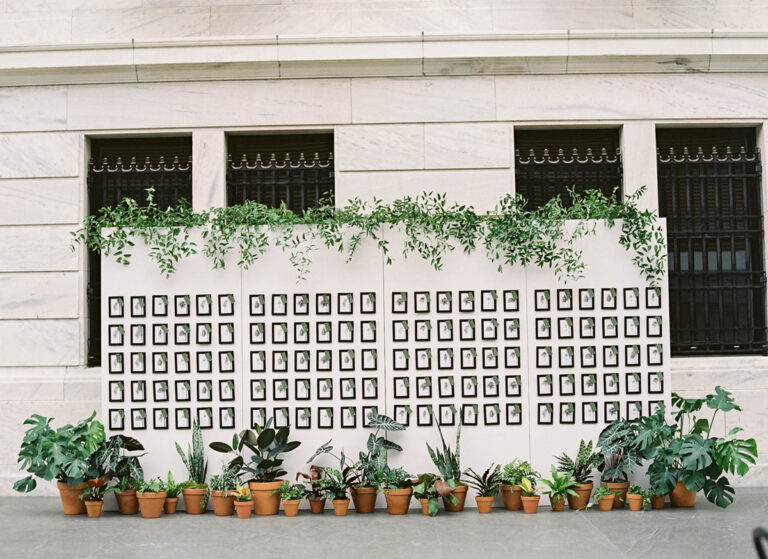
How Cleveland compares to coastal and major‑city markets

In markets like New York, Boston, Chicago, or San Francisco, venue fees, catering minimums, labor, and lodging can escalate quickly. In Northeast Ohio and nearby regions, couples generally find:

Venue fees that leave more room for investing in design, entertainment, or guest experiences. Catering and bar packages that can still prioritize seasonal ingredients and a strong beverage program without outpacing the rest of the budget. Hotel and transportation rates that are more forgiving for guests, especially when you secure room blocks well in advance.
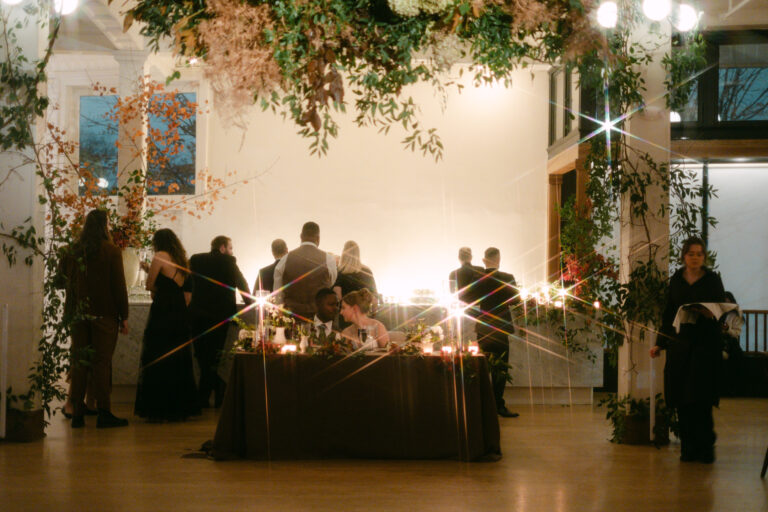
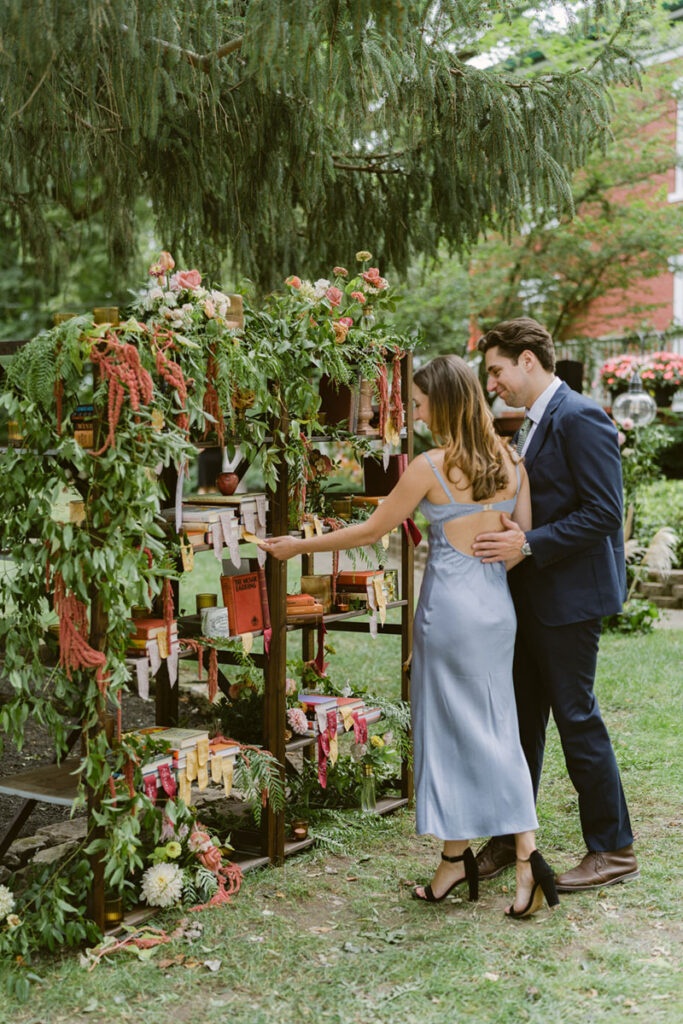
Because of this, some couples who live in Cleveland choose to plan destination weddings elsewhere in the Midwest, East Coast, or South, using local vendors for planning and design while directing more of the budget toward travel, guest accommodations, or weekend activities.

Where your budget has the most impact

The single biggest variable in any wedding budget is guest count. Every additional person affects food, beverage, rentals, stationery, favors, transportation, and sometimes the scale of the venue you need.

A smaller guest list can mean:

Higher per‑person investment in food and beverage; a broader range of venues, including inns, boutique hotels, or smaller estates; and more breathing room for design details or additional events like a welcome reception or farewell brunch.

For boutique, timeless celebrations, many couples choose to prioritize:

A venue or property with inherent character. Architecture, landscape, and history become part of your design. Food and beverage, because guests remember how they felt and what they ate. Photography (and often videography), because this is the record of the day. And planning and design support, particularly for tented, multi‑day, or destination weddings where logistics are complex.

Costs that often surprise couples

Tented and private estate weddings are essentially building a venue from scratch. In addition to the tent itself, you’re planning for:

Tables, chairs, linens, china, glassware, flatware, bars, dance floor, staging, and lounge furniture. Power distribution and generators; a catering kitchen build‑out; restroom trailers; waste management; and staff parking. Shuttles or valet; security; potentially permits; and, in some municipalities, coordination with the fire marshal or local police.

Even in traditional venues, couples sometimes underestimate:

Service charges and taxes on catering and bar (which can add 20–30% or more to those line items), overtime fees for bands, photographers, transportation, and staff, and the cost of weather contingencies—extra tents, sidewalls, heaters, fans, or alternate indoor spaces held as backups.

Using your budget to protect a timeless aesthetic

A clear, realistic budget is not a constraint as much as a focusing tool. When you commit to investing in elements that will still feel meaningful years from now—architecture, lighting, textiles, florals that suit the setting, excellent photography—you naturally become more resistant to short‑lived trends.

Resources like the budget breakdowns at Brides or planning tools from The Knot can give you ballpark percentages. Use those as a starting point, but don’t be afraid to shift weight toward what you personally value, whether that’s a museum venue, a live band, custom paper goods, or an intimate multi‑course dinner.

cleveland wedding planner

Choosing the Right Location: Cleveland, Northeast Ohio & Regional Destinations

Your venue (or property) shapes almost everything else: the tone of the day, your design direction, your budget, and your logistics. Cleveland and its surrounding regions offer an unusually wide range of “personalities,” from ornate ballrooms to minimal galleries to lakeside lawns. Thinking about venues in terms of character—rather than just capacity—helps you choose a place that naturally supports a boutique, timeless wedding.

Outdoor wedding reception beside the glasshouse on Geis Terrace at the Cleveland Botanical Garden

Common venue styles in Cleveland and beyond

Historic properties and museums: Cleveland’s historic hotels, clubs, theaters, and museums often feature grand staircases, carved woodwork, plaster ceilings, stone, and marble. They’re ideally suited to black‑tie or cocktail‑attire celebrations with layered candlelight, classic florals, and refined table settings.

Boutique hotels, inns, and private clubs: Smaller properties in and around Cleveland, the countryside near Hudson or Chagrin Falls, and regional hubs like western Pennsylvania, northern Michigan, or New England offer intimacy and the ability to host multiple events—welcome drinks, rehearsal dinner, ceremony, reception, and brunch—in one place.

Industrial lofts and repurposed warehouses: Exposed brick, beams, concrete floors, and large windows create a clean backdrop for design‑driven couples. These spaces are effectively blank canvases; your floral and lighting teams can soften or highlight architectural features without fighting existing décor.

Vineyards, gardens, and countryside estates: Northeast Ohio’s wine country, properties near Cuyahoga Valley National Park, and rural estates provide natural scenery and room for tented receptions, outdoor ceremonies, or multi‑space builds that move guests gradually from one area to another.

Private estates and at‑home weddings: Lakefront residences, family farms, and homes in Cleveland’s suburbs or outlying communities offer the most personalized experience. They also require the most planning, but for many couples the payoff—a weekend that feels like inviting everyone into your life—is worth it.

Wedding ceremony inside a vaulted wood barn in Northeast Ohio

Regional archetypes to consider

You’ll see a few archetypes repeat across Northeast Ohio:

The historic ballroom or theater, often with Art Deco or Beaux‑Arts detailing, crystal chandeliers, balconies, and ornate plaster or gilded trim. These spaces usually call for a more formal dress code, thoughtful lighting design, and décor that respects existing architecture rather than covering it.

Lakefront and riverfront venues with sweeping views of Lake Erie, marinas, bridges, or the downtown skyline. These settings pair naturally with airy palettes, lighter fabrics, and consideration for wind, sun, and temperature shifts across the evening.

Countryside, vineyard, or equestrian properties that lend themselves to sailcloth or frame tents, cocktail hours on lawns, and evenings under string lights or starry skies.

Using Cleveland as a base for destination weddings

Many Cleveland‑based couples choose to marry elsewhere while planning from home. Common patterns include:

Midwestern destinations: Lake Michigan resort towns, Chicago lofts or museums, northern Michigan lakeside estates, or Wisconsin properties. These usually offer manageable travel for guests and a sense of “getting away” without crossing too many time zones.

East Coast settings: New England inns, coastal towns such as Newport, Kennebunkport, or Cape Cod, and cities like Boston, Philadelphia, and Washington, D.C. Architectural history and maritime or colonial details often influence the atmosphere.

Southern U.S. venues: Charleston, Savannah, New Orleans, Asheville and the Blue Ridge Mountains, or coastal resorts in the Carolinas, Georgia, or Florida. Think courtyards, piazzas, moss‑draped oaks, wraparound porches, and grand ballrooms.

When you’re planning across regions, working with a planning studio familiar with multiple markets can help you navigate vendor standards, permitting, and travel logistics more easily.

How to evaluate a venue for a boutique, timeless experience

When you’re touring, try to see past the default setup. A few things to notice:

Architectural bones and natural light. Does the room feel beautiful even when empty? Are there architectural lines you love? Where does the light fall at the time of day you’re likely to marry?

Capacity relative to your guest count. A boutique experience calls for a Goldilocks fit—neither cramped nor cavernous. Too large, and your reception can feel sparse; too small, and guests feel squeezed and staff can’t move easily.

Service and catering. If the venue handles catering in‑house, pay attention at tastings and during site visits. Do staff seem attentive? Are dietary restrictions taken seriously? Consistent, gracious service is a cornerstone of boutique hospitality.

Flexibility. Ask what’s possible in terms of floor plans, tent placements, hanging installations, candles, and outside vendors. Historical venues and museums often have important limitations that you can absolutely work within—you just want to know what they are early.

Key questions to ask during site visits

Beyond the basics (availability, pricing, rental inclusions), it’s smart to ask:

How late can amplified music play? Are there specific noise ordinances for the neighborhood or waterfront? Where would your ceremony or cocktails move in inclement weather, and how quickly can that shift happen? Is there enough power on‑site for band, lighting, and kitchen, or will you need supplemental power?

Are there required or preferred vendors? Can you bring in an outside caterer or bar service if the on‑site options don’t fit? What are the rules about candles, sparklers, confetti, or live flames? Having clear answers to these questions will save you from designing something that can’t actually be executed.

Newlyweds seated at a candlelit evening reception at the Cleveland Botanical Garden

Navigating Cleveland Weather and Seasonality

Northeast Ohio genuinely experiences all four seasons—and sometimes a few of them in the same week. Instead of fighting the weather, the most successful weddings work with it. When you embrace the season you’ve chosen rather than trying to create a different one, everything feels more coherent and less stressful.

Season by season: what to expect

Spring (March–May): Temperatures can swing quickly; rain and wind are common. The payoff is blossoming trees, tulips, and fresh light. Think layered attire, covered or tented ceremony options, and contingency plans that don’t feel like a downgrade.

Summer (June–August): Long days, soft evenings, and Lake Erie breezes make this a popular season. It can also be hot and humid. Providing shade, water, fans, and possibly a later ceremony start time can make a huge difference in guest comfort. If you’re right on the lake, be ready for wind.

Fall (September–November): A favorite for good reason: foliage, crisp air, and naturally cozy color palettes. Early fall can still feel summery; late October and November can bring chilly evenings and earlier sunsets. Layered fabrics, candlelight, and warm beverages work beautifully here.

Winter (December–February): Cold, early darkness, and possible snow. The tradeoff? Some of the most romantic weddings happen in winter: candlelit rooms, rich textures, evergreen or white floral palettes, and intimate dinners that lean into the season rather than apologizing for it.

Wedding ceremony setup overlooking the lagoon at the Cleveland Museum of Art

Ceremony timing, light, and photography

Light shapes the mood of your celebration and your photos. Work with your photographer to understand local sunset times for your date and location. Most couples planning outdoor portraits aim for golden hour—roughly 60–90 minutes before sunset—when the light is soft and flattering.

If you prefer a traditional aisle reveal and also want golden‑hour portraits, that might mean a slightly earlier ceremony with portraits scheduled between ceremony and cocktails. In high summer, an early evening ceremony can spare guests the harshest heat. In winter, an earlier ceremony allows for at least some outdoor or natural‑light portraits before heading into a more candlelit evening.

Weather‑resilient planning for tented and outdoor weddings

Outdoor and tented celebrations in this region are absolutely possible and often stunning, but they ask more from your planning. A few practical considerations:

Choose tent styles that match both your aesthetic and the season. Sailcloth or pole tents feel classic and romantic but need ample staking space. Frame or clearspan tents offer more flexibility with footprint and handle wind or inclement weather very well. When budget allows, flooring under at least the dining and dancing areas improves both comfort and safety, especially if the ground is soft.

Temperature control matters more than many couples expect. Sidewalls and heaters can transform a chilly evening; fans and good cross‑ventilation help during hot months. Even small touches, like baskets of blankets or paper fans, can make guests feel cared for.

Decide in advance how you’ll make a weather call—who decides, by what time, with what criteria—and communicate that plan to your vendors. On your wedding website, include a short note about the setting (“grass underfoot,” “paved paths,” “indoor ceremony, outdoor cocktails”) so guests can plan footwear and outerwear accordingly.

Smiling newlyweds leaving their candlelit wedding ceremony at Gordon Green

Planning With or Without a Wedding Planner

Some couples love project‑managing their own wedding. Others look at their calendars, careers, family dynamics, or the complexity of their vision and know they need a partner. Understanding what a planner actually does, and where they add the most value, helps you make an informed decision rather than defaulting to “we can probably figure it out.”

What full‑service planners handle for boutique and destination weddings

For complex or multi‑day celebrations, a full‑service planner usually:

Refines your vision into something cohesive and doable, then translates it into design and logistics. Curates vendors who fit your aesthetic, service expectations, location, and budget, and manages those relationships and contracts. Develops and actively manages your budget as decisions evolve. Creates a detailed timeline that accounts for deliveries, set‑up windows, photography, guest movement, and teardown. Oversees layout, flow, and guest experience, including transportation and contingency plans.

For destination weekends, that work extends into building itineraries, orchestrating welcome events and brunches, and coordinating with hotels on room blocks and welcome touches.

When a planner is especially worth considering

Hiring a planner tends to be most impactful when:

You’re hosting a tented, at‑home, or private estate wedding that requires building infrastructure from the ground up. You’re planning a full weekend with multiple events and transportation needs. You’re balancing demanding careers, a shorter planning timeline, or complex family dynamics. Or you’re planning from out of town (or overseas) and need someone with local knowledge to serve as your on‑the‑ground point of contact.

Different levels of planning support

Not every couple needs or wants the same level of support. Common structures include:

Full‑service planning and design, where a studio partners with you from early vision and venue selection through execution. Partial planning or design consulting, where you handle certain logistics while a planner focuses on vendor curation, design, or specific problem‑solving. And month‑of or event management, where you plan the wedding yourself and a coordinator steps in closer to the date to manage final details and execution.

For intricate tented builds, historical venues with strict rules, or destination weekends across states, full‑service support is often the most practical fit. For simpler, venue‑based weddings, partial or month‑of planning can be enough.

What to look for when choosing a planning studio

When you speak with potential planners, pay attention to:

Their portfolio: do you see weddings in the types of venues you’re considering—historic hotels, museums, tented estates, boutique inns, or private properties? Their communication style: do they listen more than they talk at first? Are their answers specific or vague? Their regional experience: multi‑region planners, such as Cleveland‑based studios that regularly work in the Midwest, East Coast, and South, can help you navigate different markets while maintaining a consistent planning experience.

You’ll also want to understand how they structure their services, how many weddings they take on in a season, and how they build their vendor teams. The right fit will feel like a combination of expertise, calm, and honest alignment with your priorities.

Curating a Cohesive Vendor Team

A wedding that feels smooth to your guests is rarely an accident. It’s the product of many different professionals working together as a genuine team. Choosing vendors is partly about aesthetics and pricing—but it’s also about communication, hospitality, and how well they collaborate with others.

Why fit matters more than fame

It’s easy to get attached to a particular photographer or band you’ve seen repeatedly on social media. Sometimes those are the right fit; sometimes they’re not. What usually matters more:

Aesthetic compatibility. Your photographer’s style should make sense with your venue and planned design. Your floral designer should be comfortable with both the scale and architectural features of your space. Your stationer should understand your taste in typography and printing.

Service philosophy. For a boutique, guest‑centered wedding, you’ll want vendors who care about hospitality as much as you do—caterers who think about pacing and dietary needs, musicians who read the room, transportation teams who offer clear guidance and patience.

Personality and communication. Some vendors you’ll spend all day with (planner, photographer, videographer, hair and makeup). You want to feel at ease with them. Clarity in emails, realistic timelines, and the ability to explain their process go a long way.

Key vendor categories for a timeless, boutique wedding

Photography and videography: Look for portfolios with strong composition, clean and true‑to‑life color, and good handling of both natural and artificial light. Review full galleries—not just highlight reels—so you can see how they document the entire day, from getting ready to dancing. Resources like Martha Stewart Weddings offer helpful checklists for evaluating photographers.

Catering and bar: Food and drink are central to how your wedding feels. Ask caterers about seasonal menus, how they build courses around your preferences, and how they handle service for larger groups. Consider whether a plated dinner, family‑style service, or stations best fits your vision and guest dynamics. For basic cost and terminology overviews, guides from The Knot can be a useful starting point.

Floral and event design: Your designer will translate your aesthetic anchors into the physical environment. Talk about more than just favorite flowers: discuss shapes, scale, how much of the venue you’d like to highlight, and how you want tables to feel when guests sit down.

Music and entertainment: Think through the entire arc of sound across the day: ceremony, cocktails, dinner, dancing, and possibly an after‑party. Live ceremony music, a jazz trio for cocktails, a band or DJ for dancing—each combination requires different technical setups. Make sure your venue and production partners are aligned on power, volume limits, and stage needs.

Stationery and day‑of paper: Invitations, menus, place cards, and signage collectively create the “visual language” of your wedding. Classic typography, well‑chosen paper, and careful wording often outlast more novelty‑driven designs. External resources such as Minted’s invitation guides or Brides’ stationery articles can help you think through etiquette and timing.

Hair, makeup, and attire support: The best artists help you look like an elevated version of yourself, not a completely different person. Timeless choices in grooming and tailoring tend to age well in photos and feel comfortable in real life.

Local vs. destination vendors

For regional or out‑of‑state weddings, you’ll decide whether to bring certain vendors with you or hire locally:

Bringing Cleveland‑based vendors can make sense when trust is a priority: a planner who knows you well, a photographer whose work you love, a hair and makeup team already familiar with your skin and hair. You’ll usually cover travel and accommodations, but you gain continuity and shared context.

Hiring local vendors in your destination city can be wise for catering, transportation, and sometimes florals or entertainment. They often have better access to local ingredients, understand the logistics of the area, and are familiar with venue policies and infrastructure.

Questions to ask when interviewing vendors

As you speak with potential partners, ask about:

Their process from booking through wedding day; how many events they take per weekend; what happens if they’re ill or an emergency arises; and how they approach collaboration with planners, photographers, and other vendors. Reading contracts slowly—especially around hours of coverage, overtime, travel fees, and deliverables—helps you avoid surprises later.

Designing a Timeless Aesthetic: Décor, Florals, and Details

“Timeless” is not code for “generic” or “all white.” It’s about proportion, balance, and material choices that hold up over time. A timeless wedding can be minimal or lush, neutral or colorful; what matters is that the design feels coherent with your venue, your season, and your own style.

Neutral bridal bouquet with champagne roses, blush flowers, and greenery

Principles of timeless wedding design

A few guidelines tend to hold true across venues and styles:

Choose fewer, better elements. A smaller number of well‑executed design gestures has more impact than many competing ideas. High‑quality candleholders, linens, and a few striking floral moments will usually yield stronger photographs (and a calmer room) than an overabundance of props.

Keep your palette focused. That doesn’t mean it has to be pale. Two or three main tones, supported by neutrals and perhaps a metallic accent, often feel more sophisticated than a longer list.

Pay attention to scale. Centerpieces should fit the dimensions of your tables and the height of your ceilings. Installations should frame, not overwhelm, key architectural features. Signage should be easy to read and appropriately sized for the space.

Pastel floral centerpiece at a Cleveland Botanical Garden wedding reception

Color palettes that work well in Cleveland and regional venues

Soft neutrals and muted tones—ivory, warm whites, taupe, soft greys, gentle greens—sit beautifully against stone, wood paneling, and marble. They’re especially at home in historic interiors and museums.

Deep, saturated hues—emerald, aubergine, burgundy, navy, charcoal—can be powerful for fall and winter. When paired with warm metallics, candlelight, and tactile fabrics, they feel rich rather than heavy.

Subtle regional nods can keep a palette grounded: lake‑inspired blues and greys for Lake Erie settings; vineyard greens and soft earth tones for wine country; sea glass, dune, or soft coastal greens for New England or Southern shorelines. The key is to treat these as accents rather than literal themes.

Soft white and blush flowers growing in a botanical garden wedding setting

Florals and greenery through the seasons

Seasonality matters in the Midwest and on the East Coast. Working with seasonal blooms often improves both quality and budget:

Spring: Ranunculus, tulips, hellebores, lilac, sweet pea, and flowering branches pair well with soft palettes and lighter fabrics. They’re delicate and romantic, perfect for museums, gardens, and historic interiors.

Summer: Garden roses, peonies in early summer, dahlias later on, lisianthus, delphinium, and lush greenery allow for fuller compositions. This is also a season when floral choices can be more colorful without feeling heavy.

Fall: Dahlias, heirloom mums, berries, and textural foliage in rust, bronze, and deep greens echo the landscape. If you’re in wine country or near forests, this is where the outside and inside can mirror one another beautifully.

Winter: Evergreens, amaryllis, anemones, paperwhites, and hellebores, layered with candlelight, velvet, or wool textiles, create warmth. You can lean into tonal whites and greens or incorporate deeper jewel tones.

Always consider your venue. Tall arrangements can balance a high‑ceiling ballroom but overwhelm a low‑ceilinged inn. Grand staircases, mantels, and entranceways can hold florals or greenery that feel like part of the architecture rather than separate décor.

Greenery-covered pergola above elegant wedding reception tables

Tablescapes and rentals: where guests spend their time

Guests spend many of their longest, most conversational moments at the table, so it’s worth some focus here:

Linens act as a foundation. Even if your venue includes basic linens, upgrading tablecloths, napkins, or runners on key tables can change the room’s overall tone. Natural fibers or textured weaves usually read as more elevated than shiny poly.

Layering brings dimension. Think about how china, flatware, glassware, menus, and florals interact. Varying candle heights—tapers, pillars, votives—can create a soft “landscape” without clutter. Ensure each place setting feels intentional and comfortable to use.

Space and comfort matter aesthetically, too. Overcrowded tables look busy and feel uncomfortable. Whenever possible, give guests enough room for glassware, plates, and elbows without needing to move décor out of the way.

Botanical escort card display with framed sketches and potted plants

Signage, stationery, and your event’s visual language

From your save‑the‑dates to your escort display, paper and signage quietly set expectations and tie your visuals together.

Invitations and save‑the‑dates do two jobs: they tell guests what to expect logistically, and they offer a first glimpse into the tone of your wedding. Clear typography, thoughtful wording, and a layout that’s easy to read are just as important as colors and motifs—especially if you’re planning a destination weekend with multiple events.

Day‑of paper—programs, menus, place or escort cards, bar signs—can echo the design of your invitations without duplicating it exactly. Small nods to Cleveland or your destination city (a custom illustration of your venue, a subtle map motif, or a monogram inspired by architectural details) add personality without turning the wedding into a themed party.

If you’re looking for a sense check on etiquette or wording, sites like Emily Post or the wedding sections of Vogue can offer more traditional reference points to draw from or intentionally deviate from.

Fall wildflower centerpieces on a rustic wedding reception table

Design choices that tend to age well

You don’t have to avoid trends entirely. The goal is to use them with intention. As you consider options, it can help to avoid:

Hard‑to‑read fonts on invitations or signage that sacrifice legibility for style. Hyper‑specific décor pieces that show up everywhere for a year and then disappear. Overly branded or hashtag‑driven installations that might feel out of step in a decade.

DIY projects that require professional‑level skill or equipment. Handmade details can be heartfelt, but if they’re time‑consuming and don’t meet the finish level of the rest of your wedding, they can end up adding stress more than value.

Guests dining beneath a sailcloth tent at a luxury Cleveland wedding

Tented, Private Estate, and At‑Home Weddings in Northeast Ohio

Tented and estate weddings are among the most personal ways to celebrate. You’re not renting a few hours in a function room; you’re inviting people into a space that feels like your own, even if you’ve rented the property for the weekend. The tradeoff for that intimacy is complexity. You’re effectively building a small village for the day—a beautiful one, but still a village.

What makes estate and tented weddings feel so boutique

These weddings often unfold over several days: a welcome party on the lawn, the wedding itself, brunch the next morning, maybe a smaller dinner the night before. Guests experience your wedding as a long, relaxed visit rather than a single four‑hour window.

There’s also a sense of privacy and control. You’re not sharing hallways with another wedding. You can shape the sequence of spaces—perhaps cocktails in a garden, dinner under a sailcloth tent, dancing in a clearspan tent with a view of the house—so it feels like a story rather than a single room flip.

Logistical layers to account for

In Northeast Ohio, an at‑home or estate wedding usually means planning for:

Power: mapping where generators will go, what they’ll power (band, lighting, kitchen, restrooms), and ensuring quiet equipment where sound matters.

Catering infrastructure: a dedicated catering tent or indoor kitchen, refrigeration, ice, dishwashing, and waste removal. This isn’t glamorous, but when it’s handled gracefully, your event feels seamless.

Restrooms: high‑quality restroom trailers with appropriate lighting, paths, and accessibility. These can be surprisingly pleasant when planned well and placed thoughtfully.

Parking and transportation: clearly marked parking or shuttles from hotels, solutions for narrow roads or driveways, and a plan for late‑night departures. You’ll also want to think about where vendor vehicles will park and load‑in, ideally out of guest sightlines.

Permits and neighborhood considerations: tent permits, inspections, noise ordinances, and, sometimes, proactive communication with neighbors. Many municipalities require tent and occupancy sign‑offs a few days before the wedding.

Working with tent and rental companies

Your tent and rental companies become central collaborators on estate weddings. Common tent types include:

Sailcloth and pole tents, which have beautiful peaks and a softer profile—ideal for countryside and lakefront properties. They require staking and can’t be placed flush against structures.

Frame tents, which offer more flexibility in shape and can work in tighter or more urban spaces. They can be weighted instead of staked in some scenarios.

Clearspan tents, which provide strong structure and wide open interiors with no center poles, allowing for large installations and more complex lighting or rigging.

Many rental partners can provide CAD drawings or 3D layouts to help you visualize traffic flow, dance floor location, stage and bar placement, and back‑of‑house spaces. For spring and fall in Ohio, factoring in flooring and temperature control is usually wise. Even in summer, grass can be uneven or damp; a dance floor or partial flooring makes a noticeable difference.

Given the number of moving parts—permits, deliveries, power, rentals—many couples choose to work with a planner or designer experienced in estate builds, simply to have someone coordinating the entire team.

Newlyweds seated at a candlelit sweetheart table at Gordon Green

Guest Experience and Hospitality: Hosting with Intention

A boutique wedding is, at heart, about how people feel. When you start to think less in terms of “wedding elements” and more like a host inviting people into your life, decision‑making becomes much clearer.

Couple viewing a bookcase escort card display decorated with flowers and greenery

Seeing the weekend through your guests’ eyes

It can be useful to literally walk through the day as if you were a guest:

How will they get from the airport or their home city to your wedding location? Is your venue easy to find or tucked down a country road? When they arrive, will someone be there to greet them? Do they know where to put their coats, when dinner will start, how long the ceremony will last?

Boutique hospitality often looks like:

Clear, timely, and kind communication—via your website, invitations, and any updates. Thoughtful touches like water stations at outdoor ceremonies, plenty of shade or heaters, and spaces to rest between dancing. A timeline that allows events to unfold without guests ever feeling like they’re waiting in a hallway or standing in a bar line that never moves.

Welcoming out‑of‑town and destination guests

When guests are traveling—whether to Cleveland or to a vineyard, inn, or Southern city on your behalf—small gestures are amplified:

Room blocks in a couple of thoughtfully chosen hotels or inns give guests a home base and often simplifies transportation routes. A welcome note in each room, possibly with local snacks or a short list of your favorite coffee shops and brunch spots, sets a tone of warmth and gratitude.

Your wedding website can become a mini travel guide: maps, parking details, rideshare information, dress codes explained in clear language (“cocktail attire; the ceremony will be outside on grass”), and recommendations for free‑time activities. For Cleveland, that might include the Cleveland Museum of Art, the Rock & Roll Hall of Fame, walks in the Cultural Gardens or Cuyahoga Valley National Park, or evenings in Ohio City or Tremont.

Designing a guest‑friendly timeline

A thoughtful timeline is one of the most underrated tools for creating a boutique feel. As you build yours:

Avoid extensive gaps between ceremony and cocktail hour unless there is a clear reason and a plan for how guests will fill that time. Group toasts strategically so they don’t interrupt every course of dinner. If you have older guests or families with young children, consider doing key dances and moments a bit earlier in the evening so they can comfortably participate.

Think about late‑night elements—snacks, a bar menu shift, dessert service, or an after‑party—and how you’ll communicate those to guests. Make sure there are also quieter areas for conversation, particularly if your dance floor will be high‑energy.

Accessibility, inclusivity, and care

Boutique hospitality considers the full spectrum of guests:

Mobility: step‑free or ramped access where needed, comfortable seating options for older guests, and clear pathways that are well lit at night. Dietary needs: visible vegetarian, vegan, gluten‑free, and allergy‑conscious options, ideally noted on menus or buffet signage. Sensory preferences: spaces away from loud music, and, if you know guests who might appreciate them, small accommodations like earplugs available at the DJ booth or bar.

For children and families, you might think about seating arrangements, access to restrooms, and whether you’d like to provide a quiet room for nursing or naps. All of these decisions add up to a celebration that feels generous, not just beautiful.

Designing Multi‑Day and Destination‑Style Itineraries

Turning your wedding into a weekend gives you something you can’t create in a single evening: time. Time for guests from different parts of your lives to connect, time to actually talk to people, time for the energy to build gradually instead of peaking and ending in four hours.

Building a destination‑style weekend in Cleveland

In Cleveland, a weekend might begin with a welcome gathering at a favorite restaurant, brewery, or museum terrace. It doesn’t have to be elaborate; the point is to create space for people to meet before the wedding day. That can take some social pressure off the reception itself.

During free time, you can offer a simple list of ideas on your website or welcome note: the Cleveland Museum of Art, the West Side Market, a walk along Edgewater or in the Cultural Gardens, or a visit to the Flats for riverfront views. Guests who prefer structure can plan outings; others can wander at their own pace.

A farewell brunch or coffee gathering on Sunday morning provides a gentle closing note, giving you a chance to say real goodbyes instead of doing a last‑song wave from the dance floor.

Wedding guest celebrating during a reception on Geis Terrace at the Cleveland Botanical Garden

Typical flow for regional destination weddings

Whether you’re marrying on a Michigan lake, at a New England inn, or in a Southern city, many destination weekends follow a similar arc:

Guests arrive Thursday or Friday and check in. That evening, you might host a rehearsal dinner for a smaller group and a welcome cocktail hour or dessert gathering that’s open to everyone. Saturday is the wedding itself, with clear transportation plans and enough space in the timeline for hair, makeup, and photography without rushing.

Sunday might include brunch, mimosas on a porch, or coffee on a hotel terrace. For guests who choose to stay longer, you can suggest optional activities: hikes, boat rides, museum visits, or wine tastings.

Transportation and timing across several days

Multi‑day events add a logistical layer, especially in areas with limited rideshare options or winding roads. Coordinating shuttles between hotels, venues, and any off‑site events is one of the most appreciated forms of hospitality you can offer.

Provide shuttle schedules and meeting points on your website, in welcome notes, and at hotel front desks. Build in buffer time for traffic, parking, and late departures. It’s almost always better to have guests comfortably early to cocktails than stressed and late to your ceremony.

Photography and Memory‑Making That Stand the Test of Time

Long after linens are returned and flowers are composted, your photographs and films are what remain. They shape how you—and in some cases, your future children or grandchildren—remember the day. Choosing artists whose work aligns with your idea of “timeless” is one of the most important decisions you’ll make.

Choosing a photographer with a timeless approach

As you evaluate photographers, focus on:

Editing style: true‑to‑life color, gentle contrast, and skin tones that look like real people tend to age better than heavy filters or extreme desaturation.

Balance of images: a strong mix of candid moments, portraits, and architectural or detail shots tells a fuller story. Look at how they capture older relatives, children, and quiet in‑between scenes—not just portraits of the couple.

Comfort with various lighting conditions: in Cleveland and many destination markets, you’re likely to encounter bright midday sun, overcast skies, indoor ceremonies, and dimly lit receptions. You want someone who handles all of those well, using natural light and flash when appropriate.

Floral chuppah for a Jewish wedding ceremony at the Cleveland Museum of Art

Scouting locations in Cleveland and other regions

Portrait locations often matter less than how relaxed you feel, but having a plan helps. In and around Cleveland, couples often gravitate to:

Historic districts with interesting facades, parks with architectural structures, gardens and museum grounds, and lakefront locations with skyline or pier views. For rain or winter, covered arcades, hotel lobbies, or galleries can be beautiful alternatives.

In other regions, your planner or photographer can suggest locations that align with your style: cobblestone streets in New England, courtyards or squares in Southern cities, lake docks or forests in the Midwest.

Building a photo timeline that respects the day

Decide early whether you’d like a first look or to see each other for the first time at the ceremony. There is no right answer, but the decision affects your schedule. A first look typically allows you to complete more portraits and family photos before the ceremony, freeing you to enjoy cocktail hour.

Whatever you choose, sharing a clear family photo list—organized by side and grouping—with your photographer (and planner, if you have one) keeps that portion of the day calm and efficient. You’ll also want to talk about any heirlooms, décor elements, or relationships that are particularly important to you, so your photographer can prioritize them.

Details that hold up in photos

Attire that fits well and feels like you tends to photograph best. Clean‑lined gowns or suits, thoughtful accessories, and hair and makeup that feel like an elevated version of your everyday self will likely feel more “you” in twenty years than something you chose purely because you saw it trending.

On the morning of the wedding, gather your invitation suite, rings, shoes, jewelry, perfume or cologne, and any meaningful objects (a handkerchief, a letter, an heirloom) in one place. Many photographers will style these for “flat lay” images that become part of your visual story.

Common Pitfalls When Planning a Boutique, Timeless Wedding

Even the most organized couples run into decision fatigue or unexpected snags. Knowing a few common pitfalls makes it easier to steer around them before they become stress points.

Letting social media dictate your decisions

Inspiration platforms are useful, but they’re also built to show you what everyone else is doing right now. It’s very easy to slide from “inspired” to “overwhelmed.” When you feel that happening, return to your original vision: does this element align with how you want the day to feel, your venue, and your priorities? If not, it’s safe to let it go.

Underestimating logistics—especially for tents and estates

Infrastructure is invisible when it’s done well and impossible to ignore when it’s not. Power, restrooms, catering access, waste management, parking, and load‑in routes all affect guest experience. This is where professional support, whether from a planner, production company, or very experienced venue coordinator, becomes invaluable.

Overloading the timeline with “moments”

When you try to include everything—choreographed dances, fireworks, multiple performances, a dozen speeches—the evening can start to feel like a program rather than a celebration. Choosing a smaller number of meaningful, well‑timed moments gives each room to breathe and makes them more memorable.

Skipping professional support for complex events

For straightforward, venue‑based weddings, you may be able to manage with a strong in‑house coordinator and some organized friends or family. For tented estates, multi‑day itineraries, or destination weddings, trying to manage all the details yourself—or asking relatives to do so—often leads to stress and miscommunication.

Strategic professional support doesn’t have to mean full‑service planning, but having someone whose role is to protect the flow of the day allows you (and your families) to actually be present.

Overlooking guest comfort in favor of aesthetics

It’s easy to get absorbed in flowers and linens and forget the basics: comfortable seating, appropriate footwear guidance, shade or heaters, accessible restrooms, enough bartenders, and clear signage. A wedding can be visually stunning and still feel exhausting if guests are too hot, too cold, confused, or hungry.

Major last‑minute design changes

Once you’ve aligned on a design direction with your vendors, shifting the overall look late in the process can strain budgets, timelines, and relationships. Small tweaks are normal; wholesale changes are costly and stressful. Trust the plan you built together unless there’s a truly compelling reason to alter it.

Newlyweds seated beneath suspended florals at a November wedding at Gordon Green

Creating a Wedding That Feels Like You, in Cleveland and Beyond

A timeless, boutique wedding isn’t about perfection. It isn’t about checking every box of what you’re “supposed” to have. It’s about alignment—between who you are, what you value, and how your celebration actually feels.

When you start with experience, choose venues and locations that reflect your taste, build a realistic timeline and budget, and surround yourselves with vendors who understand both your aesthetic and your priorities, the rest tends to fall into place. Trends become options rather than obligations. Decisions become easier because you have a clear filter to run them through.

Cleveland and Northeast Ohio offer an unusually rich foundation for this kind of celebration: historic spaces with soul, lakefront and countryside landscapes, and a growing network of creative professionals. From there, it’s an easy leap to regional destination weddings throughout the Midwest, the East Coast, and the South, especially when you work with planning and design teams who understand both local and destination logistics.

Use this guide as a framework, not a checklist. Keep returning to that early conversation about how you want your wedding to feel. Protect time for the parts you care about most—your ceremony, the meal, the music, the people who have traveled to be with you. And remember that the details that tend to matter most in the long run are the quiet ones: the way your venue tells part of your story, the ease with which guests move through the day, and the moments of recognition and joy you share with the people in the room.

However you structure your celebration—historic ballroom in downtown Cleveland, tented lawn overlooking the lake, vineyard weekend, or Southern inn—anchoring your decisions in hospitality, thoughtful design, and a genuine sense of place is what will make your wedding feel timeless long after the last song ends.