
A wedding that feels timeless and boutique doesn’t need to perform. It doesn’t rely on gimmicks or the trend of the month. It moves with quiet confidence, grounded in generous hospitality, thoughtful design, and a real connection to place. In Cleveland and throughout Northeast Ohio, that idea has particular weight: historic architecture, layered neighborhoods, and the interplay of lakefront, countryside, and city energy give you a backdrop that already feels like part of your story.
When couples say they want a “timeless” wedding, they’re usually talking about memories and images that won’t feel dated when you look back in twenty or thirty years. Think refined silhouettes, balanced spaces, and details that feel intentional instead of busy. “Boutique” adds another dimension: smaller in feel, not necessarily in guest count; curated rather than generic; and deeply centered on the guest experience, whether you’re hosting 40 people in an inner courtyard or 220 in a Beaux-Arts ballroom.
Cleveland and Northeast Ohio are unusually well-suited to this approach. Gilded Age mansions, historic hotels, museums, theaters, riverfront warehouses, and design-forward lofts offer character that can’t be replicated with rentals alone. Drive thirty or forty minutes in almost any direction and you’ll find vineyards, national park vistas, and rolling farmland. For many couples, that means you can have a destination-level experience without leaving home—or you can let Cleveland be home base while you plan a wedding in another region of the Midwest, East Coast, or South.
This guide is for couples planning in and around Cleveland as well as those drawn to tented private estates, boutique hotels, historical venues, and destination-style weekends in nearby regions. The intent here is practical and transparent: how to think about your vision, what a realistic timeline actually looks like, how budgets work in this region, what to expect from tented builds, and how to make complex, multi-day celebrations feel effortless to your guests.
The perspective comes from years of planning and designing weddings at historical properties, boutique hotels, and private estates across Ohio, the Midwest, the East Coast, and the South. Use it as a roadmap you can adapt—whether you’re marrying at a Cleveland museum, under a sailcloth tent on a private lawn, at a vineyard in wine country, or at an inn in New England.
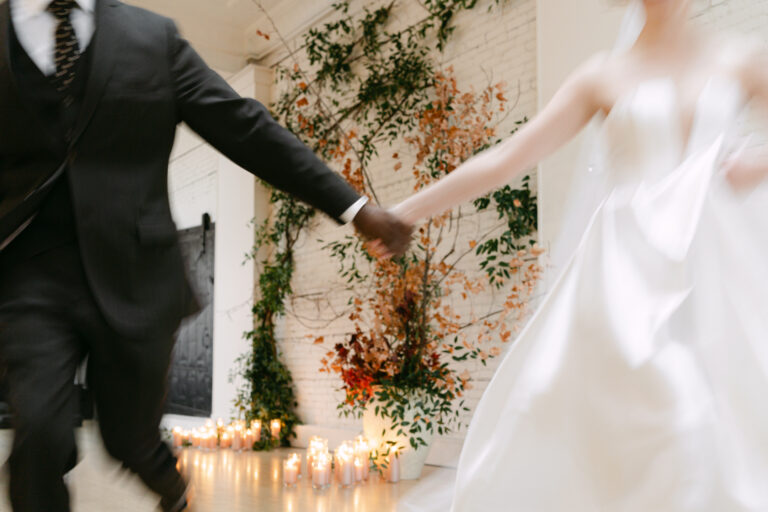
Clarifying Your Vision: The Foundation of a Timeless, Boutique Celebration
Before you think about linens, flowers, or color palettes, it helps to zoom out and talk about experience. The most enduring weddings are not a collage of pretty things; they’re coherent experiences that feel like you. That starts well before décor. It begins with a shared vision for how you want the day—and if you’re planning a weekend, the whole arc—to feel.
Start with experience, not aesthetics
Many couples begin with Pinterest boards and Instagram saves. That’s understandable, but often those images pull you toward someone else’s story. Instead, start with a conversation that has nothing to do with weddings:
How do you picture the energy of the day? Quiet and intimate, or high-energy and exuberant? Do you want guests to feel like they’ve arrived at a black-tie gala, a relaxed weekend house party, a European-style garden dinner, or something that sits between those? Do you imagine lingering at long tables or packing the dance floor from the first song?
These answers drive almost every decision you’ll make: ceremony time, music style, menu format, size of your wedding party, whether you do speeches during dinner or at cocktails, and how formally you ask guests to dress.
A boutique celebration prioritizes hospitality and comfort. That can look like:
Short, thoughtful transitions instead of long gaps; ceremony chairs that are actually comfortable; signage and staffing that make it very difficult to get lost; espresso or tea service after dinner; baskets of shawls during an early fall tented ceremony; or a quieter lounge away from the dance floor for older guests or those who don’t love loud music.
Finding your shared aesthetic “anchors”
Once you’re aligned on how you want the day to feel, you can translate that into visual “anchors” instead of a long list of must-have décor items. Look outside weddings for this:
What kinds of spaces do you both love? A modern art museum, a historic library, a lakeside inn, a Parisian café, a minimalist gallery, a classic hotel lobby with marble and brass? What architecture draws you in—Art Deco, mid-century, farmhouse, classical, industrial? What hotels have you stayed in that felt like you could move in?
Your wardrobes can be surprisingly revealing: do you both gravitate to clean lines and neutrals, or rich textures and jewel tones? These threads form a visual language you already speak together.
When you create a mood board, lean heavier on textures, tones, and shapes than on very specific arrangements. Instead of 50 images of centerpieces, focus on things like:
The way candlelight bounces off glassware. The contrast between stone walls and airy, loose florals. The negative space on a beautifully set table. The interplay of old wood beams and crisp white textiles. Those anchor points can flex with season, venue, and budget while staying recognizably “you.”
The difference between boutique and “big box” wedding feel
Boutique doesn’t necessarily mean a tiny guest list. It means intentionality and scale that feel human. A 60-person rooftop dinner can feel boutique. So can a 200-guest ballroom wedding, if each decision flows from your vision instead of a generic template.
A few hallmarks of boutique celebrations:
There’s a sense of narrative. Guests are welcomed into the weekend; spaces unfold thoughtfully; transitions make sense. The venue, menu, music, and décor all pass through the filter of your priorities, not a package list. Personalization shows up in subtle, meaningful ways—a menu referencing your favorite city, a string quartet playing an unexpected modern song as you recess, escort cards that double as a keepsake or something guests will actually use after the wedding.
Creating a priorities list you can actually use
Once you’ve talked through experience and aesthetic anchors, write down two short lists:
Non‑negotiables: season, region, or type of venue (for example, a historic property or a tented celebration), rough guest count, ceremony type, and anything you both feel strongly about—live music, a full weekend of events, all events at one site, or a very intentional dinner.
Nice‑to‑haves: the specific floral varieties you love if they’re in season; a champagne tower; a custom dance floor; a vintage car; a live ceremony musician; late‑night snacks. These are items you can add if budget and logistics allow, but they don’t drive the vision.
Keeping these categories separate early on makes later decisions far less stressful. It’s much easier to move a nice‑to‑have off the list than something that quietly functioned as a non‑negotiable from the beginning.
Building a Realistic Planning Timeline for Cleveland & Northeast Ohio Weddings
Boutique, detail‑rich weddings—especially in sought‑after historical venues or tented settings—need time. In Cleveland and Northeast Ohio, demand for key dates has climbed steadily, and certain styles of wedding (like private estates) require more coordination than a traditional banquet hall. Understanding what’s realistic early on prevents a lot of last‑minute pressure.
How far in advance to plan in this region
For Saturday weddings between late spring and early fall, a 12–18 month planning window is ideal if you care about any combination of:
A specific date or holiday weekend; a particular historical venue, museum, or boutique hotel; a band or photographer you’ve followed for years; or a tented build at a private property that will involve multiple vendors.
If you’re more flexible on date or day of the week, 6–9 months can still be very workable, especially for:
Friday or Sunday weddings; winter celebrations; shoulder‑season dates in early spring or late fall; or slightly smaller guest counts. You’ll want to move quickly on venue and core vendors, but you’ll often have more choices than you’d expect.
A high‑level roadmap from engagement to wedding day
Every wedding has its own rhythm, but the sequence below is a realistic framework for most boutique and destination‑style celebrations:
Twelve to eighteen months out: Talk through your vision, rough guest count, preferred region or city, and budget. If you’re considering a full‑service planner, this is the moment to bring them in. Secure your venue (or property, if you’re hosting at home) and, for outdoor celebrations, confirm your tent provider and any essential infrastructure partners.
Nine to twelve months out: Book your key creative vendors: catering (if not in‑house), photography, videography, band or DJ, and floral/design. For destination weekends, hold room blocks at hotels or inns that match your style and budget. If you’re marrying at a historical site or museum, confirm any restrictions governing décor, candles, or photography.
Six to nine months out: Develop the design more fully: rentals, linens, specialty décor, lighting, stationery direction, and signage style. Begin attire shopping for both of you and your wedding party. Confirm transportation partners and make sure your room blocks and any minimums are on track.
Three to six months out: Send invitations (earlier if guests are traveling significant distances). Complete menu tastings and bar decisions. Shape your ceremony—officiant, readings, music—and start refining your detailed wedding day timeline. Secure hair and makeup and schedule trials if you’d like them.
Zero to three months out: Finalize seating plans, escort displays, and day‑of stationery. Confirm headcounts and floor plans with your venue and caterer. Share your detailed timeline with your vendors. Review contracts for overtime and end times so there are no surprises. Hold a rehearsal and, if possible, a walk‑through at your venue or property with key players and, if you have one, your planner.
Regional factors that shape your planning calendar
Cleveland and Northeast Ohio have a distinct high season—roughly late May through early October. The weather is gentler, the light is beautiful, and local calendars are full. During these months:
University graduations, alumni events, and move‑in weekends can make hotel availability tight near campuses. Sports schedules for the Cleveland Guardians, Browns, and Cavaliers bring extra visitors downtown, particularly if there are playoffs or season openers. Long holiday weekends (Memorial Day, Fourth of July, Labor Day) can book up far earlier than a typical Saturday.
For tented and outdoor weddings, add in seasonal weather patterns: spring rain and mud, summer heat and thunderstorms, lake‑effect breezes, and early fall cold snaps. Those realities influence everything from start times to footwear suggestions on your website. They also mean you’ll want to book tents, flooring, heating or cooling, and additional lighting earlier than you might think—and commit to a rain plan before invitations go out.
Budgeting for a Timeless, Boutique Wedding in Northeast Ohio (and Beyond)
One of the quiet advantages of planning in Cleveland and the surrounding region is that you can often achieve a “big city” or destination‑level experience at a more accessible price point than coastal metropolitan areas. That doesn’t mean weddings here are inexpensive—tented builds, multi‑day itineraries, and historic venues carry real costs—but it does mean your budget often stretches further in meaningful ways.
How Cleveland compares to coastal and major‑city markets
In markets like New York, Boston, Chicago, or San Francisco, venue fees, catering minimums, labor, and lodging can escalate quickly. In Northeast Ohio and nearby regions, couples generally find:
Venue fees that leave more room for investing in design, entertainment, or guest experiences. Catering and bar packages that can still prioritize seasonal ingredients and a strong beverage program without outpacing the rest of the budget. Hotel and transportation rates that are more forgiving for guests, especially when you secure room blocks well in advance.
Because of this, some couples who live in Cleveland choose to plan destination weddings elsewhere in the Midwest, East Coast, or South, using local vendors for planning and design while directing more of the budget toward travel, guest accommodations, or weekend activities.
Where your budget has the most impact
The single biggest variable in any wedding budget is guest count. Every additional person affects food, beverage, rentals, stationery, favors, transportation, and sometimes the scale of the venue you need.
A smaller guest list can mean:
Higher per‑person investment in food and beverage; a broader range of venues, including inns, boutique hotels, or smaller estates; and more breathing room for design details or additional events like a welcome reception or farewell brunch.
For boutique, timeless celebrations, many couples choose to prioritize:
A venue or property with inherent character. Architecture, landscape, and history become part of your design. Food and beverage, because guests remember how they felt and what they ate. Photography (and often videography), because this is the record of the day. And planning and design support, particularly for tented, multi‑day, or destination weddings where logistics are complex.
Costs that often surprise couples
Tented and private estate weddings are essentially building a venue from scratch. In addition to the tent itself, you’re planning for:
Tables, chairs, linens, china, glassware, flatware, bars, dance floor, staging, and lounge furniture. Power distribution and generators; a catering kitchen build‑out; restroom trailers; waste management; and staff parking. Shuttles or valet; security; potentially permits; and, in some municipalities, coordination with the fire marshal or local police.
Even in traditional venues, couples sometimes underestimate:
Service charges and taxes on catering and bar (which can add 20–30% or more to those line items), overtime fees for bands, photographers, transportation, and staff, and the cost of weather contingencies—extra tents, sidewalls, heaters, fans, or alternate indoor spaces held as backups.
Using your budget to protect a timeless aesthetic
A clear, realistic budget is not a constraint as much as a focusing tool. When you commit to investing in elements that will still feel meaningful years from now—architecture, lighting, textiles, florals that suit the setting, excellent photography—you naturally become more resistant to short‑lived trends.
Resources like the budget breakdowns at Brides or planning tools from The Knot can give you ballpark percentages. Use those as a starting point, but don’t be afraid to shift weight toward what you personally value, whether that’s a museum venue, a live band, custom paper goods, or an intimate multi‑course dinner.

Choosing the Right Location: Cleveland, Northeast Ohio & Regional Destinations
Your venue (or property) shapes almost everything else: the tone of the day, your design direction, your budget, and your logistics. Cleveland and its surrounding regions offer an unusually wide range of “personalities,” from ornate ballrooms to minimal galleries to lakeside lawns. Thinking about venues in terms of character—rather than just capacity—helps you choose a place that naturally supports a boutique, timeless wedding.
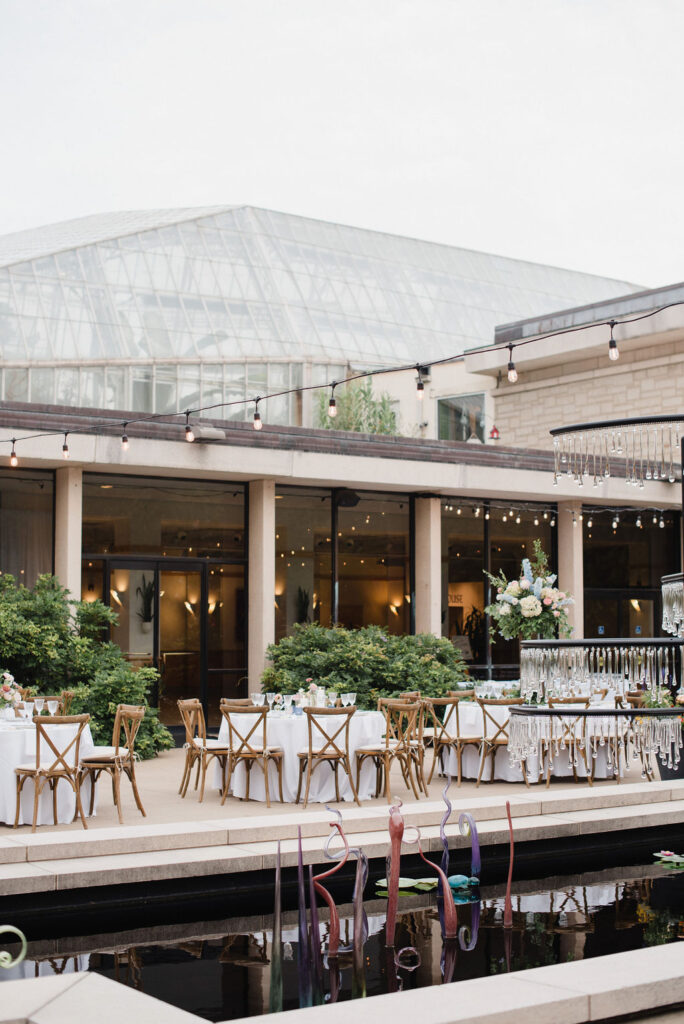
Common venue styles in Cleveland and beyond
Historic properties and museums: Cleveland’s historic hotels, clubs, theaters, and museums often feature grand staircases, carved woodwork, plaster ceilings, stone, and marble. They’re ideally suited to black‑tie or cocktail‑attire celebrations with layered candlelight, classic florals, and refined table settings.
Boutique hotels, inns, and private clubs: Smaller properties in and around Cleveland, the countryside near Hudson or Chagrin Falls, and regional hubs like western Pennsylvania, northern Michigan, or New England offer intimacy and the ability to host multiple events—welcome drinks, rehearsal dinner, ceremony, reception, and brunch—in one place.
Industrial lofts and repurposed warehouses: Exposed brick, beams, concrete floors, and large windows create a clean backdrop for design‑driven couples. These spaces are effectively blank canvases; your floral and lighting teams can soften or highlight architectural features without fighting existing décor.
Vineyards, gardens, and countryside estates: Northeast Ohio’s wine country, properties near Cuyahoga Valley National Park, and rural estates provide natural scenery and room for tented receptions, outdoor ceremonies, or multi‑space builds that move guests gradually from one area to another.
Private estates and at‑home weddings: Lakefront residences, family farms, and homes in Cleveland’s suburbs or outlying communities offer the most personalized experience. They also require the most planning, but for many couples the payoff—a weekend that feels like inviting everyone into your life—is worth it.
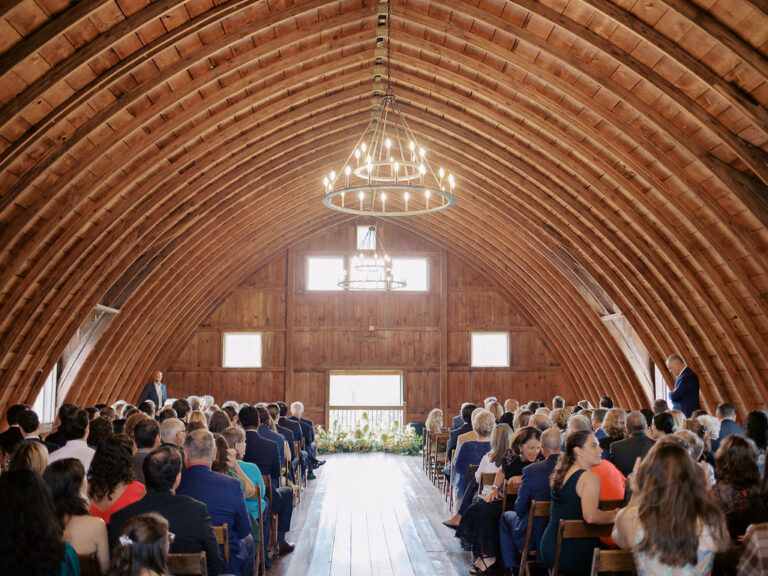
Regional archetypes to consider
You’ll see a few archetypes repeat across Northeast Ohio:
The historic ballroom or theater, often with Art Deco or Beaux‑Arts detailing, crystal chandeliers, balconies, and ornate plaster or gilded trim. These spaces usually call for a more formal dress code, thoughtful lighting design, and décor that respects existing architecture rather than covering it.
Lakefront and riverfront venues with sweeping views of Lake Erie, marinas, bridges, or the downtown skyline. These settings pair naturally with airy palettes, lighter fabrics, and consideration for wind, sun, and temperature shifts across the evening.
Countryside, vineyard, or equestrian properties that lend themselves to sailcloth or frame tents, cocktail hours on lawns, and evenings under string lights or starry skies.
Using Cleveland as a base for destination weddings
Many Cleveland‑based couples choose to marry elsewhere while planning from home. Common patterns include:
Midwestern destinations: Lake Michigan resort towns, Chicago lofts or museums, northern Michigan lakeside estates, or Wisconsin properties. These usually offer manageable travel for guests and a sense of “getting away” without crossing too many time zones.
East Coast settings: New England inns, coastal towns such as Newport, Kennebunkport, or Cape Cod, and cities like Boston, Philadelphia, and Washington, D.C. Architectural history and maritime or colonial details often influence the atmosphere.
Southern U.S. venues: Charleston, Savannah, New Orleans, Asheville and the Blue Ridge Mountains, or coastal resorts in the Carolinas, Georgia, or Florida. Think courtyards, piazzas, moss‑draped oaks, wraparound porches, and grand ballrooms.
When you’re planning across regions, working with a planning studio familiar with multiple markets can help you navigate vendor standards, permitting, and travel logistics more easily.
How to evaluate a venue for a boutique, timeless experience
When you’re touring, try to see past the default setup. A few things to notice:
Architectural bones and natural light. Does the room feel beautiful even when empty? Are there architectural lines you love? Where does the light fall at the time of day you’re likely to marry?
Capacity relative to your guest count. A boutique experience calls for a Goldilocks fit—neither cramped nor cavernous. Too large, and your reception can feel sparse; too small, and guests feel squeezed and staff can’t move easily.
Service and catering. If the venue handles catering in‑house, pay attention at tastings and during site visits. Do staff seem attentive? Are dietary restrictions taken seriously? Consistent, gracious service is a cornerstone of boutique hospitality.
Flexibility. Ask what’s possible in terms of floor plans, tent placements, hanging installations, candles, and outside vendors. Historical venues and museums often have important limitations that you can absolutely work within—you just want to know what they are early.
Key questions to ask during site visits
Beyond the basics (availability, pricing, rental inclusions), it’s smart to ask:
How late can amplified music play? Are there specific noise ordinances for the neighborhood or waterfront? Where would your ceremony or cocktails move in inclement weather, and how quickly can that shift happen? Is there enough power on‑site for band, lighting, and kitchen, or will you need supplemental power?
Are there required or preferred vendors? Can you bring in an outside caterer or bar service if the on‑site options don’t fit? What are the rules about candles, sparklers, confetti, or live flames? Having clear answers to these questions will save you from designing something that can’t actually be executed.

Navigating Cleveland Weather and Seasonality
Northeast Ohio genuinely experiences all four seasons—and sometimes a few of them in the same week. Instead of fighting the weather, the most successful weddings work with it. When you embrace the season you’ve chosen rather than trying to create a different one, everything feels more coherent and less stressful.
Season by season: what to expect
Spring (March–May): Temperatures can swing quickly; rain and wind are common. The payoff is blossoming trees, tulips, and fresh light. Think layered attire, covered or tented ceremony options, and contingency plans that don’t feel like a downgrade.
Summer (June–August): Long days, soft evenings, and Lake Erie breezes make this a popular season. It can also be hot and humid. Providing shade, water, fans, and possibly a later ceremony start time can make a huge difference in guest comfort. If you’re right on the lake, be ready for wind.
Fall (September–November): A favorite for good reason: foliage, crisp air, and naturally cozy color palettes. Early fall can still feel summery; late October and November can bring chilly evenings and earlier sunsets. Layered fabrics, candlelight, and warm beverages work beautifully here.
Winter (December–February): Cold, early darkness, and possible snow. The tradeoff? Some of the most romantic weddings happen in winter: candlelit rooms, rich textures, evergreen or white floral palettes, and intimate dinners that lean into the season rather than apologizing for it.

Ceremony timing, light, and photography
Light shapes the mood of your celebration and your photos. Work with your photographer to understand local sunset times for your date and location. Most couples planning outdoor portraits aim for golden hour—roughly 60–90 minutes before sunset—when the light is soft and flattering.
If you prefer a traditional aisle reveal and also want golden‑hour portraits, that might mean a slightly earlier ceremony with portraits scheduled between ceremony and cocktails. In high summer, an early evening ceremony can spare guests the harshest heat. In winter, an earlier ceremony allows for at least some outdoor or natural‑light portraits before heading into a more candlelit evening.
Weather‑resilient planning for tented and outdoor weddings
Outdoor and tented celebrations in this region are absolutely possible and often stunning, but they ask more from your planning. A few practical considerations:
Choose tent styles that match both your aesthetic and the season. Sailcloth or pole tents feel classic and romantic but need ample staking space. Frame or clearspan tents offer more flexibility with footprint and handle wind or inclement weather very well. When budget allows, flooring under at least the dining and dancing areas improves both comfort and safety, especially if the ground is soft.
Temperature control matters more than many couples expect. Sidewalls and heaters can transform a chilly evening; fans and good cross‑ventilation help during hot months. Even small touches, like baskets of blankets or paper fans, can make guests feel cared for.
Decide in advance how you’ll make a weather call—who decides, by what time, with what criteria—and communicate that plan to your vendors. On your wedding website, include a short note about the setting (“grass underfoot,” “paved paths,” “indoor ceremony, outdoor cocktails”) so guests can plan footwear and outerwear accordingly.
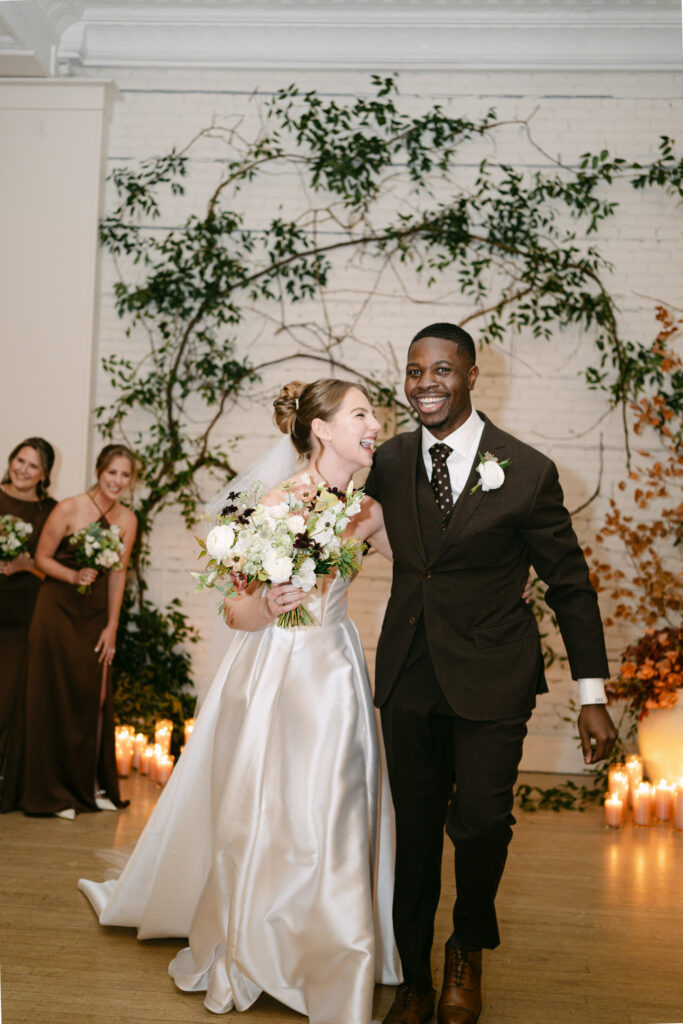
Planning With or Without a Wedding Planner
Some couples love project‑managing their own wedding. Others look at their calendars, careers, family dynamics, or the complexity of their vision and know they need a partner. Understanding what a planner actually does, and where they add the most value, helps you make an informed decision rather than defaulting to “we can probably figure it out.”
What full‑service planners handle for boutique and destination weddings
For complex or multi‑day celebrations, a full‑service planner usually:
Refines your vision into something cohesive and doable, then translates it into design and logistics. Curates vendors who fit your aesthetic, service expectations, location, and budget, and manages those relationships and contracts. Develops and actively manages your budget as decisions evolve. Creates a detailed timeline that accounts for deliveries, set‑up windows, photography, guest movement, and teardown. Oversees layout, flow, and guest experience, including transportation and contingency plans.
For destination weekends, that work extends into building itineraries, orchestrating welcome events and brunches, and coordinating with hotels on room blocks and welcome touches.
When a planner is especially worth considering
Hiring a planner tends to be most impactful when:
You’re hosting a tented, at‑home, or private estate wedding that requires building infrastructure from the ground up. You’re planning a full weekend with multiple events and transportation needs. You’re balancing demanding careers, a shorter planning timeline, or complex family dynamics. Or you’re planning from out of town (or overseas) and need someone with local knowledge to serve as your on‑the‑ground point of contact.
Different levels of planning support
Not every couple needs or wants the same level of support. Common structures include:
Full‑service planning and design, where a studio partners with you from early vision and venue selection through execution. Partial planning or design consulting, where you handle certain logistics while a planner focuses on vendor curation, design, or specific problem‑solving. And month‑of or event management, where you plan the wedding yourself and a coordinator steps in closer to the date to manage final details and execution.
For intricate tented builds, historical venues with strict rules, or destination weekends across states, full‑service support is often the most practical fit. For simpler, venue‑based weddings, partial or month‑of planning can be enough.
What to look for when choosing a planning studio
When you speak with potential planners, pay attention to:
Their portfolio: do you see weddings in the types of venues you’re considering—historic hotels, museums, tented estates, boutique inns, or private properties? Their communication style: do they listen more than they talk at first? Are their answers specific or vague? Their regional experience: multi‑region planners, such as Cleveland‑based studios that regularly work in the Midwest, East Coast, and South, can help you navigate different markets while maintaining a consistent planning experience.
You’ll also want to understand how they structure their services, how many weddings they take on in a season, and how they build their vendor teams. The right fit will feel like a combination of expertise, calm, and honest alignment with your priorities.
Curating a Cohesive Vendor Team
A wedding that feels smooth to your guests is rarely an accident. It’s the product of many different professionals working together as a genuine team. Choosing vendors is partly about aesthetics and pricing—but it’s also about communication, hospitality, and how well they collaborate with others.
Why fit matters more than fame
It’s easy to get attached to a particular photographer or band you’ve seen repeatedly on social media. Sometimes those are the right fit; sometimes they’re not. What usually matters more:
Aesthetic compatibility. Your photographer’s style should make sense with your venue and planned design. Your floral designer should be comfortable with both the scale and architectural features of your space. Your stationer should understand your taste in typography and printing.
Service philosophy. For a boutique, guest‑centered wedding, you’ll want vendors who care about hospitality as much as you do—caterers who think about pacing and dietary needs, musicians who read the room, transportation teams who offer clear guidance and patience.
Personality and communication. Some vendors you’ll spend all day with (planner, photographer, videographer, hair and makeup). You want to feel at ease with them. Clarity in emails, realistic timelines, and the ability to explain their process go a long way.
Key vendor categories for a timeless, boutique wedding
Photography and videography: Look for portfolios with strong composition, clean and true‑to‑life color, and good handling of both natural and artificial light. Review full galleries—not just highlight reels—so you can see how they document the entire day, from getting ready to dancing. Resources like Martha Stewart Weddings offer helpful checklists for evaluating photographers.
Catering and bar: Food and drink are central to how your wedding feels. Ask caterers about seasonal menus, how they build courses around your preferences, and how they handle service for larger groups. Consider whether a plated dinner, family‑style service, or stations best fits your vision and guest dynamics. For basic cost and terminology overviews, guides from The Knot can be a useful starting point.
Floral and event design: Your designer will translate your aesthetic anchors into the physical environment. Talk about more than just favorite flowers: discuss shapes, scale, how much of the venue you’d like to highlight, and how you want tables to feel when guests sit down.
Music and entertainment: Think through the entire arc of sound across the day: ceremony, cocktails, dinner, dancing, and possibly an after‑party. Live ceremony music, a jazz trio for cocktails, a band or DJ for dancing—each combination requires different technical setups. Make sure your venue and production partners are aligned on power, volume limits, and stage needs.
Stationery and day‑of paper: Invitations, menus, place cards, and signage collectively create the “visual language” of your wedding. Classic typography, well‑chosen paper, and careful wording often outlast more novelty‑driven designs. External resources such as Minted’s invitation guides or Brides’ stationery articles can help you think through etiquette and timing.
Hair, makeup, and attire support: The best artists help you look like an elevated version of yourself, not a completely different person. Timeless choices in grooming and tailoring tend to age well in photos and feel comfortable in real life.
Local vs. destination vendors
For regional or out‑of‑state weddings, you’ll decide whether to bring certain vendors with you or hire locally:
Bringing Cleveland‑based vendors can make sense when trust is a priority: a planner who knows you well, a photographer whose work you love, a hair and makeup team already familiar with your skin and hair. You’ll usually cover travel and accommodations, but you gain continuity and shared context.
Hiring local vendors in your destination city can be wise for catering, transportation, and sometimes florals or entertainment. They often have better access to local ingredients, understand the logistics of the area, and are familiar with venue policies and infrastructure.
Questions to ask when interviewing vendors
As you speak with potential partners, ask about:
Their process from booking through wedding day; how many events they take per weekend; what happens if they’re ill or an emergency arises; and how they approach collaboration with planners, photographers, and other vendors. Reading contracts slowly—especially around hours of coverage, overtime, travel fees, and deliverables—helps you avoid surprises later.
Designing a Timeless Aesthetic: Décor, Florals, and Details
“Timeless” is not code for “generic” or “all white.” It’s about proportion, balance, and material choices that hold up over time. A timeless wedding can be minimal or lush, neutral or colorful; what matters is that the design feels coherent with your venue, your season, and your own style.
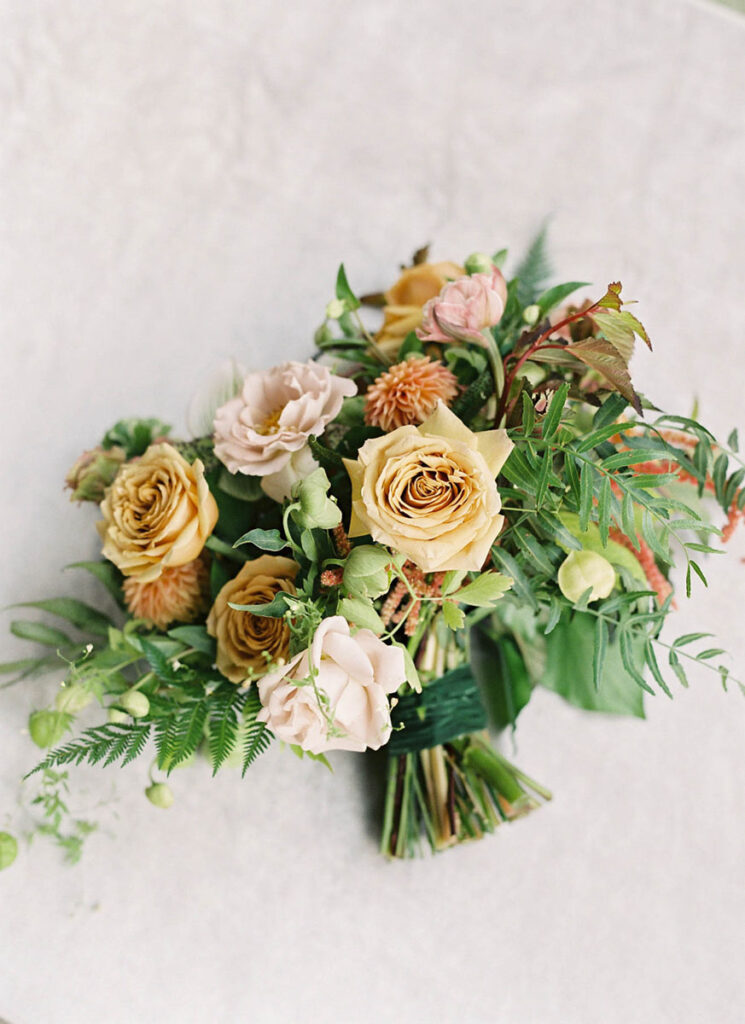
Principles of timeless wedding design
A few guidelines tend to hold true across venues and styles:
Choose fewer, better elements. A smaller number of well‑executed design gestures has more impact than many competing ideas. High‑quality candleholders, linens, and a few striking floral moments will usually yield stronger photographs (and a calmer room) than an overabundance of props.
Keep your palette focused. That doesn’t mean it has to be pale. Two or three main tones, supported by neutrals and perhaps a metallic accent, often feel more sophisticated than a longer list.
Pay attention to scale. Centerpieces should fit the dimensions of your tables and the height of your ceilings. Installations should frame, not overwhelm, key architectural features. Signage should be easy to read and appropriately sized for the space.
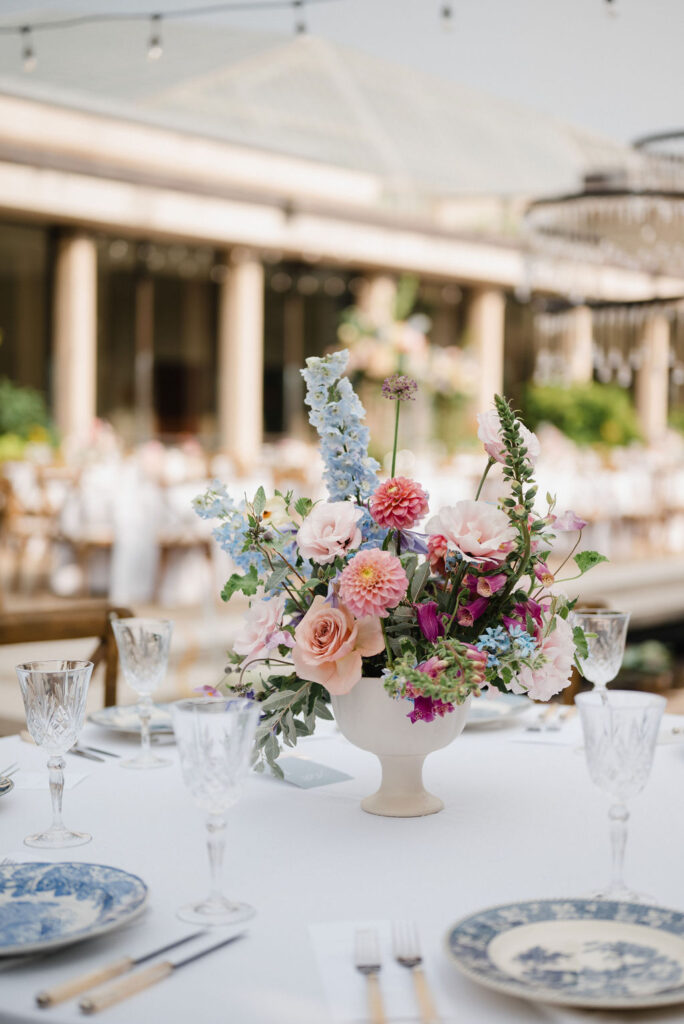
Color palettes that work well in Cleveland and regional venues
Soft neutrals and muted tones—ivory, warm whites, taupe, soft greys, gentle greens—sit beautifully against stone, wood paneling, and marble. They’re especially at home in historic interiors and museums.
Deep, saturated hues—emerald, aubergine, burgundy, navy, charcoal—can be powerful for fall and winter. When paired with warm metallics, candlelight, and tactile fabrics, they feel rich rather than heavy.
Subtle regional nods can keep a palette grounded: lake‑inspired blues and greys for Lake Erie settings; vineyard greens and soft earth tones for wine country; sea glass, dune, or soft coastal greens for New England or Southern shorelines. The key is to treat these as accents rather than literal themes.
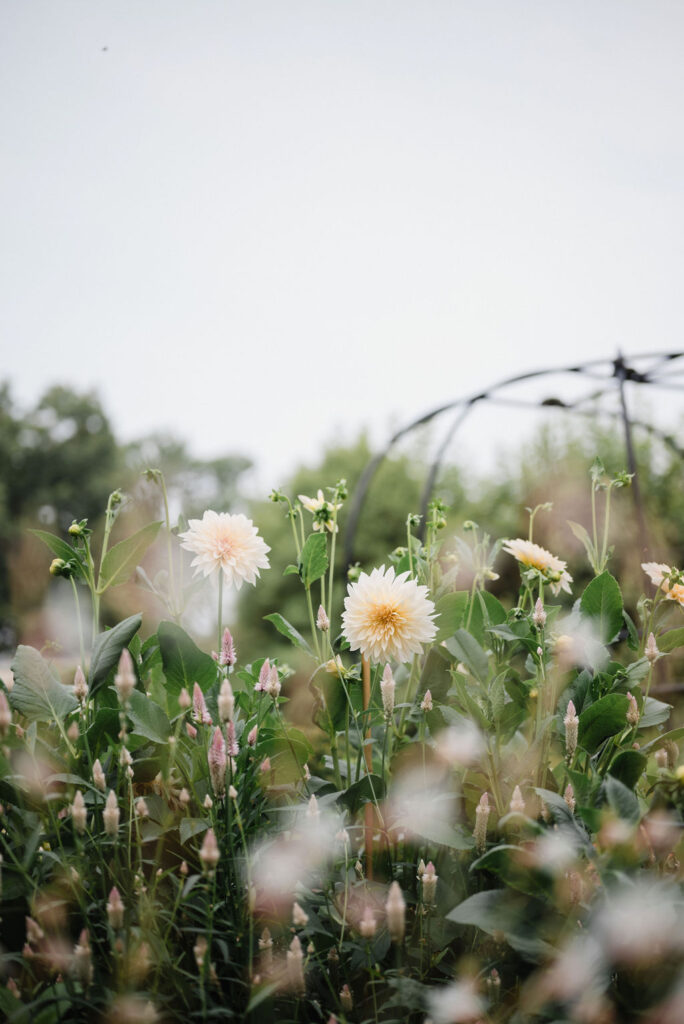
Florals and greenery through the seasons
Seasonality matters in the Midwest and on the East Coast. Working with seasonal blooms often improves both quality and budget:
Spring: Ranunculus, tulips, hellebores, lilac, sweet pea, and flowering branches pair well with soft palettes and lighter fabrics. They’re delicate and romantic, perfect for museums, gardens, and historic interiors.
Summer: Garden roses, peonies in early summer, dahlias later on, lisianthus, delphinium, and lush greenery allow for fuller compositions. This is also a season when floral choices can be more colorful without feeling heavy.
Fall: Dahlias, heirloom mums, berries, and textural foliage in rust, bronze, and deep greens echo the landscape. If you’re in wine country or near forests, this is where the outside and inside can mirror one another beautifully.
Winter: Evergreens, amaryllis, anemones, paperwhites, and hellebores, layered with candlelight, velvet, or wool textiles, create warmth. You can lean into tonal whites and greens or incorporate deeper jewel tones.
Always consider your venue. Tall arrangements can balance a high‑ceiling ballroom but overwhelm a low‑ceilinged inn. Grand staircases, mantels, and entranceways can hold florals or greenery that feel like part of the architecture rather than separate décor.
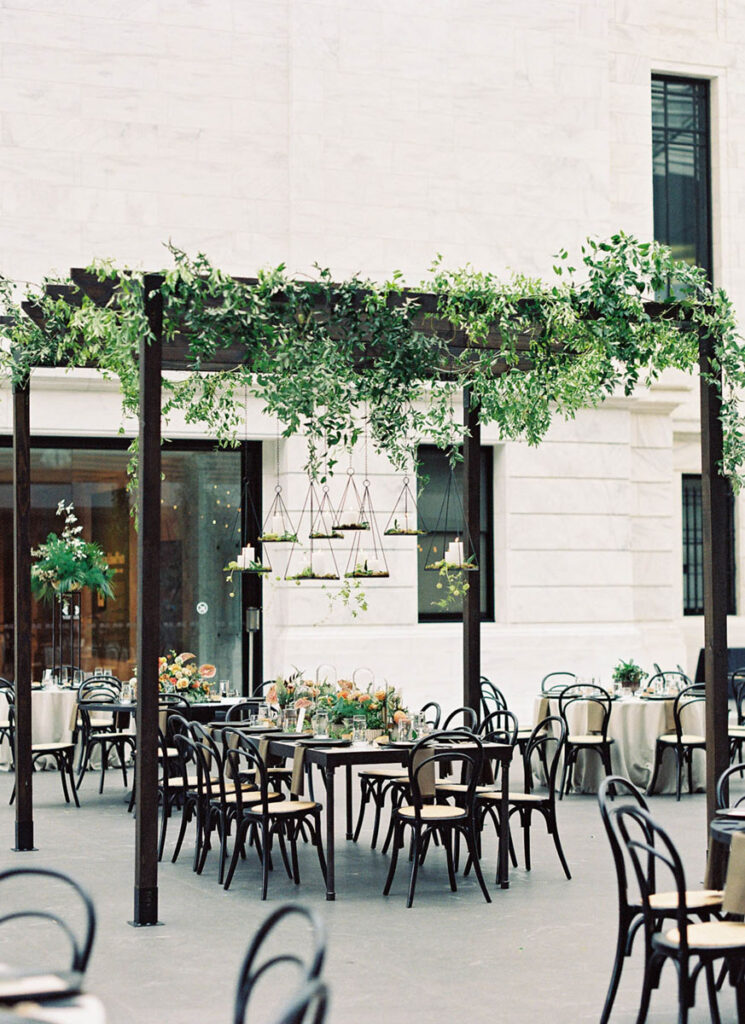
Tablescapes and rentals: where guests spend their time
Guests spend many of their longest, most conversational moments at the table, so it’s worth some focus here:
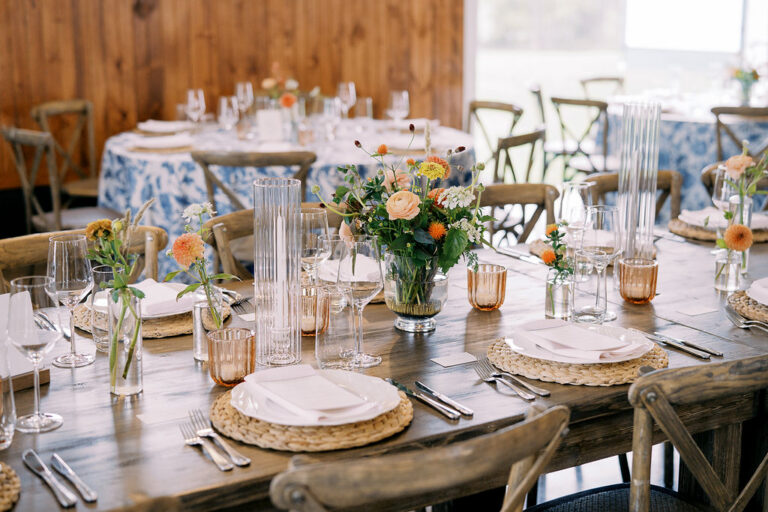
Linens act as a foundation. Even if your venue includes basic linens, upgrading tablecloths, napkins, or runners on key tables can change the room’s overall tone. Natural fibers or textured weaves usually read as more elevated than shiny poly.
Layering brings dimension. Think about how china, flatware, glassware, menus, and florals interact. Varying candle heights—tapers, pillars, votives—can create a soft “landscape” without clutter. Ensure each place setting feels intentional and comfortable to use.
Space and comfort matter aesthetically, too. Overcrowded tables look busy and feel uncomfortable. Whenever possible, give guests enough room for glassware, plates, and elbows without needing to move décor out of the way.
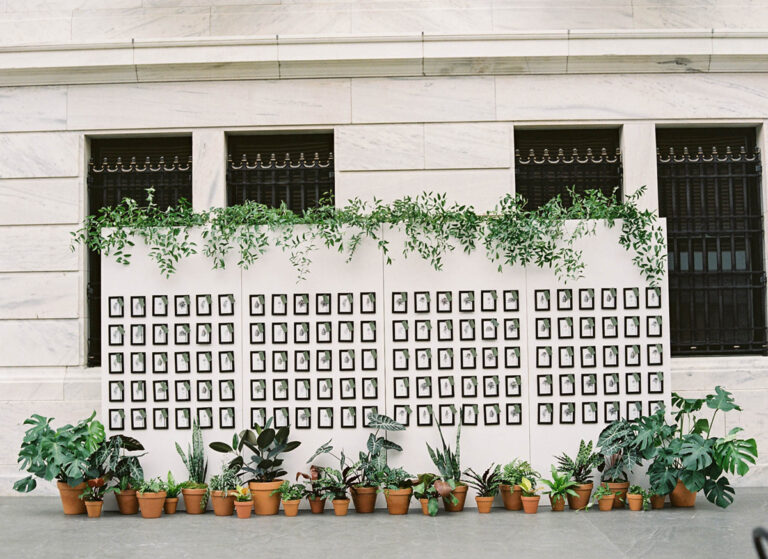
Signage, stationery, and your event’s visual language
From your save‑the‑dates to your escort display, paper and signage quietly set expectations and tie your visuals together.
Invitations and save‑the‑dates do two jobs: they tell guests what to expect logistically, and they offer a first glimpse into the tone of your wedding. Clear typography, thoughtful wording, and a layout that’s easy to read are just as important as colors and motifs—especially if you’re planning a destination weekend with multiple events.
Day‑of paper—programs, menus, place or escort cards, bar signs—can echo the design of your invitations without duplicating it exactly. Small nods to Cleveland or your destination city (a custom illustration of your venue, a subtle map motif, or a monogram inspired by architectural details) add personality without turning the wedding into a themed party.
If you’re looking for a sense check on etiquette or wording, sites like Emily Post or the wedding sections of Vogue can offer more traditional reference points to draw from or intentionally deviate from.
Design choices that tend to age well
You don’t have to avoid trends entirely. The goal is to use them with intention. As you consider options, it can help to avoid:
Hard‑to‑read fonts on invitations or signage that sacrifice legibility for style. Hyper‑specific décor pieces that show up everywhere for a year and then disappear. Overly branded or hashtag‑driven installations that might feel out of step in a decade.
DIY projects that require professional‑level skill or equipment. Handmade details can be heartfelt, but if they’re time‑consuming and don’t meet the finish level of the rest of your wedding, they can end up adding stress more than value.
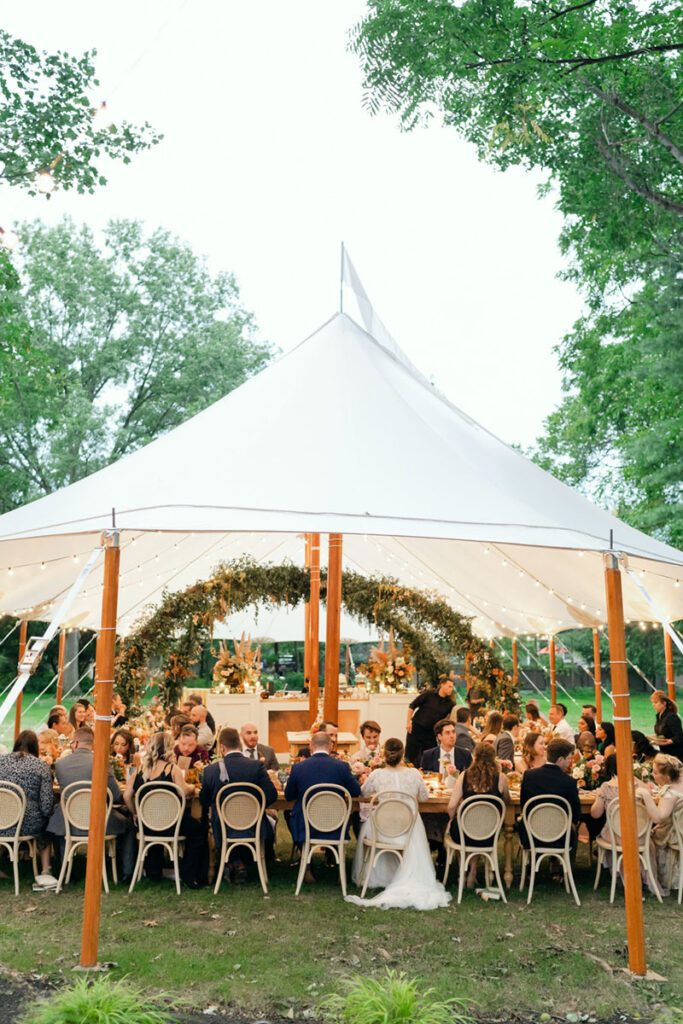
Tented, Private Estate, and At‑Home Weddings in Northeast Ohio
Tented and estate weddings are among the most personal ways to celebrate. You’re not renting a few hours in a function room; you’re inviting people into a space that feels like your own, even if you’ve rented the property for the weekend. The tradeoff for that intimacy is complexity. You’re effectively building a small village for the day—a beautiful one, but still a village.
What makes estate and tented weddings feel so boutique
These weddings often unfold over several days: a welcome party on the lawn, the wedding itself, brunch the next morning, maybe a smaller dinner the night before. Guests experience your wedding as a long, relaxed visit rather than a single four‑hour window.
There’s also a sense of privacy and control. You’re not sharing hallways with another wedding. You can shape the sequence of spaces—perhaps cocktails in a garden, dinner under a sailcloth tent, dancing in a clearspan tent with a view of the house—so it feels like a story rather than a single room flip.
Logistical layers to account for
In Northeast Ohio, an at‑home or estate wedding usually means planning for:
Power: mapping where generators will go, what they’ll power (band, lighting, kitchen, restrooms), and ensuring quiet equipment where sound matters.
Catering infrastructure: a dedicated catering tent or indoor kitchen, refrigeration, ice, dishwashing, and waste removal. This isn’t glamorous, but when it’s handled gracefully, your event feels seamless.
Restrooms: high‑quality restroom trailers with appropriate lighting, paths, and accessibility. These can be surprisingly pleasant when planned well and placed thoughtfully.
Parking and transportation: clearly marked parking or shuttles from hotels, solutions for narrow roads or driveways, and a plan for late‑night departures. You’ll also want to think about where vendor vehicles will park and load‑in, ideally out of guest sightlines.
Permits and neighborhood considerations: tent permits, inspections, noise ordinances, and, sometimes, proactive communication with neighbors. Many municipalities require tent and occupancy sign‑offs a few days before the wedding.
Working with tent and rental companies
Your tent and rental companies become central collaborators on estate weddings. Common tent types include:
Sailcloth and pole tents, which have beautiful peaks and a softer profile—ideal for countryside and lakefront properties. They require staking and can’t be placed flush against structures.
Frame tents, which offer more flexibility in shape and can work in tighter or more urban spaces. They can be weighted instead of staked in some scenarios.
Clearspan tents, which provide strong structure and wide open interiors with no center poles, allowing for large installations and more complex lighting or rigging.
Many rental partners can provide CAD drawings or 3D layouts to help you visualize traffic flow, dance floor location, stage and bar placement, and back‑of‑house spaces. For spring and fall in Ohio, factoring in flooring and temperature control is usually wise. Even in summer, grass can be uneven or damp; a dance floor or partial flooring makes a noticeable difference.
Given the number of moving parts—permits, deliveries, power, rentals—many couples choose to work with a planner or designer experienced in estate builds, simply to have someone coordinating the entire team.
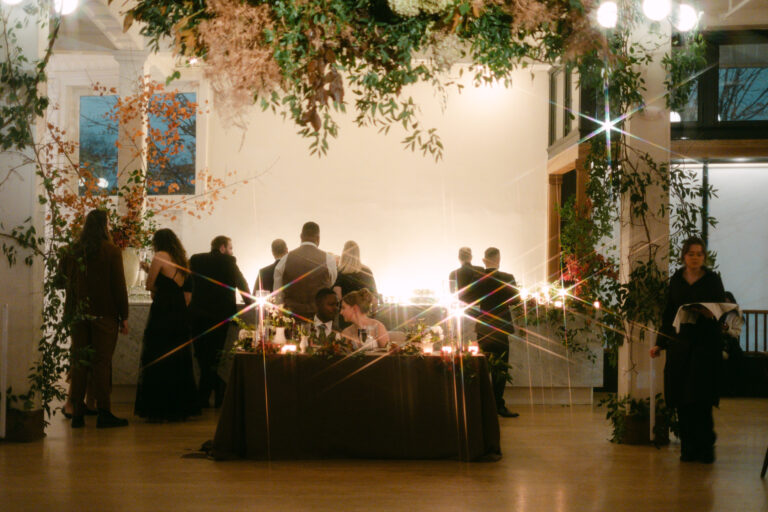
Guest Experience and Hospitality: Hosting with Intention
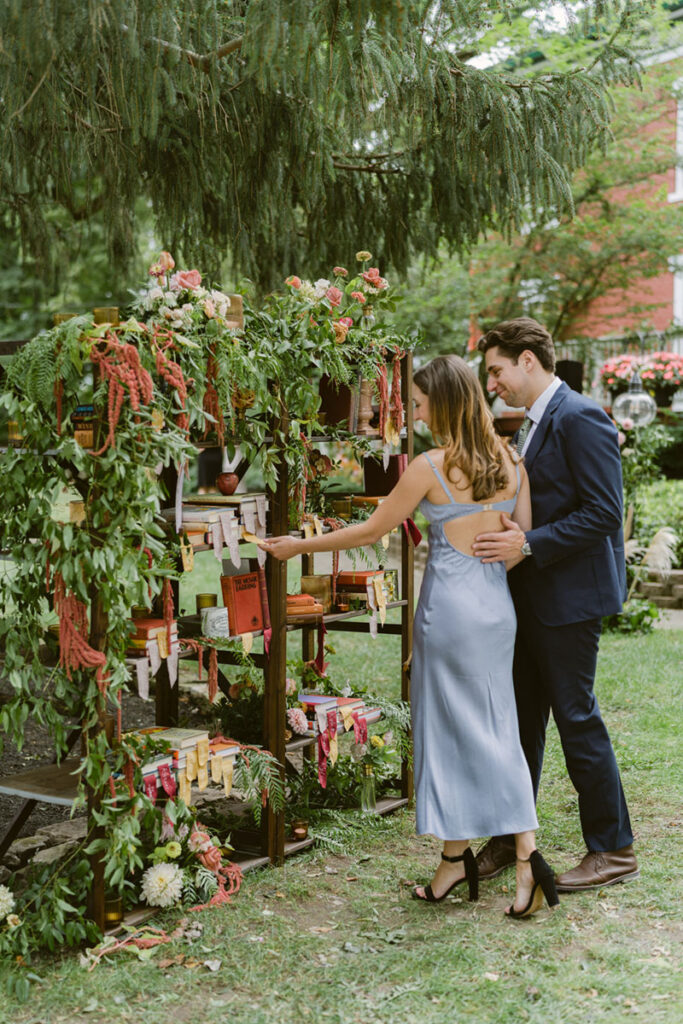
A boutique wedding is, at heart, about how people feel. When you start to think less in terms of “wedding elements” and more like a host inviting people into your life, decision‑making becomes much clearer.
Seeing the weekend through your guests’ eyes
It can be useful to literally walk through the day as if you were a guest:
How will they get from the airport or their home city to your wedding location? Is your venue easy to find or tucked down a country road? When they arrive, will someone be there to greet them? Do they know where to put their coats, when dinner will start, how long the ceremony will last?
Boutique hospitality often looks like:
Clear, timely, and kind communication—via your website, invitations, and any updates. Thoughtful touches like water stations at outdoor ceremonies, plenty of shade or heaters, and spaces to rest between dancing. A timeline that allows events to unfold without guests ever feeling like they’re waiting in a hallway or standing in a bar line that never moves.
Welcoming out‑of‑town and destination guests
When guests are traveling—whether to Cleveland or to a vineyard, inn, or Southern city on your behalf—small gestures are amplified:
Room blocks in a couple of thoughtfully chosen hotels or inns give guests a home base and often simplifies transportation routes. A welcome note in each room, possibly with local snacks or a short list of your favorite coffee shops and brunch spots, sets a tone of warmth and gratitude.
Your wedding website can become a mini travel guide: maps, parking details, rideshare information, dress codes explained in clear language (“cocktail attire; the ceremony will be outside on grass”), and recommendations for free‑time activities. For Cleveland, that might include the Cleveland Museum of Art, the Rock & Roll Hall of Fame, walks in the Cultural Gardens or Cuyahoga Valley National Park, or evenings in Ohio City or Tremont.
Designing a guest‑friendly timeline
A thoughtful timeline is one of the most underrated tools for creating a boutique feel. As you build yours:
Avoid extensive gaps between ceremony and cocktail hour unless there is a clear reason and a plan for how guests will fill that time. Group toasts strategically so they don’t interrupt every course of dinner. If you have older guests or families with young children, consider doing key dances and moments a bit earlier in the evening so they can comfortably participate.
Think about late‑night elements—snacks, a bar menu shift, dessert service, or an after‑party—and how you’ll communicate those to guests. Make sure there are also quieter areas for conversation, particularly if your dance floor will be high‑energy.
Accessibility, inclusivity, and care
Boutique hospitality considers the full spectrum of guests:
Mobility: step‑free or ramped access where needed, comfortable seating options for older guests, and clear pathways that are well lit at night. Dietary needs: visible vegetarian, vegan, gluten‑free, and allergy‑conscious options, ideally noted on menus or buffet signage. Sensory preferences: spaces away from loud music, and, if you know guests who might appreciate them, small accommodations like earplugs available at the DJ booth or bar.
For children and families, you might think about seating arrangements, access to restrooms, and whether you’d like to provide a quiet room for nursing or naps. All of these decisions add up to a celebration that feels generous, not just beautiful.
Designing Multi‑Day and Destination‑Style Itineraries
Turning your wedding into a weekend gives you something you can’t create in a single evening: time. Time for guests from different parts of your lives to connect, time to actually talk to people, time for the energy to build gradually instead of peaking and ending in four hours.
Building a destination‑style weekend in Cleveland
In Cleveland, a weekend might begin with a welcome gathering at a favorite restaurant, brewery, or museum terrace. It doesn’t have to be elaborate; the point is to create space for people to meet before the wedding day. That can take some social pressure off the reception itself.
During free time, you can offer a simple list of ideas on your website or welcome note: the Cleveland Museum of Art, the West Side Market, a walk along Edgewater or in the Cultural Gardens, or a visit to the Flats for riverfront views. Guests who prefer structure can plan outings; others can wander at their own pace.
A farewell brunch or coffee gathering on Sunday morning provides a gentle closing note, giving you a chance to say real goodbyes instead of doing a last‑song wave from the dance floor.
Typical flow for regional destination weddings
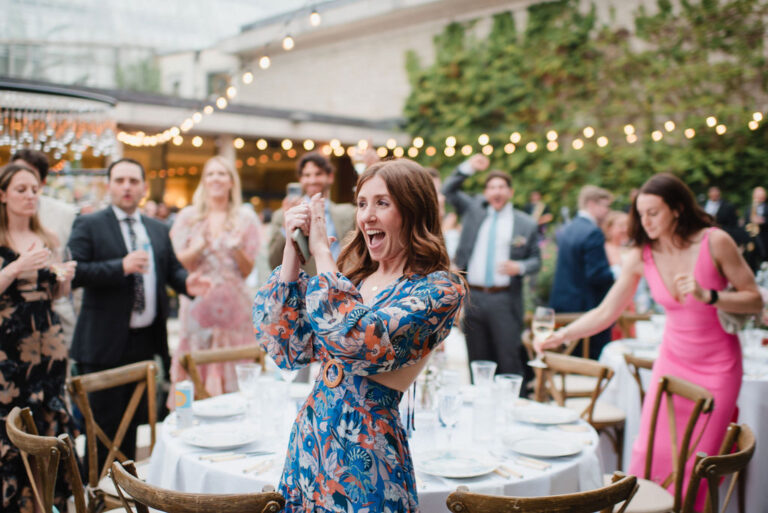
Whether you’re marrying on a Michigan lake, at a New England inn, or in a Southern city, many destination weekends follow a similar arc:
Guests arrive Thursday or Friday and check in. That evening, you might host a rehearsal dinner for a smaller group and a welcome cocktail hour or dessert gathering that’s open to everyone. Saturday is the wedding itself, with clear transportation plans and enough space in the timeline for hair, makeup, and photography without rushing.
Sunday might include brunch, mimosas on a porch, or coffee on a hotel terrace. For guests who choose to stay longer, you can suggest optional activities: hikes, boat rides, museum visits, or wine tastings.
Transportation and timing across several days
Multi‑day events add a logistical layer, especially in areas with limited rideshare options or winding roads. Coordinating shuttles between hotels, venues, and any off‑site events is one of the most appreciated forms of hospitality you can offer.
Provide shuttle schedules and meeting points on your website, in welcome notes, and at hotel front desks. Build in buffer time for traffic, parking, and late departures. It’s almost always better to have guests comfortably early to cocktails than stressed and late to your ceremony.
Photography and Memory‑Making That Stand the Test of Time
Long after linens are returned and flowers are composted, your photographs and films are what remain. They shape how you—and in some cases, your future children or grandchildren—remember the day. Choosing artists whose work aligns with your idea of “timeless” is one of the most important decisions you’ll make.
Choosing a photographer with a timeless approach
As you evaluate photographers, focus on:
Editing style: true‑to‑life color, gentle contrast, and skin tones that look like real people tend to age better than heavy filters or extreme desaturation.
Balance of images: a strong mix of candid moments, portraits, and architectural or detail shots tells a fuller story. Look at how they capture older relatives, children, and quiet in‑between scenes—not just portraits of the couple.
Comfort with various lighting conditions: in Cleveland and many destination markets, you’re likely to encounter bright midday sun, overcast skies, indoor ceremonies, and dimly lit receptions. You want someone who handles all of those well, using natural light and flash when appropriate.

Scouting locations in Cleveland and other regions
Portrait locations often matter less than how relaxed you feel, but having a plan helps. In and around Cleveland, couples often gravitate to:
Historic districts with interesting facades, parks with architectural structures, gardens and museum grounds, and lakefront locations with skyline or pier views. For rain or winter, covered arcades, hotel lobbies, or galleries can be beautiful alternatives.
In other regions, your planner or photographer can suggest locations that align with your style: cobblestone streets in New England, courtyards or squares in Southern cities, lake docks or forests in the Midwest.
Building a photo timeline that respects the day
Decide early whether you’d like a first look or to see each other for the first time at the ceremony. There is no right answer, but the decision affects your schedule. A first look typically allows you to complete more portraits and family photos before the ceremony, freeing you to enjoy cocktail hour.
Whatever you choose, sharing a clear family photo list—organized by side and grouping—with your photographer (and planner, if you have one) keeps that portion of the day calm and efficient. You’ll also want to talk about any heirlooms, décor elements, or relationships that are particularly important to you, so your photographer can prioritize them.
Details that hold up in photos
Attire that fits well and feels like you tends to photograph best. Clean‑lined gowns or suits, thoughtful accessories, and hair and makeup that feel like an elevated version of your everyday self will likely feel more “you” in twenty years than something you chose purely because you saw it trending.
On the morning of the wedding, gather your invitation suite, rings, shoes, jewelry, perfume or cologne, and any meaningful objects (a handkerchief, a letter, an heirloom) in one place. Many photographers will style these for “flat lay” images that become part of your visual story.
Common Pitfalls When Planning a Boutique, Timeless Wedding
Even the most organized couples run into decision fatigue or unexpected snags. Knowing a few common pitfalls makes it easier to steer around them before they become stress points.
Letting social media dictate your decisions
Inspiration platforms are useful, but they’re also built to show you what everyone else is doing right now. It’s very easy to slide from “inspired” to “overwhelmed.” When you feel that happening, return to your original vision: does this element align with how you want the day to feel, your venue, and your priorities? If not, it’s safe to let it go.
Underestimating logistics—especially for tents and estates
Infrastructure is invisible when it’s done well and impossible to ignore when it’s not. Power, restrooms, catering access, waste management, parking, and load‑in routes all affect guest experience. This is where professional support, whether from a planner, production company, or very experienced venue coordinator, becomes invaluable.
Overloading the timeline with “moments”
When you try to include everything—choreographed dances, fireworks, multiple performances, a dozen speeches—the evening can start to feel like a program rather than a celebration. Choosing a smaller number of meaningful, well‑timed moments gives each room to breathe and makes them more memorable.
Skipping professional support for complex events
For straightforward, venue‑based weddings, you may be able to manage with a strong in‑house coordinator and some organized friends or family. For tented estates, multi‑day itineraries, or destination weddings, trying to manage all the details yourself—or asking relatives to do so—often leads to stress and miscommunication.
Strategic professional support doesn’t have to mean full‑service planning, but having someone whose role is to protect the flow of the day allows you (and your families) to actually be present.
Overlooking guest comfort in favor of aesthetics
It’s easy to get absorbed in flowers and linens and forget the basics: comfortable seating, appropriate footwear guidance, shade or heaters, accessible restrooms, enough bartenders, and clear signage. A wedding can be visually stunning and still feel exhausting if guests are too hot, too cold, confused, or hungry.
Major last‑minute design changes
Once you’ve aligned on a design direction with your vendors, shifting the overall look late in the process can strain budgets, timelines, and relationships. Small tweaks are normal; wholesale changes are costly and stressful. Trust the plan you built together unless there’s a truly compelling reason to alter it.
Creating a Wedding That Feels Like You, in Cleveland and Beyond
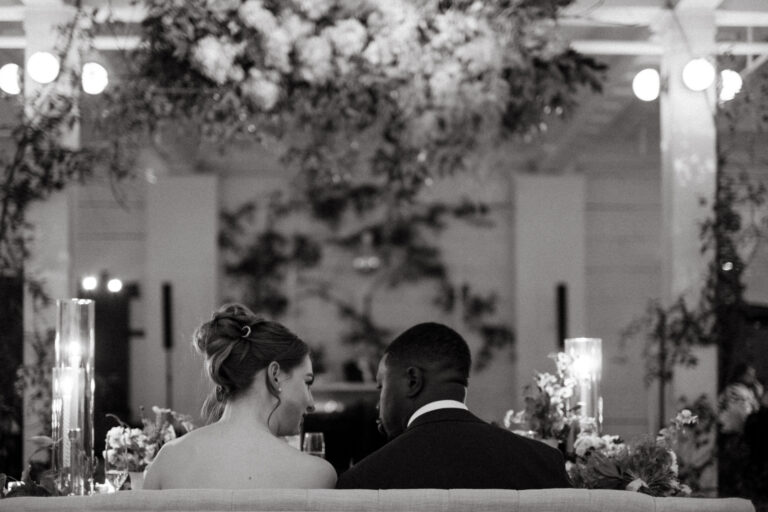
A timeless, boutique wedding isn’t about perfection. It isn’t about checking every box of what you’re “supposed” to have. It’s about alignment—between who you are, what you value, and how your celebration actually feels.
When you start with experience, choose venues and locations that reflect your taste, build a realistic timeline and budget, and surround yourselves with vendors who understand both your aesthetic and your priorities, the rest tends to fall into place. Trends become options rather than obligations. Decisions become easier because you have a clear filter to run them through.
Cleveland and Northeast Ohio offer an unusually rich foundation for this kind of celebration: historic spaces with soul, lakefront and countryside landscapes, and a growing network of creative professionals. From there, it’s an easy leap to regional destination weddings throughout the Midwest, the East Coast, and the South, especially when you work with planning and design teams who understand both local and destination logistics.
Use this guide as a framework, not a checklist. Keep returning to that early conversation about how you want your wedding to feel. Protect time for the parts you care about most—your ceremony, the meal, the music, the people who have traveled to be with you. And remember that the details that tend to matter most in the long run are the quiet ones: the way your venue tells part of your story, the ease with which guests move through the day, and the moments of recognition and joy you share with the people in the room.
However you structure your celebration—historic ballroom in downtown Cleveland, tented lawn overlooking the lake, vineyard weekend, or Southern inn—anchoring your decisions in hospitality, thoughtful design, and a genuine sense of place is what will make your wedding feel timeless long after the last song ends.