
Vermont has a way of slowing everything down in the best possible way. Roads narrow into winding lanes shaded by maple trees, village greens appear around unexpected bends, and mountains seem to rise up just when you start to exhale. For couples dreaming of a romantic New England destination wedding, the Green Mountain State offers a kind of quiet magic that’s hard to replicate elsewhere.
Part of Vermont’s appeal is its range. You can host a black-tie weekend at a historic inn, a laid-back lakeside gathering, a luxe tented reception on a private meadow, or a snow-dusted celebration in a ski village. Each season feels distinct, each region has its own character, and the scale of the state keeps things intimate and personal.
Planning that experience from afar, though, comes with moving parts: seasonal weather, rural logistics, vendor availability, and guest travel. This guide is designed to walk you through those details. Whether you’re planning from another state or another country, you’ll find practical, real-world insight to help you navigate Vermont’s regions, seasons, venues, and vendors with confidence.
Throughout, you’ll also see where an experienced destination wedding planner can help—especially if you’re envisioning a tented celebration, boutique hotel buyout, or private estate event. The goal is not to sell you on anything, but to give you a clear sense of what’s possible and what to expect as you bring your Vermont wedding vision to life.
Why Vermont Works So Well For A Romantic New England Wedding
Vermont is often described as “quintessential New England,” but that undersells it a bit. Yes, you’ll find white-steepled churches, historic town centers, and covered bridges. You’ll also find a rich farm-to-table culture, a deep respect for craftsmanship, and a landscape that feels both dramatic and welcoming.
The four-season romance of the Green Mountain State
One of Vermont’s biggest strengths as a destination wedding location is how different it feels at various times of year. The same mountain vista can read as soft and hazy in June, blazing in October, or quietly cinematic in February. That matters for photography, guest comfort, and overall atmosphere.
Summer brings lush hillsides, warm evenings, and long golden hours—ideal for tented weddings, lakeside ceremonies, and al fresco cocktails. Temperatures are typically comfortable rather than sweltering, especially in the mountains. You do want to be prepared for humidity and the occasional afternoon thunderstorm, but the trade-off is those glowing, late sunsets.
Fall needs little introduction. Peak foliage usually arrives between late September and mid-October, depending on elevation and region. Think saturated reds, golds, and oranges, crisp air, and that sense of cozy abundance that makes candlelit receptions feel particularly inviting. In many ways, fall is Vermont at its most iconic—and also its most in-demand.
Winter transforms Vermont into a snow globe. Ski resort towns bustle with activity, fireplaces crackle in inns and lodges, and twinkling lights against the snow create a romantic, almost cinematic backdrop. If you like the idea of a smaller, more intimate guest list and you’re comfortable embracing the season, winter can work in your favor. It’s also a natural fit if many of your guests ski or snowboard.
Spring is underrated. Once “mud season” passes, fields and hillsides wake up with fresh greens, budding trees, and early blooms. Days can feel bright and hopeful, with soft light and cooler temperatures. For couples seeking shoulder-season pricing and a more delicate color palette, late spring can be a beautiful choice—as long as you’re realistic about rain and build in a thoughtful backup plan for outdoor elements.
What sets Vermont apart from other New England wedding destinations
Compared with more densely populated New England coastal areas, Vermont has a slower, more intimate feel. That affects everything from traffic to noise ordinances to how long it actually takes to get from a rental warehouse to a mountain venue. There’s room to breathe here, and that sense of space tends to shape the pace of the weekend.
There’s also a distinct farm-to-table and maker culture. Many venues have direct relationships with local farms, and it’s common to see menus built almost entirely from regional ingredients. Local creameries, breweries, cideries, and distilleries give you plenty of options for featuring Vermont-made food and drink at cocktail hour and dinner. If you love the idea of menus that shift with the seasons, you’re in the right place.
Finally, the landscapes themselves are remarkably varied within a small footprint: mountains, rolling farmland, deep forests, crystal-clear lakes, and those iconic covered bridges. Instead of choosing between “mountain” or “water” or “village,” you can often have some combination of all three within a short drive. That variety is a gift when you’re thinking about portraits, guest excursions, or a multi-day itinerary.
Who this guide is for
This guide is especially helpful if you are:
Planning from out of state (or abroad). Most couples marrying in Vermont are hosting some or all guests from elsewhere in the U.S. or beyond. Coordinating travel, lodging, and weekend events from a distance takes some strategy, particularly when local knowledge—like how long it actually takes to drive from Burlington to Stowe on a foliage weekend—makes a difference.
Imagining a boutique, detail-driven wedding. If you’re drawn to historic inns, intimate resorts, refined barns, or design-forward tented celebrations, Vermont’s scale and culture support those more curated experiences. You can lean into a sense of “we’re all away together” rather than a single-day event.
Considering a tent or private estate. These settings can be extraordinary—and logistically complex. An experienced destination wedding planner, such as Shi Shi Events, can help with infrastructure, vendor sourcing, and the hundreds of behind-the-scenes decisions that create a seamless guest experience in rural settings.
Understanding Vermont’s Wedding Regions
It helps to think of Vermont in three broad wedding regions: north, central, and south. Each has its own strengths, travel considerations, and venue styles. Within those, individual towns take on distinct personalities, so you’re really choosing a “little world” for your guests to inhabit for the weekend.
Northern Vermont and the Burlington area
Burlington is Vermont’s largest city and home to the University of Vermont. It sits on the shores of Lake Champlain, looking west toward the Adirondack Mountains in New York. The result: sunsets that guests will talk about long after the wedding.
In and around Burlington, you’ll find:
Lake Champlain views. Waterfront hotels, marinas, and nearby inns can give you direct access to the lake. Some couples incorporate boat rides, dockside ceremonies, or lakeside welcome events. The light on the water in late afternoon is especially beautiful for photos.
Urban conveniences with small-city charm. Burlington’s Church Street Marketplace is lined with shops, cafés, and restaurants, creating plenty of options for guest downtime and informal meetups. Nearby towns like Shelburne, Charlotte, and Essex offer a more rural feel within an easy drive—so you can pair a countryside venue with an urban-adjacent lodging hub.
Accessibility. Burlington International Airport (BTV) has direct flights from several major cities and is only a short drive from downtown. This makes northern Vermont particularly appealing for destination weddings where many guests will fly in. For updated flight routes and airport details, the Burlington International Airport website is a useful resource.
Because Burlington is a university and tourism center, it’s wise to keep an eye on college move-in weekends, graduations, and major festivals when selecting dates; these can impact hotel availability and rates.
Central Vermont: Stowe, Waitsfield, and the Mad River Valley
If you imagine the “postcard” version of Vermont—towering green mountains, covered bridges, and small ski towns—central Vermont is probably what you’re picturing. Stowe, Waitsfield, Warren, and the Mad River Valley have become beloved wedding destinations for good reason.
Here you’ll find:
Mountain views and ski culture. Ski resorts operate year-round, offering wedding venues with chairlift access, mountaintop ceremony sites, and extensive guest amenities. In summer and fall, trails become hiking and biking routes; in winter, you have skiing, snowboarding, and après-ski built into the weekend. This makes central Vermont an easy “wedding plus vacation” choice for many guests.
Storybook villages. Town centers in places like Stowe combine historic charm with modern amenities—artisan shops, farm-to-table restaurants, breweries, and galleries. Guests can wander, grab coffee, or explore on their own between events without feeling lost or overwhelmed.
A wide range of venues. From classic inns and upscale lodges to barn venues and private estates, central Vermont offers a strong mix for couples wanting both dramatic scenery and solid infrastructure. It’s an especially good fit for couples interested in tented receptions with nearby lodging.
Southern Vermont: Manchester, Woodstock, Brattleboro, and beyond
Southern Vermont tends to feel slightly more accessible to guests driving from New York City, Boston, or the Mid-Atlantic. Towns like Manchester, Woodstock, and Brattleboro combine historic architecture with a relaxed, upscale country feel.
Expect:
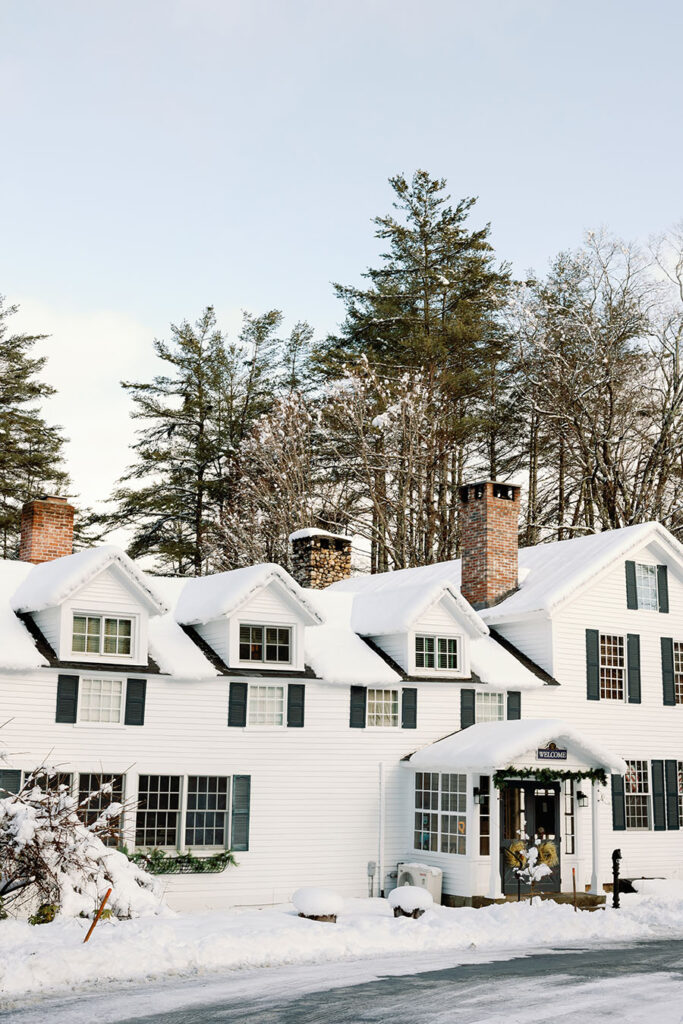
Historic inns and estates. Many properties date back to the 18th and 19th centuries, with beautifully preserved architecture and manicured grounds. Full-property buyouts are common, which works well for weekend-long gatherings where you’d like everyone under one or two roofs.
Village greens and classic New England streetscapes. Southern Vermont villages photograph beautifully, and they give guests a defined place to wander between events—often with independent bookstores, small museums, and cafés within a few blocks.
Ease of driving access. From New York City, southern Vermont can be reached in roughly three to four hours by car, depending on your exact destination. From Boston, many areas are two and a half to three and a half hours away. Albany and Hartford are also within comfortable driving distance, which can simplify travel planning for guests coming from multiple directions.
Woodstock in particular is worth mentioning on its own. With its iconic covered bridge, central green, and well-preserved architecture, it often feels like a movie set—in the best way. For couples who want “quintessential New England” in a walkable footprint, it’s hard to beat.
How to choose your Vermont wedding region
When deciding where to focus your venue search, a few questions are especially helpful:
How will most guests travel? Are they likely to fly, drive, or do a combination? Flying guests may appreciate proximity to Burlington or larger regional airports such as Boston (BOS), Albany (ALB), or Hartford–Bradley (BDL) with a reasonable drive to the venue. Driving guests from major cities might lean toward southern Vermont for shorter travel times.
What kind of setting feels most like you? If you want a waterfront ceremony, northern Vermont and Lake Champlain can be especially compelling. If you want a ski resort or alpine feel, central and northern mountain towns are strong choices. For historic inns and quintessential New England villages, southern Vermont offers a deep bench.
How self-contained do you want the weekend to feel? A resort or inn that can host multiple events on site creates a compact, retreat-like experience. A private estate paired with lodging in a nearby town leads to a more “choose your own adventure” feel for guests during downtime.
Ultimately, the region you choose will shape your guests’ experience: the drives they take, the views they see, and the way the whole weekend feels. It will also influence logistics like vendor travel fees and access to rentals—factors a destination planner can help you evaluate early on.
Timing Your Vermont Wedding: Seasons, Weather, and Lead Times
Because Vermont is so seasonal, the timing of your wedding will affect nearly everything: your design, your budget, your guest count, and your logistics. Each season has trade-offs. The goal is to choose the one that best matches your priorities—and then plan with its realities in mind rather than fighting against them.
Vermont wedding seasons at a glance
Spring (April–early June). Spring in Vermont can be beautiful, but it is also transitional. “Mud season” usually happens in late March and April, especially in rural and mountainous areas, as snow melts and dirt roads soften. By May and early June, hillsides turn a vivid green and early flowers start to appear.
Pros include fresh, soft color palettes, cooler temperatures, and often more flexibility on pricing and availability than peak summer and foliage seasons. The trade-offs are less predictable weather and the possibility of rain and lingering mud, especially if you’re planning an outdoor or tented celebration on grass fields. Thorough flooring and walkways become more important.
Summer (mid-June–August). Summer is ideal for couples who want to use the outdoors as much as possible. Long days mean extended golden hour, late sunsets, and plenty of time for photos. Outdoor ceremonies, cocktail hours, and open-sided tents shine this time of year.
However, summer is also peak tourist season in many Vermont destinations. Popular resort towns and lakeside areas can book out early, and hotel rates may be higher. You’ll want to plan ahead for room blocks and transportation if your date overlaps with school vacations, music festivals, or major local events.
Fall foliage (September–mid-October). Fall in Vermont is famous for a reason. Temperatures are usually comfortable during the day with cooler evenings—ideal for layered attire, candlelight, and rich color palettes. Peak foliage is a moving target influenced by weather patterns and elevation, but early October is often a safe bet for strong color in many regions. The Vermont foliage reports from the state’s Department of Forests, Parks & Recreation can be a helpful reference as you get closer.
Because this period is in such high demand, venues and accommodations often carry premium pricing and may require longer minimum stays. Availability can be tight, especially on weekends. Expect more traffic on scenic routes and in popular towns; this matters for guest transportation and travel times between ceremony and reception locations.
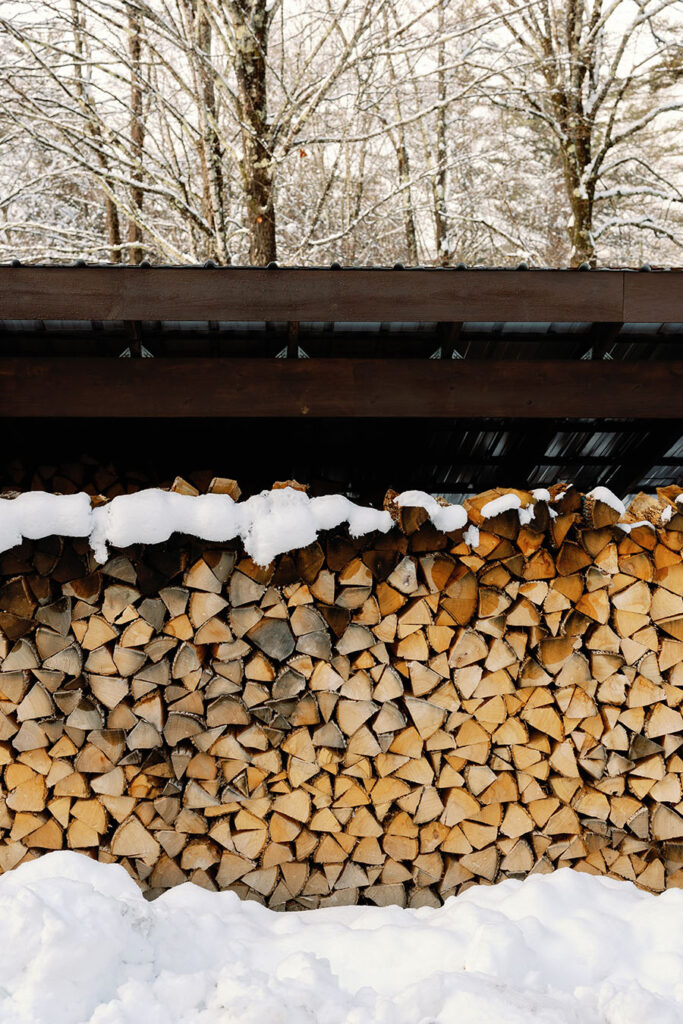
Winter (late November–March). Winter weddings in Vermont tend to be smaller, cozier, and more intimate. Resorts often offer lower food and beverage minimums in certain winter windows (outside of peak holiday and long-weekend periods), and you can build festivities around skiing, snowboarding, snowshoeing, or simply watching the snow fall from a fireside lounge.
On the other hand, winter introduces the possibility of snow and ice affecting travel. Flight delays and difficult driving conditions are not uncommon. Daylight hours are shorter, which means earlier ceremonies if you want natural light for portraits. With the right planning and communication, though, winter can feel unforgettable rather than stressful.
How far in advance to book
Popular weekends in Vermont, especially in foliage season and mid-summer, typically book out 12–18 months in advance. Highly sought-after venues, photographers, and planners may fill their calendars even earlier for peak dates.
As you set your timeline, consider:
Foliage season demand. If your heart is set on early October in a well-known destination like Stowe or Woodstock, aim to secure your venue and planner as early as you reasonably can. A range of 14–18 months isn’t unrealistic, especially if you have specific properties in mind.
Holiday weekends and local events. Long weekends (Memorial Day, Labor Day, Indigenous Peoples’ Day, Presidents’ Day for winter) can work well for travel but also attract higher lodging rates and more visitors. Major local festivals, marathons, and college events can also impact availability. The Vermont Vacation events calendar is helpful for scanning what’s happening around your ideal date.
Weather backup plans that actually work
Regardless of season, Vermont weather can shift quickly. The most realistic approach is to assume you’ll need a backup plan and design it as thoughtfully as your “perfect weather” plan.
Look for built-in flexibility. When evaluating venues, ask specifically about indoor ceremony and cocktail hour spaces, their capacities, and how they are set up. Walk through what would happen if rain (or snow) started an hour before the ceremony. If you’re using a tent, think through the ceremony, cocktail, and reception flow if everything has to move under cover.
Invest in tent enhancements when they matter. For shoulder seasons and unpredictable weather, heaters, tent sidewalls, covered walkways, and solid flooring can make a dramatic difference in comfort and safety. In hot summer weather, fans or tent air-conditioning, plus shaded pre-ceremony areas, keep guests comfortable without much visual impact on your design.
Over-communicate with guests. Your wedding website and pre-wedding emails can set expectations: footwear suggestions, layers for temperature swings, and any possible changes in ceremony location if the forecast looks uncertain. Vermont guests will bring a sense of adventure, but they’ll appreciate knowing what to pack and what kind of terrain they’ll be navigating.
Legal Details: Making Your Vermont Marriage Official
The legal side of getting married in Vermont is relatively straightforward, especially for out-of-state couples. Even so, it’s one of those areas you don’t want to overlook in the rush of design decisions and vendor calls.
Vermont marriage license basics
Vermont does not have a residency requirement for marriage licenses. You can apply whether you live in the state or not, which makes it particularly friendly for destination weddings.
Where to apply. Couples can apply for a marriage license at any Vermont town or city clerk’s office. If you live in Vermont, you’ll apply in the town where you or your partner reside. If you are coming from out of state, you may apply in any town or city you choose. Many couples apply in the town where their venue is located for convenience and to minimize extra driving after arrival.
What you’ll need. Requirements can shift slightly by town, but generally you’ll bring government-issued photo identification and basic personal information. Some clerk offices may ask for a certified copy of a divorce decree if applicable. It’s wise to confirm current requirements directly with the specific town clerk’s office where you plan to apply; most have updated details on their municipal websites.
Waiting period and expiration. Vermont does not have a waiting period; you may marry as soon as the license is issued. The license is valid for 60 days from the date of issuance, which gives you a generous window around your wedding date, especially if you’re planning a longer stay.
For up-to-date details, refer to the State of Vermont’s marriage information page on the Vermont Department of Health website.
Officiants and ceremony requirements
In Vermont, your ceremony can be performed by:
Ordained ministers and clergy of any religious denomination.
Judges, justices, and certain public officials as designated by state law.
Friends or family members who become ordained through a recognized religious or spiritual organization (including many online ministries). Vermont also offers a one-time temporary officiant status through probate court in some circumstances; check the relevant county’s process if that interests you.
Your officiant is responsible for completing and returning the signed license to the issuing clerk’s office after the ceremony so that your marriage is legally recorded. It’s a small but crucial step to assign clearly and confirm on the day.
Folding legal logistics into your planning
From a planning standpoint, treat the license like a key timeline task rather than a last-minute errand.
Schedule time on your arrival day (or a day or two before, if you’re staying longer) to visit the town clerk’s office during business hours. If you are arriving on a Friday for a Saturday wedding, confirm that the clerk’s office is open and can accommodate you. Small-town offices can have limited hours or closures around holidays.
Confirm with your officiant who will handle the completed license after the ceremony and when you can expect certified copies, if needed. Some couples like to designate a trusted person or planner to help shepherd the paperwork and ensure it is signed and returned promptly, especially when the day itself is full and emotional.
Choosing a Vermont Wedding Venue
Vermont’s venues span historic inns, modern lodges, agrarian barns, art-forward boutique hotels, and private estates tucked down gravel roads. Each comes with its own atmosphere and logistical profile. Understanding those nuances will make your search more focused and your final decision more aligned with your priorities.
Common types of Vermont wedding venues
Historic inns and boutique hotels. These properties often sit right in or just outside town centers. Many date back decades or centuries, with charming architecture, cozy common rooms, and landscaped gardens or courtyards.
Advantages include on-site lodging, in-house food and beverage teams, and built-in gathering spaces for welcome parties and brunches. A full buyout can make the property feel like your private home base for the weekend, with guests mingling over breakfast or nightcaps in spaces that feel personal instead of anonymous.
Barns and farm properties. Barns in Vermont are not one-size-fits-all. Some are elegantly restored, with modern amenities and climate control. Others retain a more rustic, working-farm feel. Surrounding views usually include open fields, rolling hills, or wooded backdrops, which lend themselves well to outdoor ceremonies and portraits.
With barns and farms, pay attention to infrastructure: quality and quantity of restrooms, power availability for catering and entertainment, parking, lighting, accessibility for older guests, and any local noise ordinances. If a property is more bare-bones, you may need to bring in additional rentals and services, which affects budget and logistics. The charm is real; the practicalities need to be real too.
Resorts and ski lodges. Resort venues offer a one-stop experience for many couples. They typically combine lodging, multiple event spaces, on-site restaurants, and built-in activities. Ski resorts can host mountaintop ceremonies accessed by gondola or chairlift, along with slopeside receptions or ballroom dinners.
Season matters here. A ski lodge in January feels very different from the same lodge in July. In the off-season, you may benefit from more flexible pricing or more date availability, while in peak ski periods, you gain energy and activity but may see higher room rates and heavier crowds. Both are valid choices; they just lead to different weekend rhythms.
Private estates and home rentals. For couples seeking maximum privacy and customization, an estate or short-term rental can be ideal. These properties are often surrounded by acres of land, with the flexibility to bring in a tent, design custom floor plans, and choreograph each element of the weekend.
The flip side: they rarely come with built-in wedding infrastructure. You’ll need to plan for permits (if required by the town), tenting, restrooms, power, parking logistics, potential shuttle services, and clear communication with neighbors about noise and timing. An experienced planner is especially valuable here, as private estates are essentially blank canvases that require careful logistical design to feel seamless for guests.
Questions to ask potential Vermont venues
As you narrow your options, go beyond the brochure descriptions and the most photogenic corners of the property. Particular questions worth asking include:
Capacity and layout. What is the maximum comfortable capacity for a seated dinner? For a ceremony? How does the space flow between ceremony, cocktail hour, and reception, especially if the weather is bad? Are there any tight transitions (narrow staircases, single elevators, long outdoor walks) that might be challenging for older guests or those with mobility considerations?
Rain and backup plans. What is the Plan B if it rains or snows? Are there indoor options on site, and how do they change the feel of the event? Can the same room flip from ceremony to reception if needed, and how long does that take?
On-site catering vs. outside catering. Some venues require you to use their in-house catering team; others allow you to bring in a caterer from an approved list or entirely of your choosing. Clarify food and beverage minimums, service styles, and any restrictions early. It’s also worth asking whether menus can be customized seasonally or if you’ll be choosing from set packages.
Lodging and transportation. How many guests can sleep on property? Are there partner hotels or inns nearby? Is there sufficient parking or space for shuttle drop-offs and pickups? Does the venue have any restrictions on large vehicles (like coaches) accessing the property?
Curfew and noise ordinances. What time must amplified music end? Are there local ordinances regarding outdoor noise? Can you move the party indoors after a certain time? If you’re dreaming of a late-night dance floor, this question is crucial.
How a planner evaluates venues from a distance
If you’re not able to visit in person immediately, a destination planner can function as your on-the-ground proxy. At Shi Shi Events, for example, venue evaluation often includes:
Detailed site visits (in person or via local partners), including video walk-throughs and photos that highlight both the pretty vignettes and the practical realities—parking areas, loading paths, kitchen access, and where a tent could realistically go without compromising views or circulation.
Review of floor plans and site maps to understand capacities, flow, and where support spaces (catering tent, restrooms, generator, shuttle drop-offs) fit without intruding on guest areas. This is especially important for tented or split-level properties.
Conversations with venue teams about restrictions, preferred vendors, noise rules, and any quirks that could influence design, budget, or guest experience, such as seasonal road closures or on-site construction plans.
This kind of due diligence on the front end prevents surprises later and ensures that you’re choosing a venue that not only looks beautiful but functions well for your specific event size, season, and style.
Designing A Thoughtful Guest Experience In Vermont
Destination weddings work best when the entire weekend feels coherent and considerate—from how guests get there to what they do between events. Vermont lends itself to multi-day celebrations, but because many locations are rural, your planning choices have an outsized impact on comfort and ease.
Getting to Vermont
Guests typically arrive by a combination of air and car. It’s worth walking yourself through how, exactly, someone who has never been to Vermont would get from their home city to your welcome party.
Airports. The most relevant airports include Burlington (BTV) within Vermont, and Albany (ALB), Boston Logan (BOS), Hartford–Bradley (BDL), and Montreal (YUL) within a reasonable drive depending on region. For example, BTV to Stowe is roughly 45 minutes; ALB to Manchester is about 1.5–2 hours. The Vermont tourism site offers a useful overview of travel options.
Ground transportation. Renting cars is common, particularly for guests arriving at out-of-state airports. For wedding-day logistics, chartered shuttles, mini-coaches, or locally based transportation companies help keep everyone on time and avoid parking crunches at more rural venues. In winter, having professional drivers who are comfortable in snow and on mountain roads is a meaningful safety and comfort upgrade.
Lodging options for out-of-town guests
A thoughtful lodging strategy does more than secure beds; it shapes how your group interacts all weekend.
Room blocks. Traditional hotels, inns, and resorts can often offer room blocks at negotiated rates. Ask about minimums, cutoff dates, and whether there’s a mix of room types to appeal to different budgets. Clarify whether there are additional resort fees or parking charges that guests should expect.
Short-term rentals. In more rural locations, short-term rentals (through platforms like Airbnb and Vrbo) can work well for families or friend groups. When several homes are clustered near each other, they create little “neighborhoods” that add to the sense of community for the weekend. It can be helpful to nudge guests toward certain areas so they’re not too spread out.
Clarity of options. On your wedding website, organize lodging recommendations by distance from the venue and price range. Include notes on whether a car is needed, which properties are walkable to town, and how late-night transportation will work. Guests tend to appreciate a clear “good, better, best” set of suggestions rather than an endless list.
Curating a Vermont wedding weekend itinerary
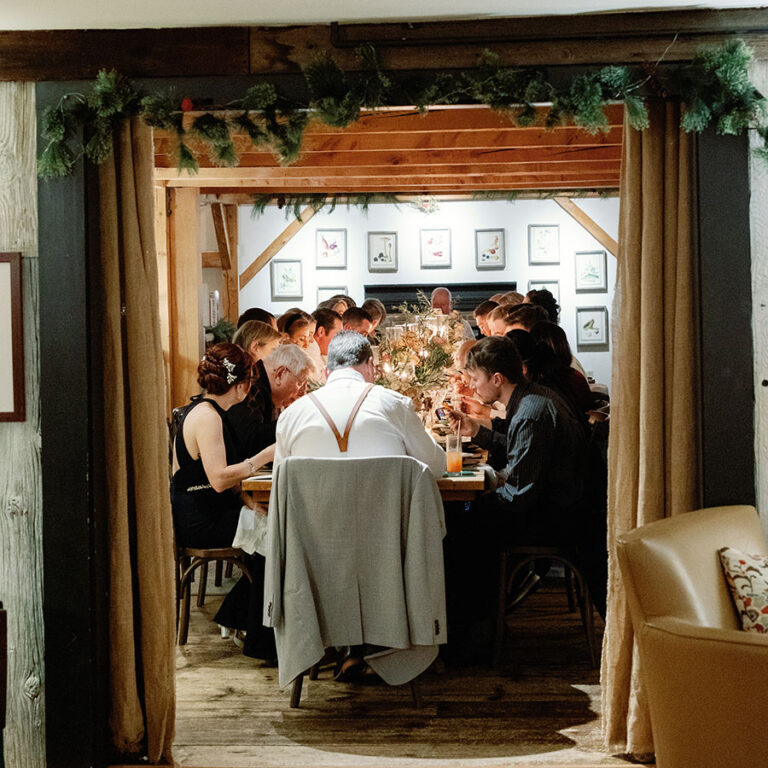
One of the joys of a Vermont destination wedding is that you can treat the event like a long, shared retreat. The right mix of hosted and unstructured time allows guests to relax rather than feel overscheduled.
Welcome gatherings. Casual welcome parties at local breweries, cideries, or farm properties set a relaxed tone. Bonfires with s’mores, lawn games, or pizza nights under bistro lights are naturally social and low-pressure. If many guests are arriving at different times, consider an open-house style event where people can drop in as they arrive.
Daytime activities. Depending on season and region, guests might enjoy hiking, kayaking or paddleboarding, skiing, snowshoeing, visiting farmers’ markets, or simply exploring a nearby town. Linking to local tourism boards such as Vermont Vacation on your website can help guests plan free time. It’s also thoughtful to offer one or two low-key, no-gear-required suggestions for those who aren’t outdoorsy.
Farewell brunches. A send-off brunch at your venue, a nearby café, or a family home gives you additional relaxed time with guests and helps them transition out of “wedding mode” before traveling home. Even a simple coffee-and-pastry spread can feel generous when people are loading cars and checking out of hotels.
Communicating weekend details
Clear communication makes destination weekends feel effortless for guests, even when the underlying logistics are complex.
Wedding website essentials. Include travel instructions, lodging options, a schedule overview, dress codes (with notes about temperatures and terrain), and any local tips. If you anticipate dirt paths, gravel drives, or lawn seating, for instance, mention that block heels or flats are best. Seasonal packing notes (like layers for crisp fall evenings or hats and sunscreen for summer mountains) are surprisingly helpful.
Welcome bags with Vermont touches. Many couples love to include local treats in welcome bags or boxes: small bottles of Vermont maple syrup, local chocolate, cheddar, snacks from nearby bakeries, and a printed weekend schedule. Including a simple area map and notes on your favorite local spots makes guests feel oriented and cared for without much extra effort on your part.
Designing A Romantic Vermont Wedding: Style, Décor, And Atmosphere
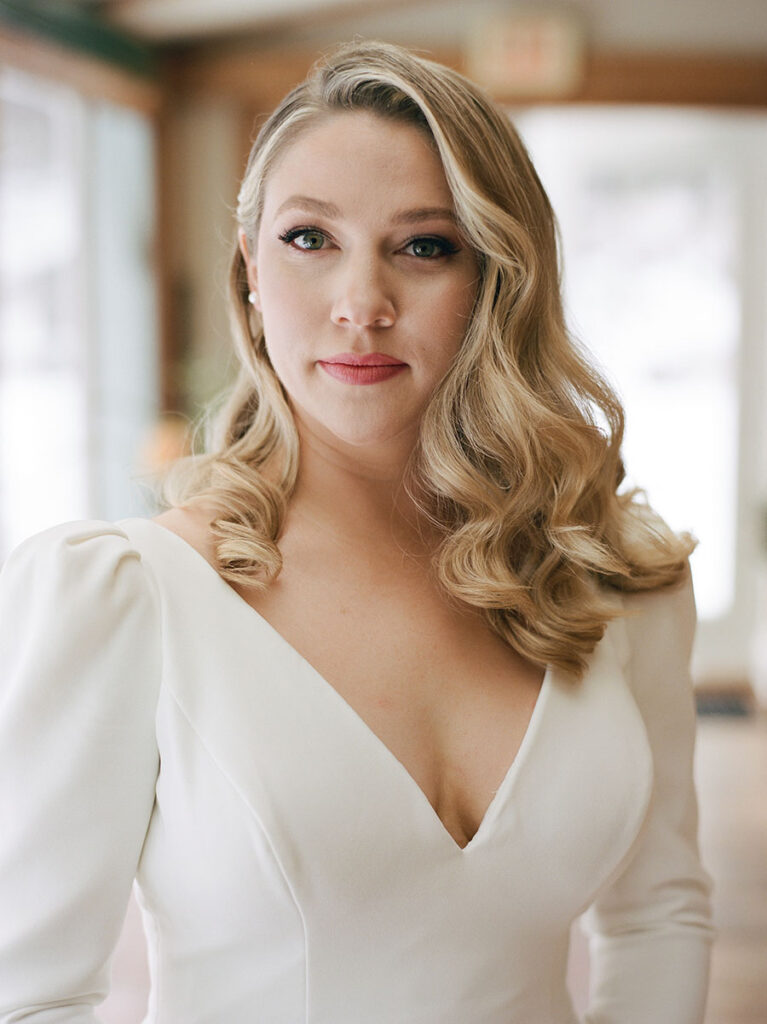
Vermont’s scenery does a lot of the work for you. The goal of your design is often to enhance, not compete with, what’s already there. That said, your choices in color, texture, and lighting will shape how guests perceive and remember the setting.
Working with Vermont’s natural palette
Each season suggests its own color story, and leaning into that can make your design feel deeply rooted in place.
Spring. Soft greens, blush, ivory, and muted pastels echo new growth and flowering branches. Incorporating budding branches, delicate blooms like hellebores or tulips, and airy textiles can feel very aligned with the season. Consider how early-evening light moves through your ceremony and reception spaces; sheer draping and lighter linens can keep everything feeling fresh.
Summer. Think layered greens, whites, and neutrals, or brighter garden-inspired palettes pulled from summer flowers. Because the landscape is already saturated with color, many couples lean toward slightly more restrained palettes for a timeless feel—perhaps with a single accent hue appearing in flowers, stationery, or glassware.
Fall. Jewel tones, rich neutrals, and warm metallics (bronze, gold, copper) sit beautifully against foliage. You can embrace the season fully with deeper tones or choose a more minimalist palette that lets the surrounding color do the talking. Textural elements like velvet ribbons, ceramic vessels, and wooden chargers work particularly well here.
Winter. Candlelight, layers of ivory and cream, forest greens, and touches of velvet or wool create instant warmth. You can go classic and restrained (greens and whites with lots of candles) or lean into moody, darker tones for a more dramatic winter evening feel. Think about tactile elements—blankets on chairs, soft napkins, heavy glassware—that make guests want to linger.
Aligning design with venue architecture
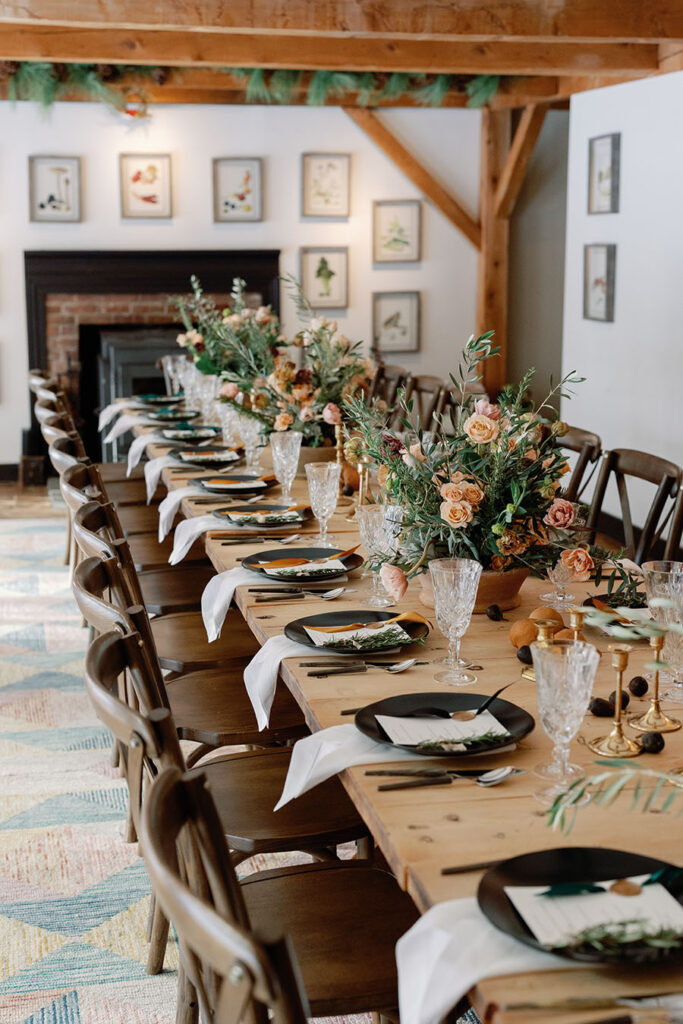
Barns and rustic spaces. Instead of leaning entirely into a rustic aesthetic, consider contrast. Clean-lined tableware, elevated linens, modern flatware, and refined floral compositions can make a barn feel like a chic, thoughtfully designed space rather than a theme. You can still reference the setting with natural wood accents or wildflower moments without defaulting to mason jars and burlap.
Historic inns and estates. Many of these spaces already have strong architectural and decorative character. Here, less can be more: candles on mantels, statement florals in a few key locations, and linens that complement rather than compete with existing colors and patterns. It’s worth noting what’s fixed (wallpaper, carpet, chandeliers) and letting that guide your palette.
Tented private estates. Tents offer a blank canvas. You can bring in custom flooring, lighting installations, tailored draping, and lounge furniture to create something that feels like a temporary, beautifully designed venue rather than a generic tent. Because you’re essentially building from scratch, it’s helpful to think about tents as both a design and infrastructure project; layout, lighting, and functional zones all impact the final look and feel.
Floral and décor details with a Vermont sensibility
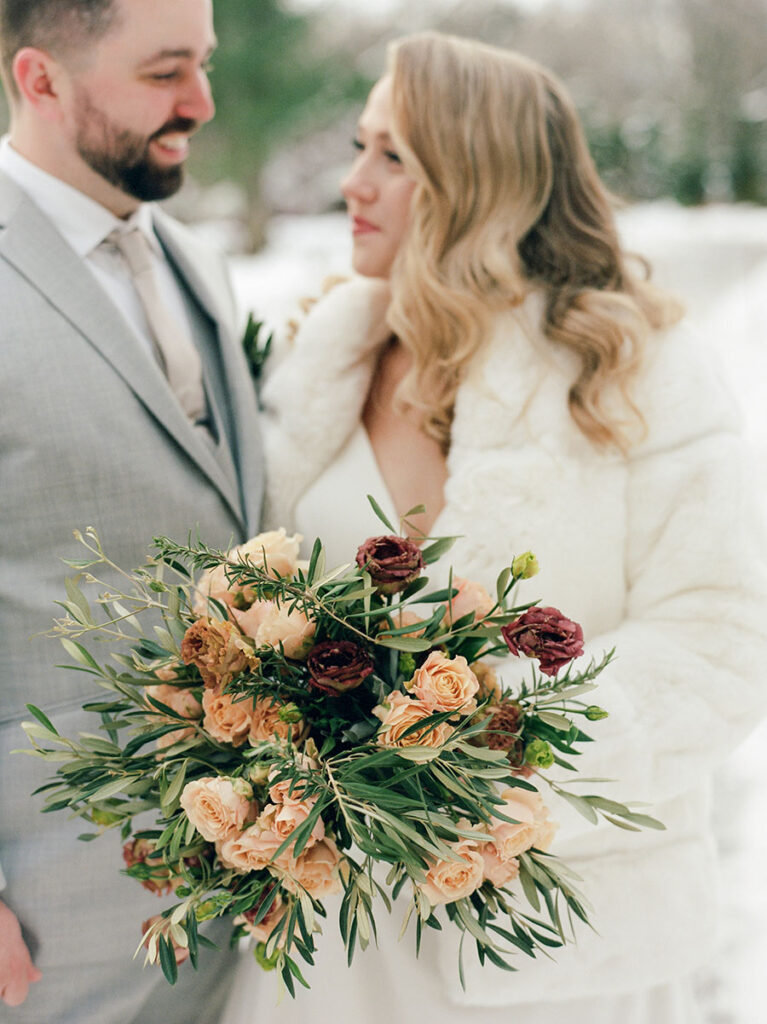
Many Vermont florists work closely with local flower farms, especially in the growing season, which means you can often incorporate seasonal, locally grown blooms and foliage into your arrangements. This aligns nicely with the broader farm-to-table ethos of the state and can also add subtle variety—no two arrangements look quite the same when the product is that fresh.
Beyond flowers, consider subtle nods to the region: wooden elements, stone or slate accents, linens in natural fibers, or wildflower-inspired details. These tie the experience to the place without turning it into a theme park version of “rustic.” Even something as simple as using local maple syrup bottles as escort-card holders can feel thoughtful.
Lighting and ambiance
Lighting is particularly important in Vermont, where golden hour and sunset can be dramatic, and fall and winter evenings arrive early.
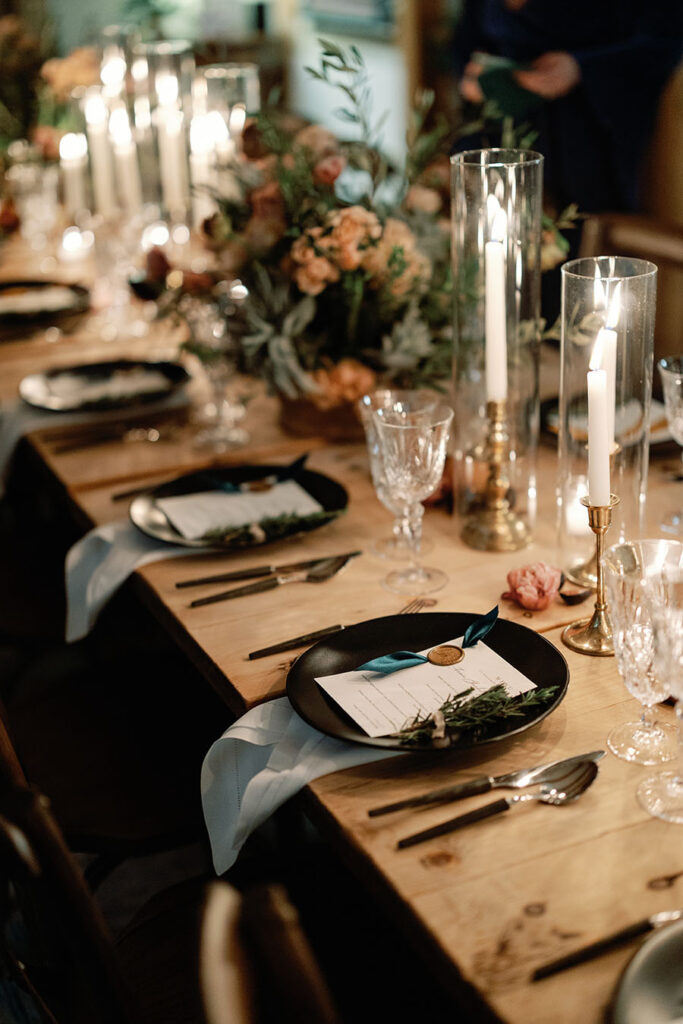
Inside barns and tents, layered lighting—overhead chandeliers or pendants, string lights, pin-spotting for florals, and plenty of candles—creates warmth and depth. Outside, path lighting, lanterns, and thoughtfully lit trees or architectural features help guests navigate and extend the feeling of the landscape into the night.
For fall and winter weddings, consider starting ceremonies earlier than you might elsewhere so that you can capture natural light for portraits and then lean fully into candlelight as the evening progresses. A planner or photographer who knows Vermont well can help you reverse-engineer your timeline from local sunset times.
Tented Weddings In Vermont: What To Know Before You Commit
Tented weddings are a natural fit for Vermont’s open fields, lakesides, and estate lawns. They give you flexibility and the drama of the landscape, but they also demand careful planning. It helps to think of a tent not as “just a structure” but as your temporary venue—one that needs power, climate control, restrooms, and decor just like any building.
Choosing a tent style
Common tent styles for Vermont weddings include:
Sailcloth tents. These have graceful peaks and semi-translucent fabric that glows beautifully in the evening when lit from within. They pair especially well with countryside and waterfront settings and are a favorite for couples who want something that feels romantic and airy.
Clear-top tents. Clear vinyl roofs allow views of the sky and surrounding trees. In early fall or on cooler evenings, this can be magical. In full summer sun, however, clear tops can create a greenhouse effect, so careful shading and cooling strategies are needed. They are best in locations where you’re confident about avoiding prolonged, direct midday sun during your main events.
Pole tents. Supported by center poles, these tents have sweeping lines and require staking into the ground. They work well in open fields with sufficient staking room but are less flexible on hard surfaces. Their interior sightlines are slightly more interrupted, but many couples love the classic shape.
Frame tents. These use a metal frame instead of center poles, offering more open interior space and the ability to position them on decks, patios, or uneven terrain with appropriate leveling. They can be dressed with liners and draping to soften the look and are often the most flexible choice for tricky sites.
Planning infrastructure and layout
A successful tented wedding in Vermont depends on infrastructure that guests never think about but absolutely feel the effects of.
Flooring and staging. In many rural settings, full tent flooring is worth considering, especially in spring and fall when ground can be damp or uneven. At minimum, a sturdy dance floor is important. Catering tents, bars, and bands or DJs may also require staging platforms. Good flooring also makes footwear choices easier for guests.
Power and generators. Assess the site’s existing power with your planner, caterer, and entertainment team. Often, dedicated generators are brought in to handle lighting, band/DJ equipment, and catering equipment. The goal is to avoid overloading circuits and to place generators where they’re accessible but not noisy or visually intrusive. Having separate power for entertainment and catering is common practice.
Restrooms. Unless your venue has ample indoor restrooms near the tent site, you’ll likely need restroom trailers. Today’s higher-end restroom trailers are comfortable and discreet, but they do need level ground, access for vehicles, and power. Locating them along a subtly lit path away from the main tent strikes a good balance between convenience and aesthetics.
Weather-proofing your tented celebration
Because Vermont weather can swing, your tent plan should assume you might encounter wind, rain, heat, or chill—sometimes all in the same weekend.
Sidewalls and vestibules can be added to tents to block wind and rain while still allowing for partial openness where the view is best. In cooler months, tent heaters (properly vented and sized) keep guests comfortable; in hotter months, fans or tent air-conditioning may be necessary, especially under clear tops.
Thoughtful layout helps, too: placing catering tents, generators, and restroom trailers on stable, accessible ground; positioning entry points away from prevailing winds; and ensuring guests don’t have to walk long distances over grass in formal attire if the ground is soft. Simple additions like outdoor rugs, matting, or hardscape paths can transform the experience.
Permits, noise, and neighborhood dynamics
Depending on the town and property, you may need permits for large tents, amplified music, or events over a certain size. Local fire and building codes can also influence how and where tents are placed. Your tent company and planner can typically help navigate these requirements.
Noise ordinances and neighbor relationships matter particularly on private estates and rural properties. Clarifying curfew times, sound levels, and any late-night activities (such as bonfires or after-parties) with both property owners and local regulations will prevent friction later. It’s worth remembering that sound travels differently in open fields and mountain valleys than in urban environments.
An experienced planner coordinates between tent companies, venues, local officials, and neighbors to align expectations, obtain necessary permits, and build realistic setups and teardowns into the overall timeline and budget.
How an experienced planner supports rural tented weddings
Tented weddings involve layered logistics: overlapping vendor deliveries, power distribution plans, lighting design, rental inventories, and contingency plans. A planner who regularly produces tented and estate events is essentially orchestrating a small buildout, then layering a wedding on top of it.
That includes mapping out hardscapes and utilities, scheduling site visits with key vendors, creating scaled diagrams of tent interiors and grounds, and ensuring that rain plans are not only theoretical but actually workable and visually cohesive. In rural Vermont, where cell service can be patchy and vendors may be driving significant distances, that level of coordination is particularly valuable.
Food, Drink, And Vermont-Forward Catering Ideas
Food and drink are central to the Vermont experience. The state’s agricultural landscape and culinary culture give you ample opportunity to create menus that feel distinctly place-specific, seasonal, and generous.
Farm-to-table as a defining feature
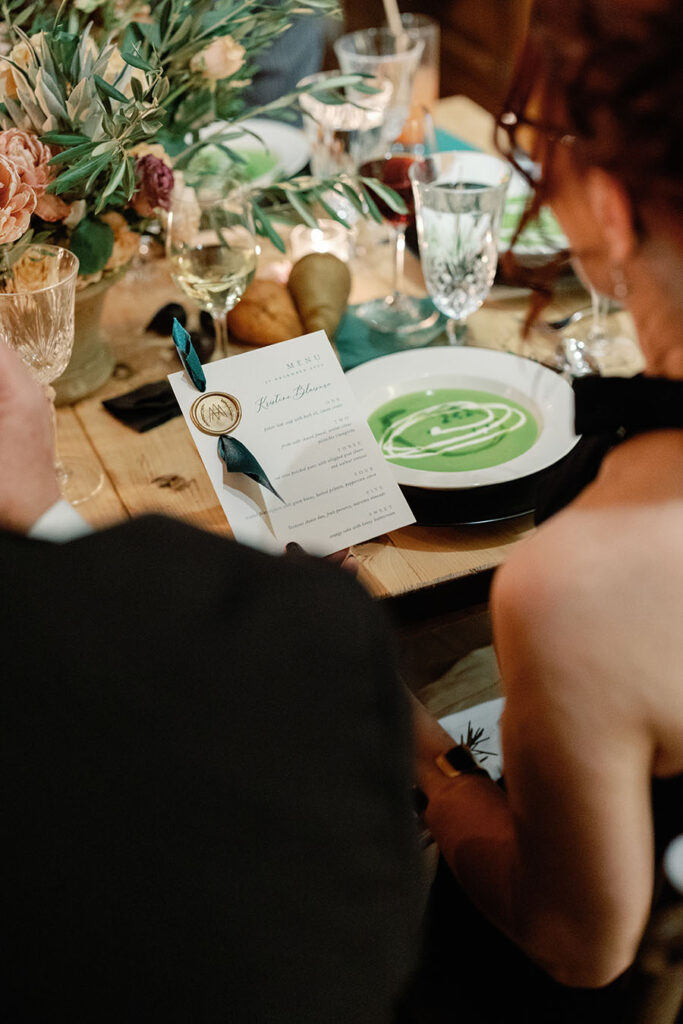
Many Vermont caterers and venues build menus around locally sourced produce, meats, cheeses, and breads. This isn’t a marketing slogan so much as a practical reality; local farms and artisan producers are woven into the state’s economy.
In summer, that might mean heirloom tomatoes, sweet corn, and berries. In fall, root vegetables, squash, and apples. Winter menus might lean more heavily on hearty braises, preserved items, and artisan cheeses, while spring features tender greens and early vegetables. Leaning into these seasonal rhythms results in food that tastes like it belongs to that exact weekend.

Showcasing Vermont on your menu
There are many subtle (and not-so-subtle) ways to weave Vermont into your food and drink:
Maple-glazed appetizers or entrees, perhaps using syrup from a local sugarhouse; cheese and charcuterie boards featuring Vermont cheddars and goat cheeses; and desserts that highlight apples, berries, or maple. Local cider, either still or sparkling, can be a lovely welcome drink during cocktail hour.
Late-night snacks could nod to regional comfort foods: elevated grilled cheese with local cheese, maple-bacon sliders, or mini cider doughnuts with dipping sauces. These small touches tend to be what guests recount later when they talk about “how much the wedding felt like Vermont.”
Bar and beverage considerations
For the bar, consider signature cocktails featuring regional spirits—Vermont has several distilleries producing gin, whiskey, and other spirits—as well as local beers and hard ciders. A maple old fashioned or a gin cocktail with local herbal notes can feel both classic and location-specific without being gimmicky.
Policies around alcohol vary by venue. Some properties require you to use their in-house bar packages; others allow you to bring in your own alcohol through a licensed vendor or retailer. Be sure to clarify corkage fees, service charges, and who carries the liquor license for the event. In more rural locations, it’s also worth confirming delivery logistics and any restrictions on glassware or outdoor service.
Working with local caterers and venues
When you’re planning from afar, look for caterers and venues who are willing to collaborate on a menu that reflects your tastes while still being realistic about what’s seasonal and practical in Vermont at that time of year. Asking to see sample menus from the same month as your wedding can give you a useful starting point.
Tastings are especially useful—not only to assess flavors and presentation but to understand service style, portion sizes, and how the caterer communicates. A planner can help you interpret proposals, compare packages, and ensure that staffing levels and rental needs (glassware, china, serving pieces) are fully and accurately reflected. This is one area where small adjustments—like adding an extra passed appetizer station or a second bar—can have an outsized impact on guest experience.
Building Your Vermont Wedding Vendor Team
The strength of your vendor team will largely determine how smoothly your wedding weekend runs. In a destination context, that means balancing local expertise with trusted specialists you may bring in from elsewhere.
Which vendors are typically local
For many Vermont weddings, it makes sense to source the following vendors locally:
Catering and bar. Local caterers know the area’s sourcing options, rental houses, and venue logistics. They also have a clearer sense of how to time service around things like early sunsets or ski traffic.
Rentals and tenting. Working with regional rental and tent companies who understand Vermont’s weather patterns and terrain is important, especially for rural or tented events. They’ll know, for example, which fields tend to stay soggy late into spring, or how much weight a particular deck can safely hold.
Transportation. Local transportation providers know the roads, potential bottlenecks, and how long it actually takes to move groups between locations. This matters more than you might think when you’re working with unlit mountain roads or narrow village streets.
Hair and makeup. Stylists who already operate in your wedding’s region understand timing, humidity, and lighting conditions and can more easily accommodate early call times or last-minute adjustments. They’ll also be familiar with how long it takes to travel between area hotels and venues on a busy foliage weekend.
Several florists may also be local to the region, particularly those who focus on Vermont weddings and work with area flower farms. If using a local florist is important to you from a sustainability perspective, this is very achievable here.
Vendors you might bring in
Some couples choose to bring in certain vendors with whom they have a strong personal connection or whose style is highly specific to their vision. That might include your photographer, videographer, planner, or band/DJ. A consistent creative team can be grounding when you’re planning far from home.
In those cases, factor in travel costs, accommodations, and any per diems or additional fees. Work with your planner to ensure that out-of-town vendors have the local support and information they need—everything from realistic driving times to where they can park and load in at your venue. Good communication here tends to prevent the “we didn’t realize how dark this road would be at 11 p.m.” moments.
Evaluating Vermont vendors from afar
When you can’t meet vendors in person initially, you rely on portfolios, reviews, and communication. A few things to watch for:
Work that aligns with your aesthetic. Portfolios should show a breadth of styles and settings, ideally including events similar to yours in scale or venue type. For example, if you’re planning a winter barn wedding, it’s reassuring to see that reflected somewhere in a photographer’s or florist’s work.
Reviews that mention reliability and communication. In a rural, seasonal destination, adaptability and professionalism are as important as artistry. Look for former clients mentioning things like “calm under pressure” or “helpful with backup plans.”
Transparency around pricing and logistics. Vendors who readily explain their pricing structure, travel fees, and contract terms tend to be easier to work with over a long planning process. Hidden fees become more noticeable when you’re coordinating multiple locations and days.
The role of a destination wedding planner
A destination planner functions as the connective tissue between you and your vendor team. They translate your vision into a plan that works in Vermont’s context, recommend vendors who fit both your style and budget, and ensure that each vendor understands the logistics and constraints of your venue and season.
At Shi Shi Events, that often means curating vendor teams that blend local Vermont talent (for catering, rentals, transportation, and some florals) with trusted partners from other markets when needed for photography, entertainment, or specialty design. The goal is a cohesive team where everyone is aligned on expectations and supported logistically.
Once vendors are contracted, your planner tracks retainers and payments, reviews contracts for compatibility (for example, making sure rental delivery windows align with venue access times), and oversees communication so that you don’t have to manage dozens of separate email threads from afar. That structure becomes increasingly valuable as your wedding weekend approaches and the number of moving parts grows.
Budgeting For A Vermont Destination Wedding
Talking about budget is rarely the most romantic part of planning, but it is one of the most grounding. Vermont can be more cost-effective than some coastal New England destinations, especially at certain times of year, but it also presents its own budget drivers.
How Vermont compares to other New England destinations
Relative to marquee markets like coastal Maine, Nantucket, Martha’s Vineyard, or the Berkshires, many Vermont areas can offer more approachable pricing for venues and lodging, particularly outside peak foliage and prime summer weekends. That said, popular resort towns and high-end inns still command premium rates, especially for buyouts during high season.
Seasonal pricing shifts are real. Shoulder seasons (late spring, certain winter dates) may provide more flexibility on minimums and room rates, while peak foliage weekends and holiday periods come at a premium. Being open to a Friday or Sunday date can also create opportunities at high-demand venues.
Major budget drivers in Vermont weddings
Venue and catering. As in most destinations, these are often your largest line items. Inclusive venues with in-house catering can simplify budgeting; estate or tented weddings, where you’re hiring a separate caterer and rental company, offer more customization but also more moving parts and potential costs.
Tenting and rentals. If you’re hosting your wedding on a private property, farm, or venue without a fully equipped event space, tenting, flooring, lighting, restrooms, and rentals (tables, chairs, linens, china, glassware) can represent a significant portion of the budget. These items also tend to be where weather-related upgrades show up, so building in a contingency cushion is wise.
Transportation and lodging support. Providing shuttles for guests, especially where roads are narrow, unlit, or winding, is often both practical and considerate. Depending on your priorities, you may also choose to contribute to or fully cover accommodations for key family members or your wedding party. Those decisions add up and are worth discussing early.
Allocating funds for maximum impact
Because Vermont offers such strong scenery and inherent charm, you may not need to invest as heavily in certain categories as you might in a blank urban venue.
Many couples choose to focus funds on guest comfort (transportation, climate control, thoughtful welcome bags), key design elements that will be widely experienced (ceremony backdrop, dining tables, lighting), and food and beverage, which guests will remember long after small details fade. A warmly lit tent with comfortable seating and great food often makes a deeper impression than elaborate decor in peripheral spaces.
On the flip side, you might simplify areas that add less perceived value for your specific group: favors that are likely to be left behind, overly intricate programs, or redundant decor pieces in low-traffic areas. Being honest about which details matter to you—and which you’re doing only because you feel you “should”—helps align your budget with your actual priorities.
Hidden or frequently overlooked costs
In Vermont, a few line items tend to surprise couples if they haven’t been discussed early:
Delivery and travel fees. Rural venues may require longer drives for vendors and rental companies, which can add travel charges or delivery minimums. This is particularly true for specialized items that may only be available from a few providers in the region.
Weather contingencies. Backup heaters or fans, tent sidewalls, extra flooring, or generator upgrades can add up. It’s wise to build a small contingency cushion into your budget for these weather-related adjustments rather than scrambling to add them at the last minute.
Additional staffing. More spread-out venues can require extra staff for catering, bar, or transportation to maintain service levels and smooth transitions. This might mean an additional bartender for a second bar, more servers for a tented multi-course dinner, or extra shuttle runs to accommodate a staggered guest departure.
A Sample Planning Timeline For A Vermont Destination Wedding
Every wedding timeline is slightly different, but it can help to see a general structure. The following assumes you are planning roughly 12–18 months out; shorter timelines are possible with flexibility on dates and vendors.
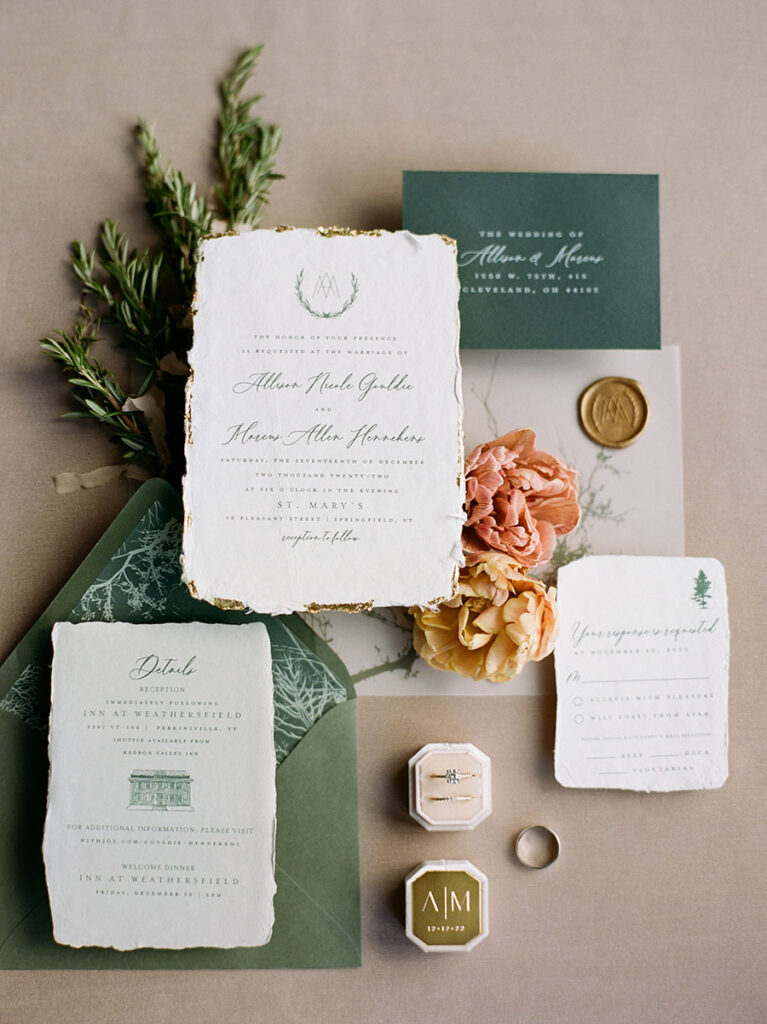
12–18 months out
Clarify your guest count range, budget framework, and overall vision. Decide which Vermont region fits your priorities and begin researching venues there. This is also the time to secure a destination wedding planner if you plan to work with one; they can then guide your venue search and date selection with an eye toward seasonality and logistics.
Once you’ve chosen your venue and date, book your planner (if you haven’t already), photographer, and, if relevant, videographer—especially if you have specific people in mind. Key creative partners tend to book far ahead for fall and summer.
9–12 months out
Lock in your core vendors: caterer (if separate from the venue), band or DJ, florist, rental company, tent company, hair and makeup, and transportation providers. Reserve hotel room blocks and begin gathering information for your wedding website, which you can launch once major details are set.
At this stage, an initial site visit—either in person or virtually—helps move from broad ideas to more concrete plans. Walking the property (even via video) with your planner can surface opportunities you might not have considered, such as an unexpected spot for a welcome toast or after-party.
6–9 months out
Develop your design direction: color palette, floral approach, linen and tabletop selections, and any custom elements like signage or lounge areas. Confirm your ceremony location and layout, as well as tent type and size if applicable.
Schedule and conduct your menu tasting, ideally in the same season or similar weather to your actual wedding if possible. Sketch out the skeleton of your wedding weekend itinerary so guests will have enough lead time to plan travel; this is when you’ll decide whether you’re hosting a welcome event, farewell brunch, or optional group activity.
3–6 months out
Finalize transportation plans, including shuttle routes and timing. Confirm hair and makeup details and schedule a trial if you’ll be in the area; if not, plan for a trial close to your home and communicate preferences clearly with photos and notes.
Work through ceremony details with your officiant, including readings, vows, and any musical selections. Confirm rain plans in detail—with your planner, venue, and tent company all aligned on how they would be implemented and what trigger you’ll use for making the final call.
1–3 months out
Track RSVPs and confirm your final guest count with the caterer and venue by their required deadlines. Create your seating plan, and finalize decor details such as place cards, escort displays, and any tabletop paper goods.
Complete a final walkthrough, whether in person or virtually, with your planner and venue. Review the detailed weekend timeline, including vendor arrival and departure times, and confirm who is responsible for which items at each stage of setup and breakdown. This is also a good time to confirm contingency items like heaters, fans, or additional tent panels.
Week-of overview
As vendors begin to arrive and setup starts, your planner or venue coordinator will oversee installations, troubleshoot any last-minute adjustments, and manage the flow of rehearsal, welcome events, and the wedding day itself.
Your role at this point should be primarily to show up, be present, and enjoy the environment you’ve worked so hard to create. The better your planning and team building in earlier months, the more you’ll be able to fully inhabit the weekend alongside your guests rather than feeling like the event manager.
Real-Life Vermont Wedding Scenarios For Inspiration
While every Vermont wedding is unique, a few archetypes come up again and again. Seeing how they function in practice might help you imagine which direction suits you best—and where you might blend elements to create something that feels like your own version.
An intimate inn wedding in Woodstock or Manchester
Picture a historic inn with 20–40 guest rooms booked entirely for your group. Guests arrive Friday afternoon to a fireside welcome reception with local cheeses, cider, and small bites. There’s an easy rhythm to the evening: people move from the bar to the library to the porch, catching up and easing into the weekend.
Saturday’s courtyard or garden ceremony is followed by cocktails on the lawn and a candlelit dinner in a dining room with original woodwork and vintage art. Because the inn is yours for the weekend, you’re not working around external restaurant service or other events; the pace can be tailored to you.
A full-property buyout gives you flexibility on timing and use of spaces: brunch in the sunroom, late-night drinks in the bar, quiet mornings on the porch. This format works particularly well for smaller guest counts and for couples who want a house-party feel where everyone crosses paths organically all weekend.
A summer tented wedding on a private estate
Here, the landscape is your anchor. Guests follow a tree-lined drive to a meadow or lakeside lawn, where an open-air ceremony frames the mountains beyond. You might choose minimal ceremony decor, letting the view carry the moment, or a floral installation that feels like it grew there naturally.
Cocktails take place under old trees or on a nearby terrace; guests sip local beer and maple-inflected cocktails as the sun drops. Children run on the lawn, older guests settle into lounge chairs, and conversations drift across the space rather than staying confined to a single bar line.
A sailcloth tent glows from within as evening falls, with long farm tables, abundant seasonal flowers, and a well-lit dance floor. Guests wander out to a firepit between songs, and a late-night snack station appears as the band hits its final set. Because you’ve built the infrastructure from scratch, each element—restrooms, paths, lighting—is exactly where it needs to be for comfort and flow.
A fall foliage celebration in Stowe or the Mad River Valley
For a fall wedding, imagine mountainside vows accessible by chairlift or shuttle, with a panorama of blazing trees in every direction. Guests take in the view during a leisurely cocktail hour, perhaps with a cider tasting or local charcuterie boards.
Later, a cozy reception at a lodge or barn features deep-toned florals, flickering candles, and a menu built around seasonal produce and hearty mains. Blankets are available for guests who want to step outside and watch the stars or the last glow on the mountains. The overall feel is warm, layered, and celebratory—very much in sync with the season.
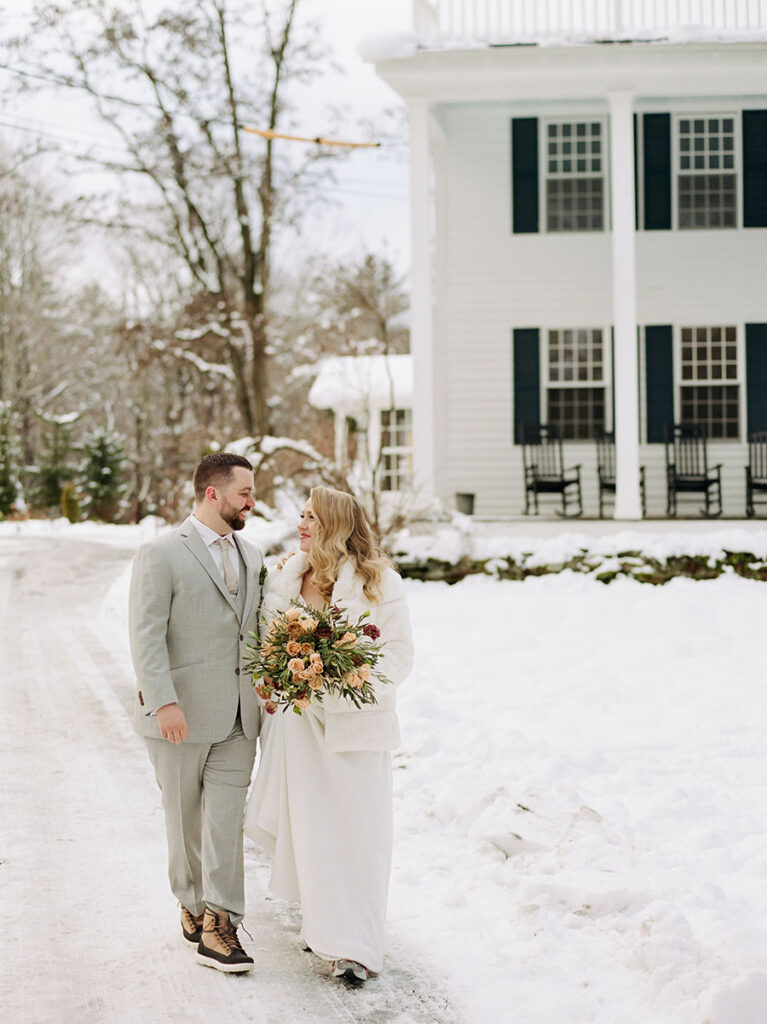
A winter wonderland weekend at a ski resort
Guests check into slopeside rooms on Friday and head straight to an après-ski style welcome party: hot chocolate bar, mulled wine, and comfort-food stations. On Saturday, some guests ski or snowboard while others opt for spa treatments or reading by the fire. No one feels obligated to do everything; the environment itself provides options.
Your ceremony takes place at dusk, either indoors with large windows framing falling snow or outdoors for a brief, bundled-up exchange of vows. A candlelit reception follows, with rich textiles, evergreen and winter-white florals, and a menu that leans into warmth—braised meats, roasted vegetables, and indulgent desserts. A hot toddy or spiked cider station keeps everyone cozy between the dance floor and the bar.
In each of these scenarios, what ties everything together is an attention to place: menus, decor, and activities that feel rooted in Vermont rather than imported wholesale from elsewhere.
Working With A Destination Wedding Planner For Your Vermont Celebration
Planning any wedding involves many decisions. Planning a destination wedding in a rural, seasonal state like Vermont adds layers: travel, weather, infrastructure, and coordination across multiple locations and vendors. A planner is not a requirement, but there are reasons they are particularly helpful here.
Why a planner can be especially valuable in Vermont
Logistically, many Vermont venues—farms, estates, ski lodges—were not originally built as event spaces. They may have limited parking, unusual load-in routes, or restrictions based on terrain and local ordinances. Coordinating those with a tent company, catering team, and transportation providers takes a level of orchestration that most people don’t want to take on while also being the couple getting married.
A planner helps you see around corners: How long will it really take for guests to move from ceremony to reception? Where do restroom trailers go so they’re accessible but discreet? What happens if an unexpected heatwave or cold snap hits a tented event?
They also coordinate vendor teams spread across multiple towns, often with varying familiarities with your specific venue and with each other. Having a single point of contact who knows the full picture reduces miscommunication and unnecessary stress.
How a planner supports you from afar
From the outset, a destination planner translates your general vision into something that considers Vermont’s seasons and landscapes. They’ll tell you, for instance, how late you can realistically schedule a mountaintop ceremony in October before losing light, or what kind of footwear your wedding party should consider for a hillside ceremony in May.
On a practical level, they manage communication, contracts, and timelines; schedule and conduct site visits; and create detailed layouts and timelines so that all vendors are literally and figuratively on the same page. You remain involved in the creative decisions without needing to problem-solve every logistical detail yourself.
A note on Shi Shi Events’ approach
Shi Shi Events is based in Cleveland but regularly produces destination weddings at historic venues, boutique hotels, inns, and private estates throughout the Midwest, East Coast, and South. That experience translates well to Vermont’s mix of charming architecture and rural settings, where tented receptions and weekend-long celebrations are common.
For Vermont and similar destinations, the focus is on designing an experience that feels tailored to the location and to you: thoughtful guest itineraries, cohesive design that enhances the natural surroundings, and detailed logistical planning for tented and estate events. The intent is to create weekends that feel both effortless for your guests and true to the place you’ve chosen.
Turning Your Vermont Wedding Vision Into A Lived-In Weekend
Vermont offers a rare combination: grand landscapes and small-town warmth, a strong sense of place and the flexibility to make your celebration feel distinctly your own. Whether you imagine exchanging vows in a candlelit inn, under a sailcloth tent as the sun sets, amidst peak foliage on a mountain, or beside a snowy slope, the state gives you real options.
The key is aligning your season, region, venue, and vendor team with your priorities—and being honest about what matters most to you and your guests. When you pair that clarity with realistic timelines, weather-aware planning, and a focus on comfort and hospitality, the logistics start to feel manageable instead of overwhelming.
Whether you choose to work with a destination planner or assemble your own team step by step, an informed, organized approach will go a long way. The reward is the chance to gather the people you love in a place that encourages them to slow down, look around, and fully experience the weekend with you—exactly the kind of celebration Vermont is so well suited to host.